
#24 Hound dog
In which Hammer takes on Sherlock Holmes and I have to take my blood pressure

Welcome back to The Christopher Lee Project, in which I spend a year tracking down every film made by Christopher Lee and watching them all. I’m Emma Hughes: a journalist, an author, and I simply cannot be objective about our 37th film, I’m afraid.
I’m a huge, lifelong Sherlock Holmes fan, you see, so I’ve watched The Hound of the Baskervilles (1959), and pretty well every other screen adaptation of Conan Doyle’s stories, multiple times. Which means that long before I knew Christopher Lee as Christopher Lee, I knew him as Sir Henry Baskerville.
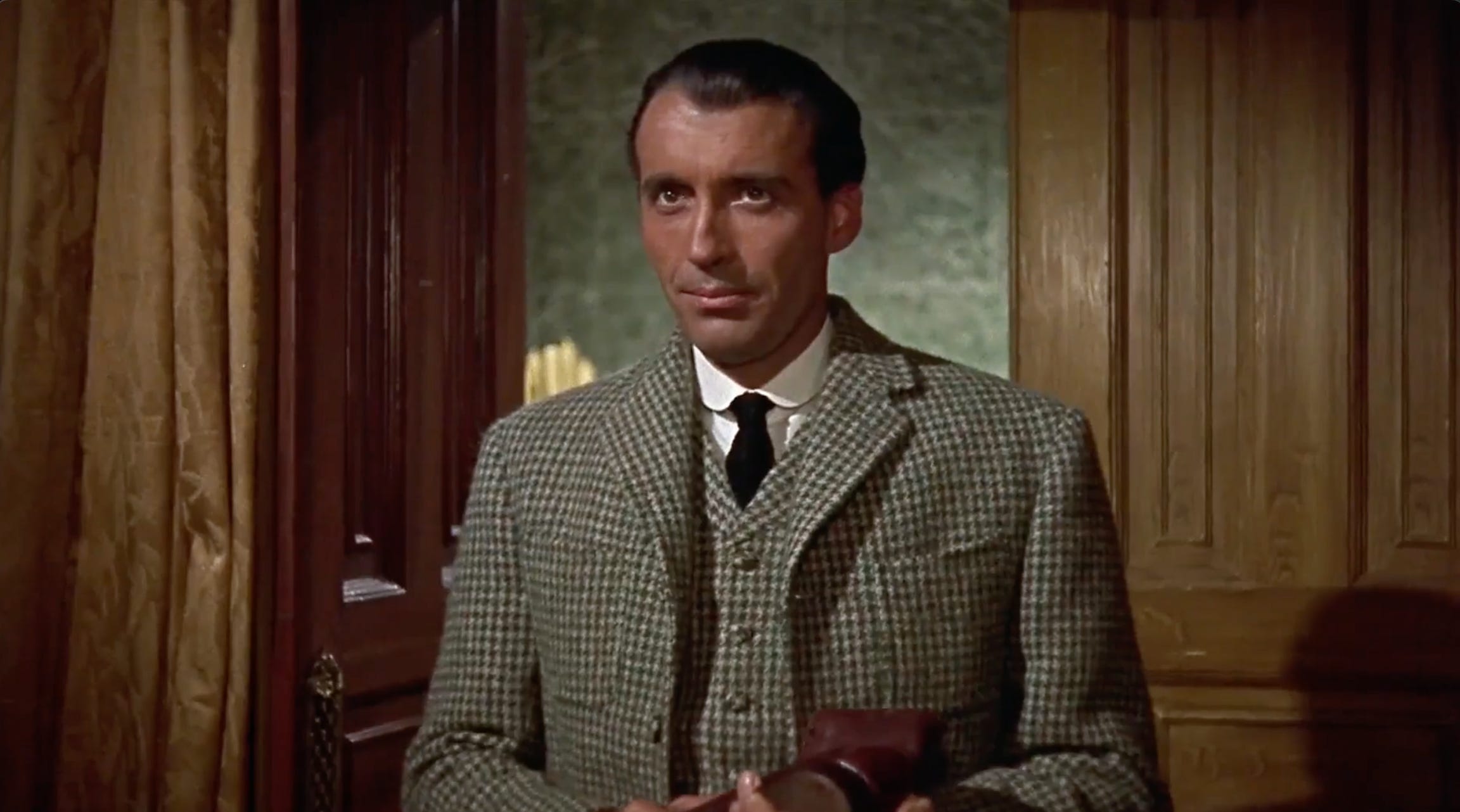
Mystifyingly there were no posters of this jaw-droppingly handsome Victorian dreamboat in the Guildford Athena when I was a teenager, but if there had been my room would have been plastered in them. Do I now have so many screenshots on my Google Drive that I had to upgrade the storage? Yes. Could I fill an entire episode with just these plus an ever-lengthening series of exclamation marks? Also yes.
But I have quite a few new subscribers this week, and I’m aware that most of you found me through a kind recommendation from the top-notch classic horror podcast General Witchfinders, so I am going to try to be a proper film historian. Without further ado, let’s set off for Dartmoor…
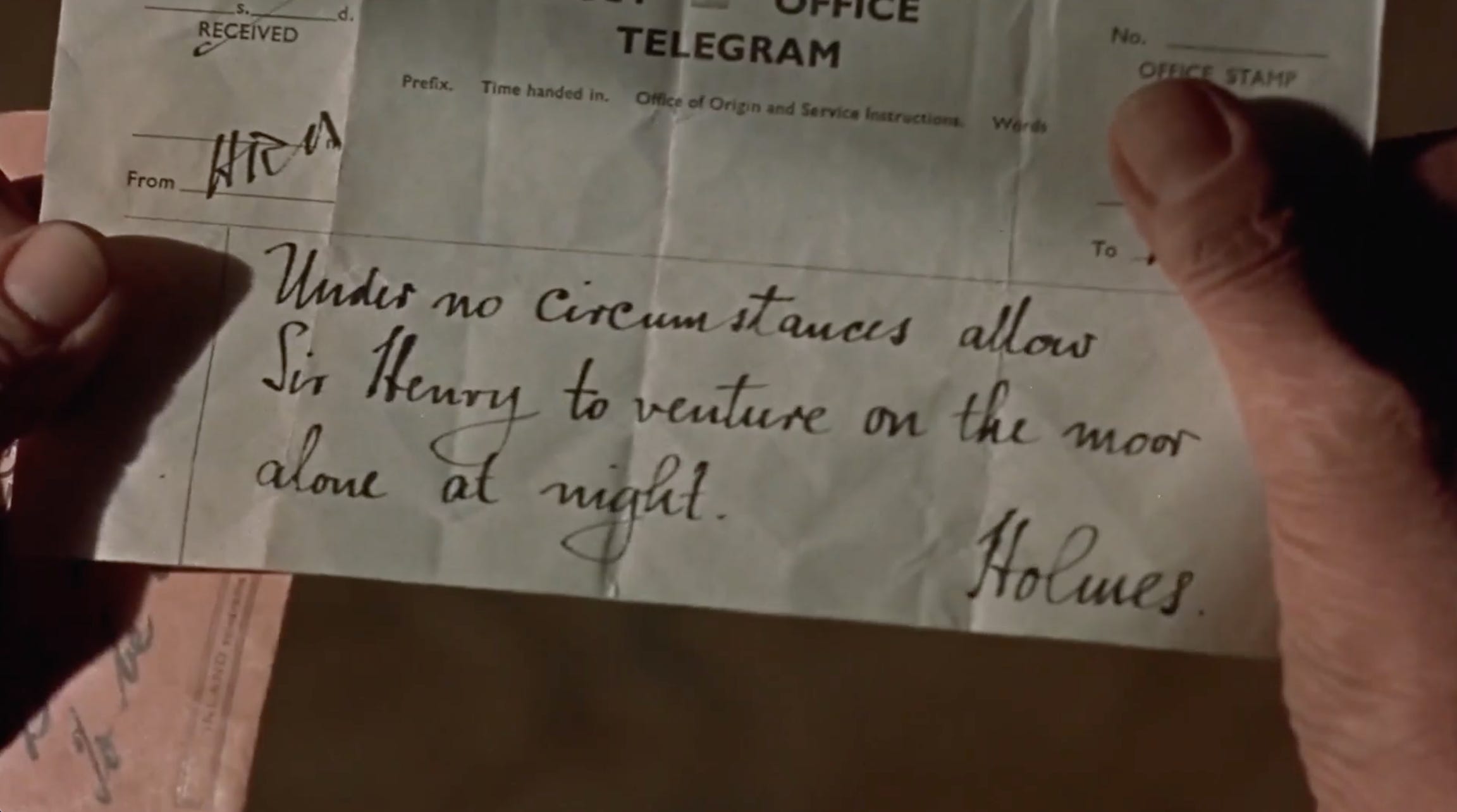
It’s late spring of 1958, and although the runaway success of The Curse of Frankenstein and Dracula had made Hammer synonymous with horror, Jimmy Carreras and Tony Hinds were ultimately interested in getting bums on cinema seats.
It had been almost 20 years since anyone had brought Sherlock Holmes to the screen, and when the American film producer Kenneth Hyman offered them the rights to The Hound of the Baskervilles (at that point still owned by the Conan Doyle estate) as the start of a potential series, they spied an opportunity. Not just to get some more use out of the Dracula set, but to make film history – they could be the ones to give the great detective his first ever outing in colour.
For the screenplay Hammer turned to cameraman Peter Bryan, who had been dabbling in writing on the side. (I didn’t know this when I re-watched it this week, and I kept thinking ‘this is a very good script for Jimmy Sangster’.) Bryan nailed the Conan Doyle-style dialogue with a little help from a member of the cast, which we’ll come to shortly. Back in the director’s chair is Terence Fisher, whose modern-day equivalent, I’ve decided, is Ronald D. Moore, of Battlestar Galactica and Outlander fame, in that he had a genius for rescuing material which could easily have been deeply silly mostly by letting good actors get on with it.
After a kick-off party at The Sherlock Holmes pub on Northumberland Street near Whitehall, filming began on Monday, September 15. Down Place, the country house at the heart of Bray Studios, was transformed from Castle Dracula into Baskerville Hall, ancient seat of the Baskervilles and, in Peter Bryan’s bodice-ripping prologue, the scene of some archetypal upper-class bastardry by Sir Hugo Baskerville.
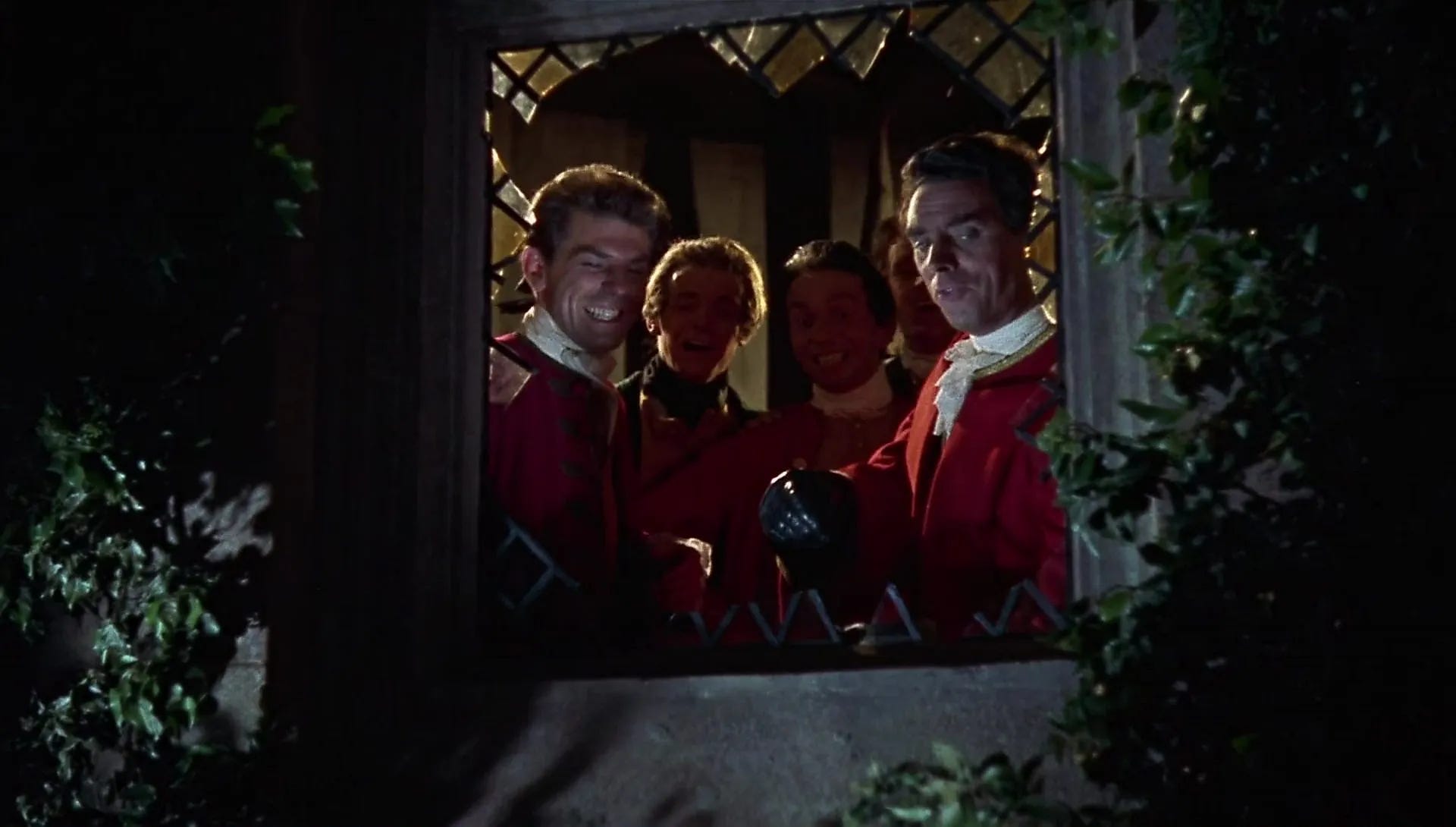
The film opens with him and his friends – all in hunting pink – throwing a peasant through a window1 for trying to defend his daughter, who the lord of the manor has designs on. Sir Hugo is played by David Oxley, who you will of course remember from weird war ballet Ill Met By Moonlight. I am actually going to seek out more of his work because he really gives it both barrels and is genuinely scary – it doesn’t surprise me at all that he’d just finished a season in Stratford. He must have been paid well for his 10 minutes on screen because it was reported that he’d gone off and bought himself an Italian island immediately after shooting wrapped.
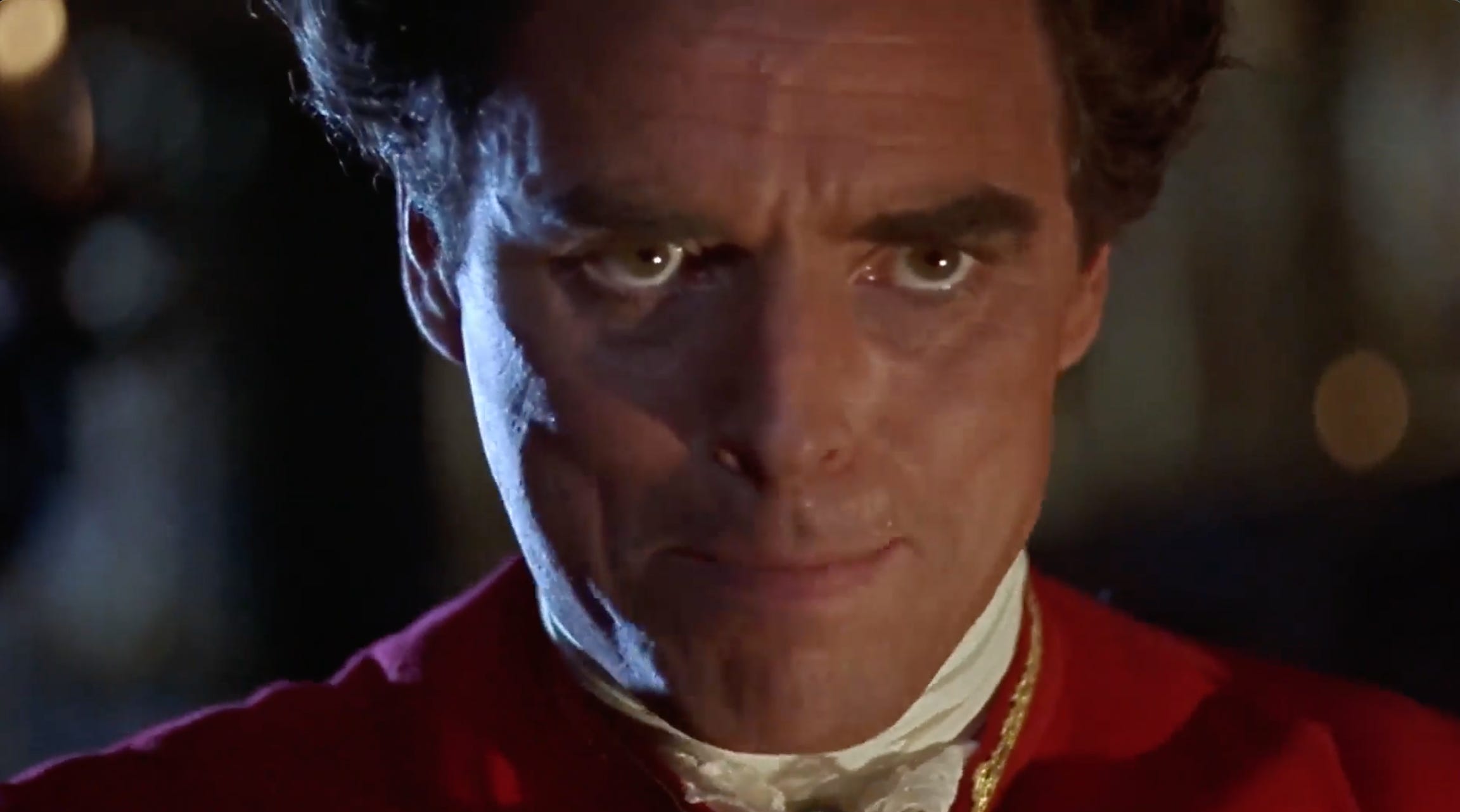
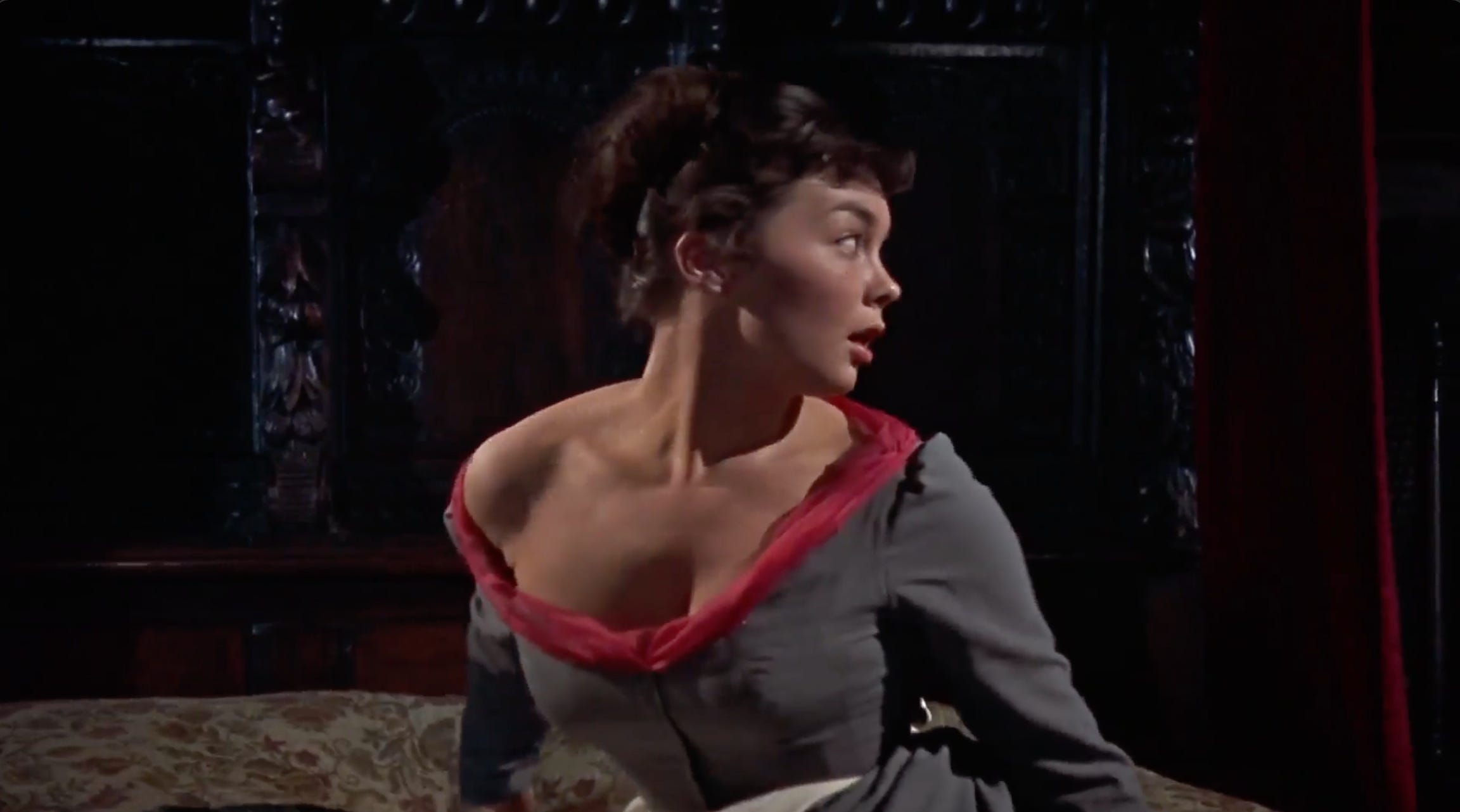
We’ve seen Judi Moyens, playing the unfortunate girl whose death curses the Baskervilles, before too – on the cover of Picturegoer’s horror special, where she was being menaced by a skeleton. My case for early Hammer’s female-adjacent gaze is undermined somewhat by the amount of cleavage and lip-biting going on here, but let’s keep our mortar-boards on and call this an interesting intersection of sex and class. The latter, I’m starting to realise, was almost as much of a thing for Hammer as the former, which surprises me a little given what a solidly middle-class, Home Counties enterprise it was. Perhaps it was a case of giving the people what they wanted on the cusp of the Sixties? (See also: Dracula x Lady Chatterley in Episode 22)
One last thing before we move on – how fantastic do the colours look in this film? We have cinematographer Jack Asher to thank for the vivid Eastmancolour, which was described at the time as a ‘comic strip come to life’ – a nod to the younger audiences whose Saturday-job cash filmmakers were eagerly courting. This, I suspect, is why there were some early Hammer discussions about sidelining Sherlock Holmes because he was ‘the fuddy-duddy to end all fuddy duddies’ – thankfully they saw the error of their ways, although some of the film’s posters made no mention of him, which seems extraordinary now.
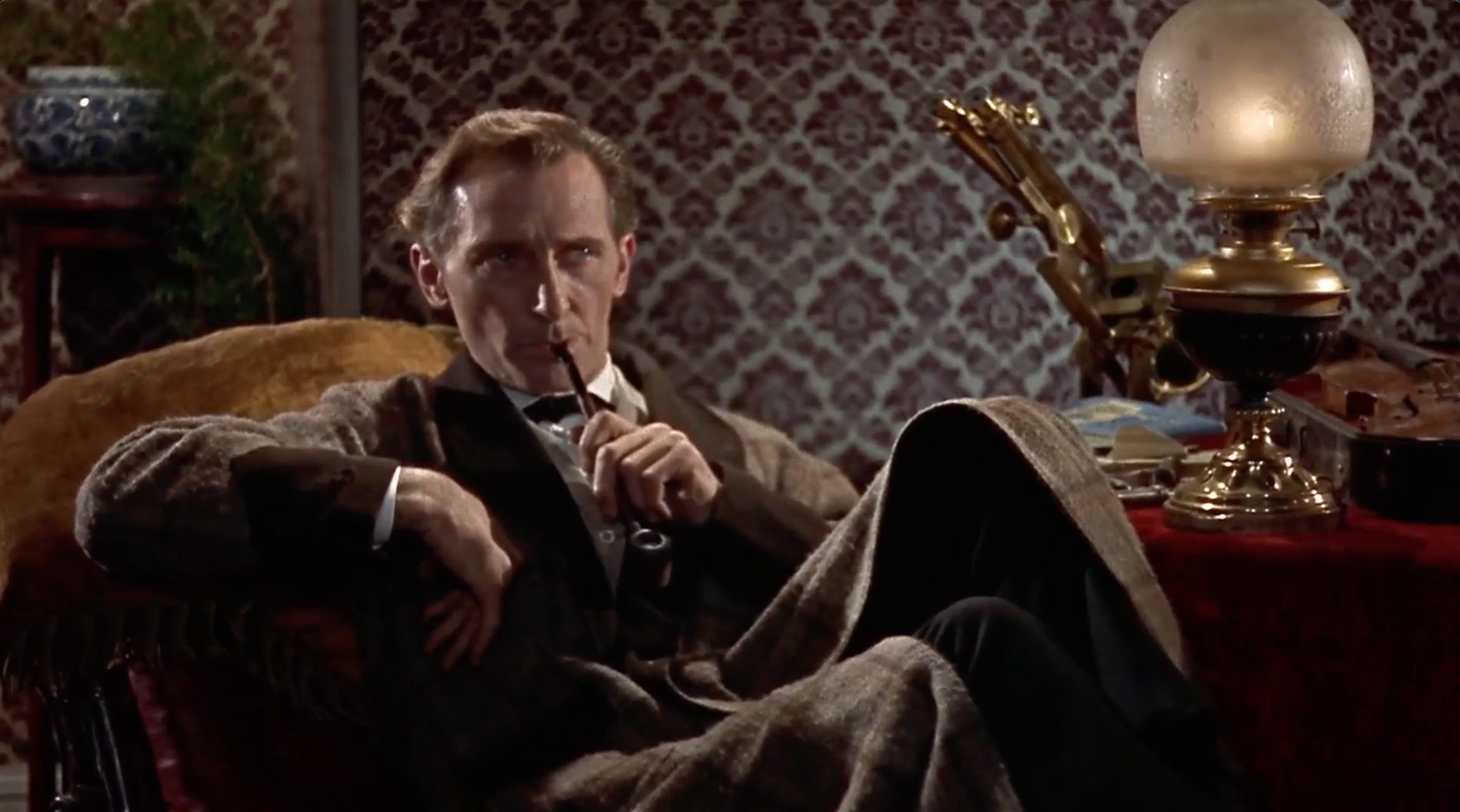
I’m actually a fairly broad church where the great detective is concerned: I think most of the screen Holmeses have been excellent in their own way because of the strength of the source material. I do love Jeremy Brett’s wonderfully fidgety and neurotic take, but my number one will always be Peter Cushing, specifically in this film. I agree with Anthony Howlett, barrister, film historian and one of the founders of The Sherlock Holmes Society (of which I am a proud member), who wrote at the time that Cushing was “the greatest Holmes of them all… mercurial, eccentric, quick-tempered, egotistical, impatient, frequently downright rude. He endows Holmes with that quality of astringency which his creator, Conan Doyle, gave him.” I really think you can trace a straight line from his Holmes – such a departure from Basil Rathbone’s 1930s gentleman sleuth – to Brett’s.
Peter Cushing arrived on set for the first time looking even more angular than usual. The Hammer team congratulated him on his commitment to the role, assuming he’d put himself on a diet to play the famously gaunt detective, but he was actually recovering from a bout of dysentery he’d picked up filming in Spain. He was, however, a dedicated Holemesian who had collected a full set of Strand magazines, and he had mined these for details with an appropriately forensic eye, as well as reworking some of the dialogue in the script. (“My professional charges are upon a fixed scale. I do not vary them, save when I remit them altogether,” was Conan Doyle via Cushing.)
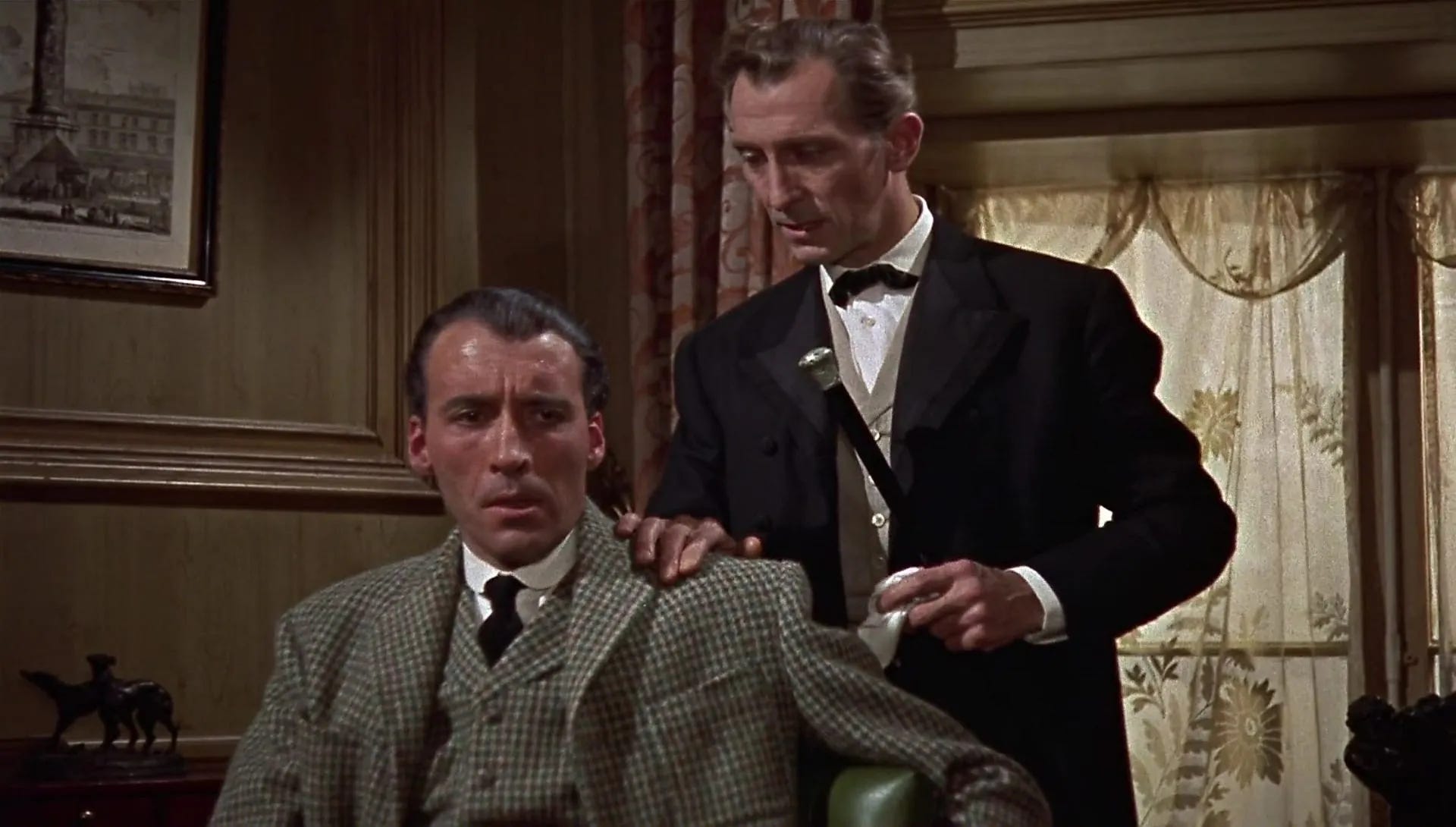
He burned cigarette holes in the cuffs of Holmes’s dressing gown to replicate the ones from his experiments, stuffed his tobacco into a Persian slipper and lit his pipe with a coal from the fire on camera just as Holmes does in the stories. He also insisted on a deerstalker, which as fellow die-hards will know was in Sidney Paget’s Strand illustrations but is never actually mentioned by Conan Doyle. For his efforts he received the blessing of The Sherlock Holmes Society, which made him an honorary member on June 17, 1958. “That you should have accepted the role so sacred to all Holmesians is a source of deep satisfaction to us all,” they wrote.
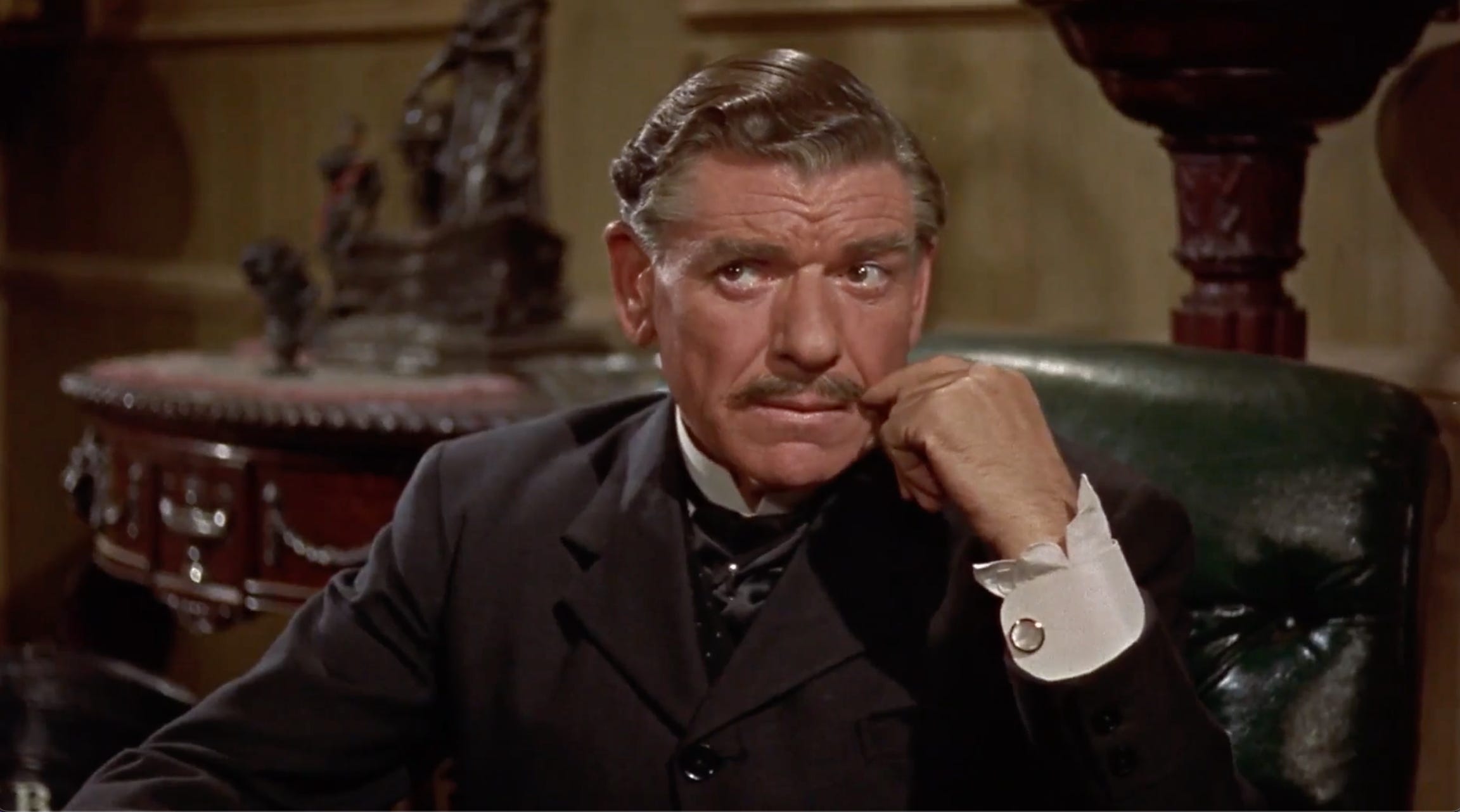
The screen trope of Watson the Wally has always annoyed me: he’s an army surgeon, for goodness sakes. Sherlock Holmes is constitutionally antisocial and doesn’t suffer fools gladly, yet Watson is his constant companion – ergo not only is Watson is no fool, but he must be adding something. Nigel Bruce’s buffoonish take set the mould in the 1930s, so good on Hammer for breaking it by casting Old Vic stalwart André Morell2, who for me is the definitive Watson. A warm, wry foil for the brittle Holmes, he also more than holds his own when dispatched to Baskerville Hall by himself – or so he thinks – to keep an eye on Sir Henry.
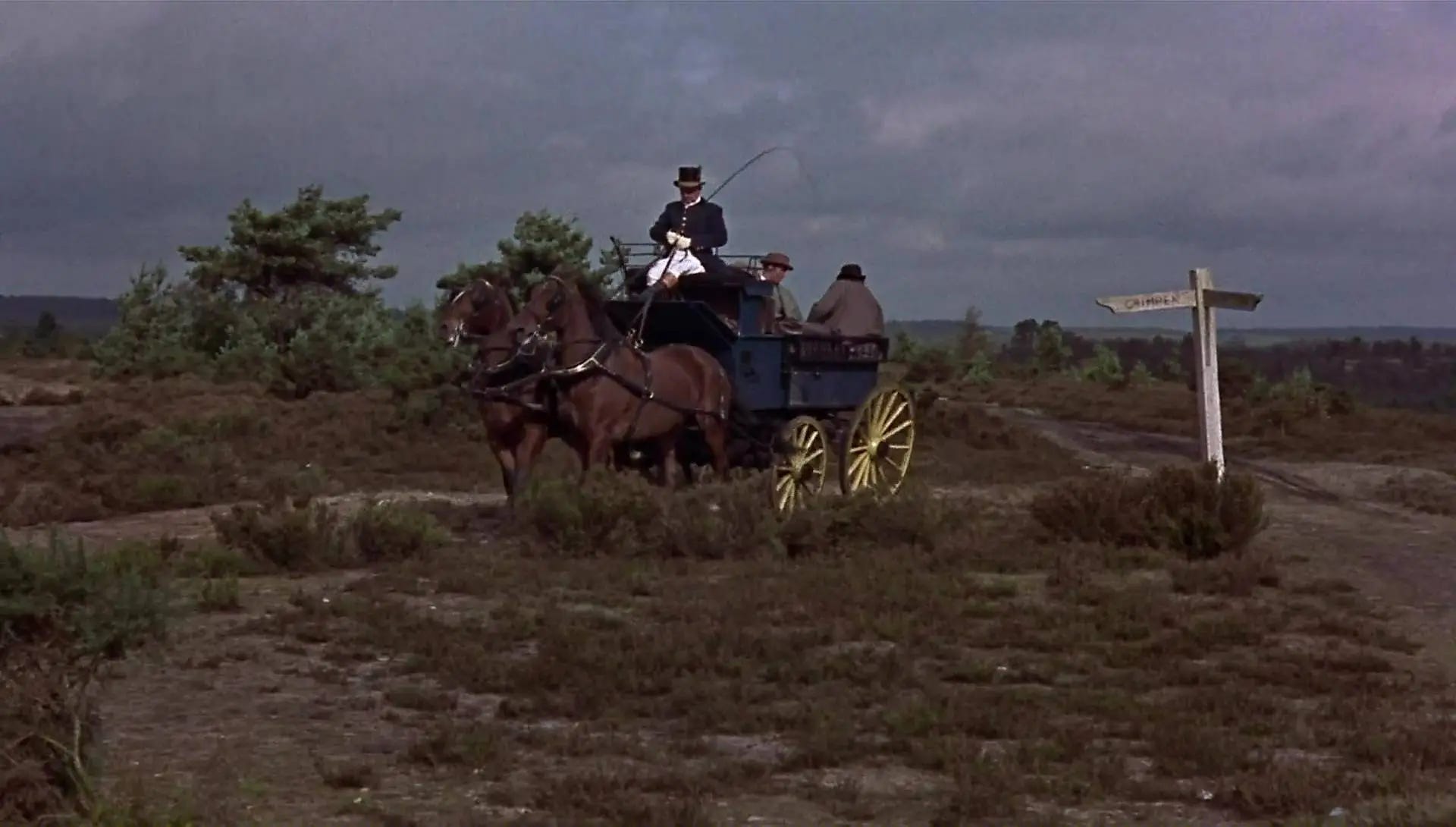
The Dartmoor scenes were meant to be shot in situ, but Hammer settled on somewhere closer to home, and therefore cheaper: on October 13 the London Evening News reported that the “wild heathland near Frensham Ponds” (just a few miles from Hindhead, where Conan Doyle lived) would be standing in. The paper sent a reporter down to Surrey where, in a break from the terrible weather which plagued the shoot, he found Christopher Lee at the top of a hill. He seemed to be enjoying his holiday from villainy and told the journalist that he would be playing the last of the Baskervilles very differently to the “juvenile lead” in the 1939 adaptation.
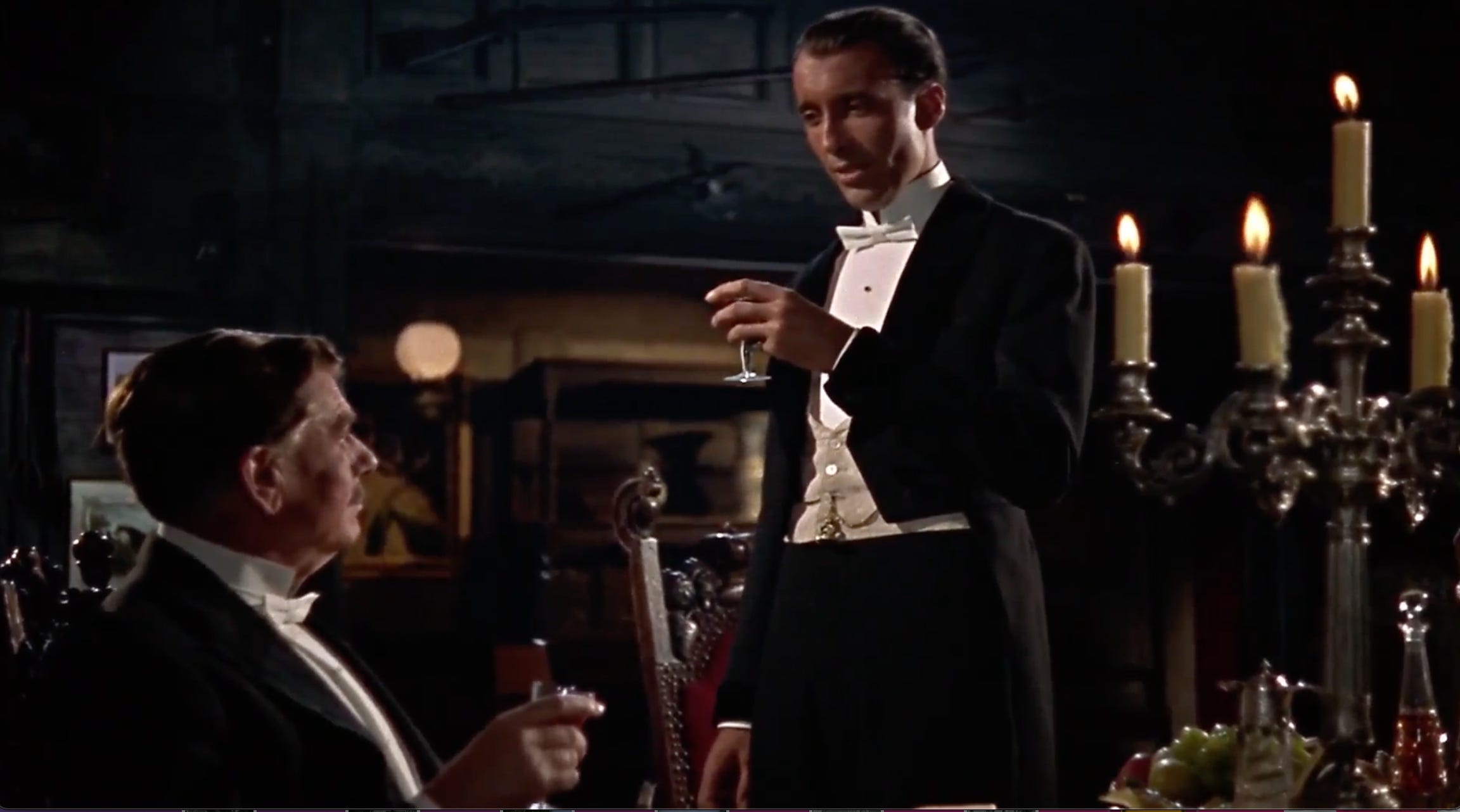
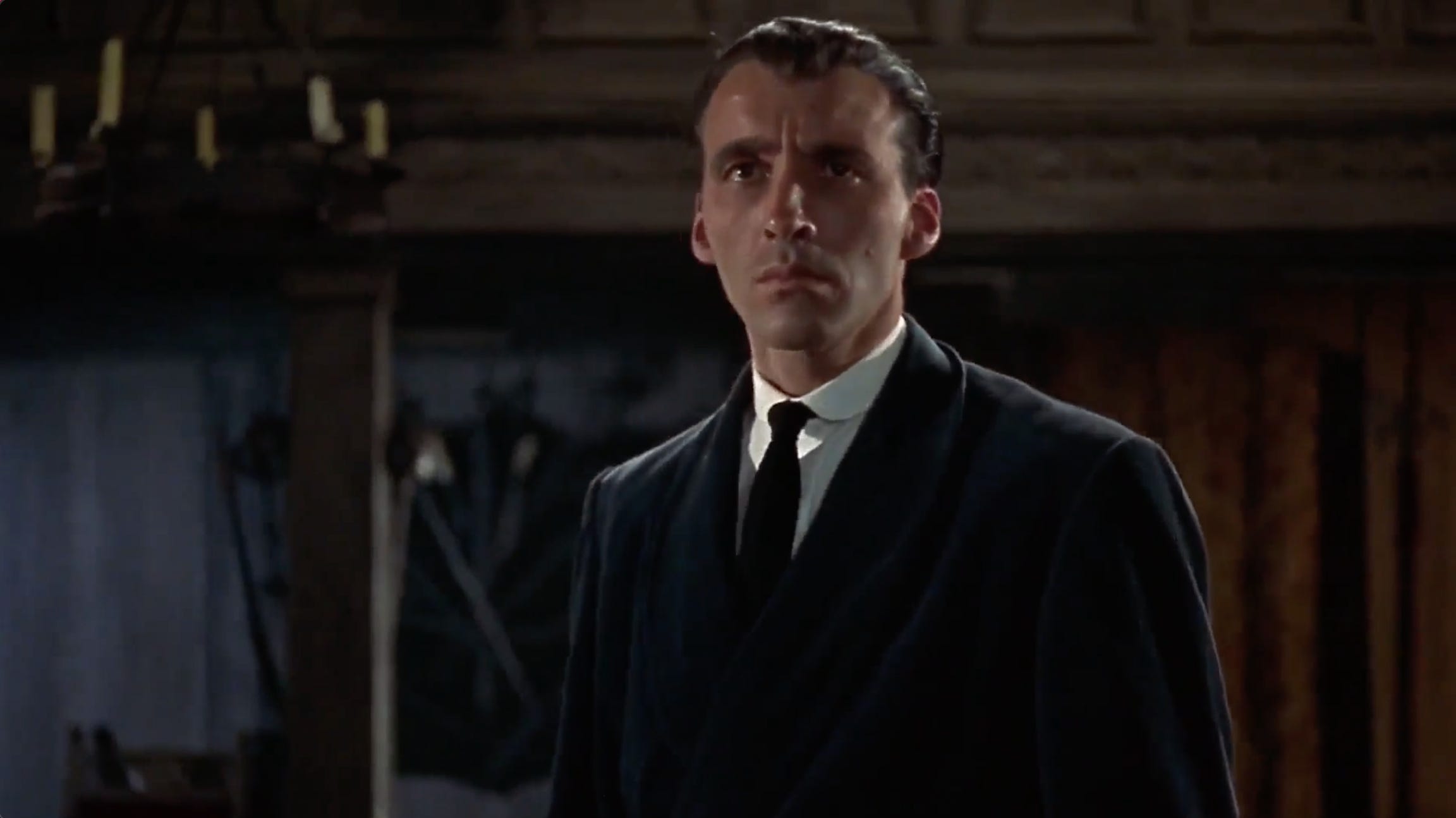
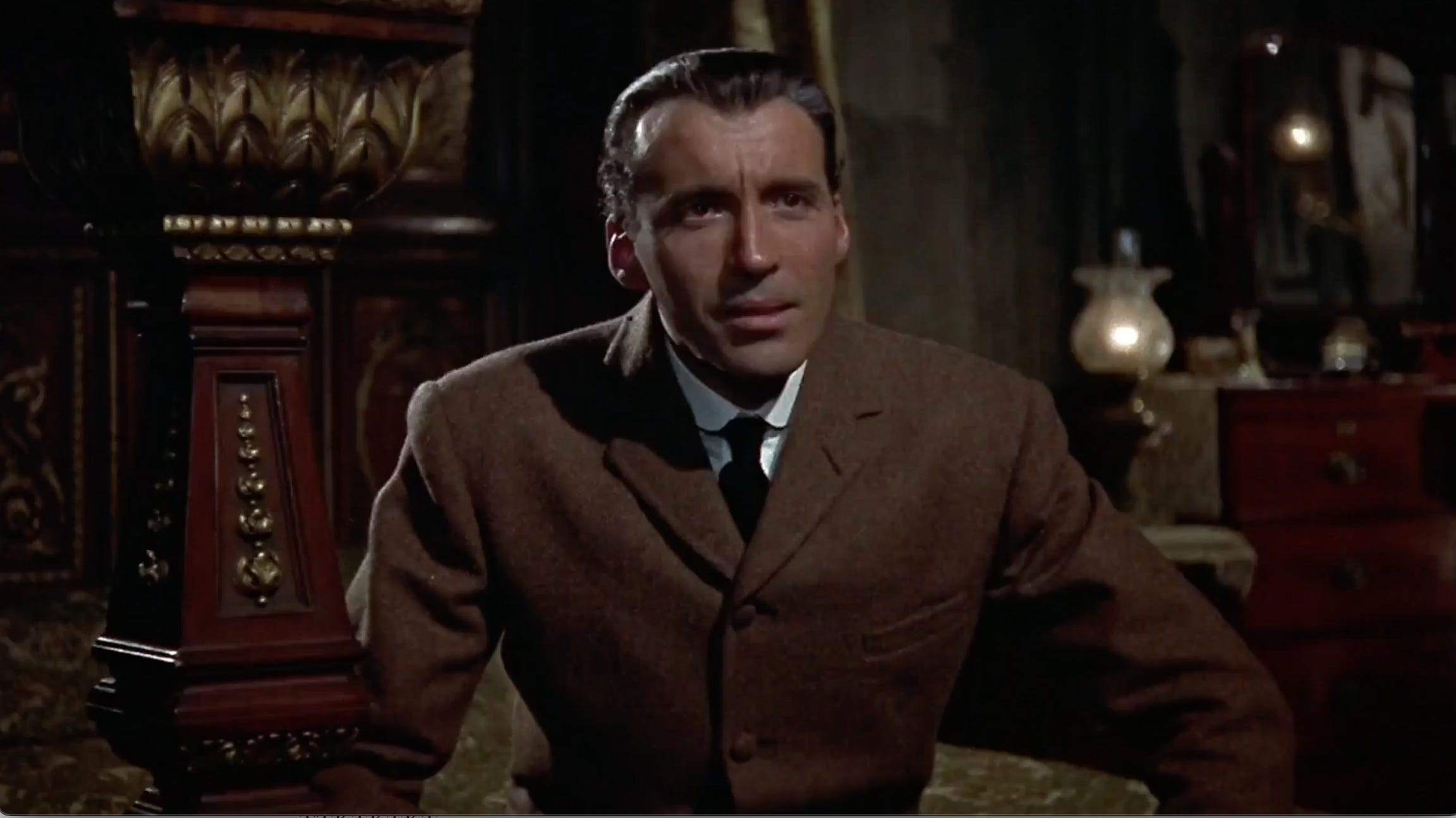
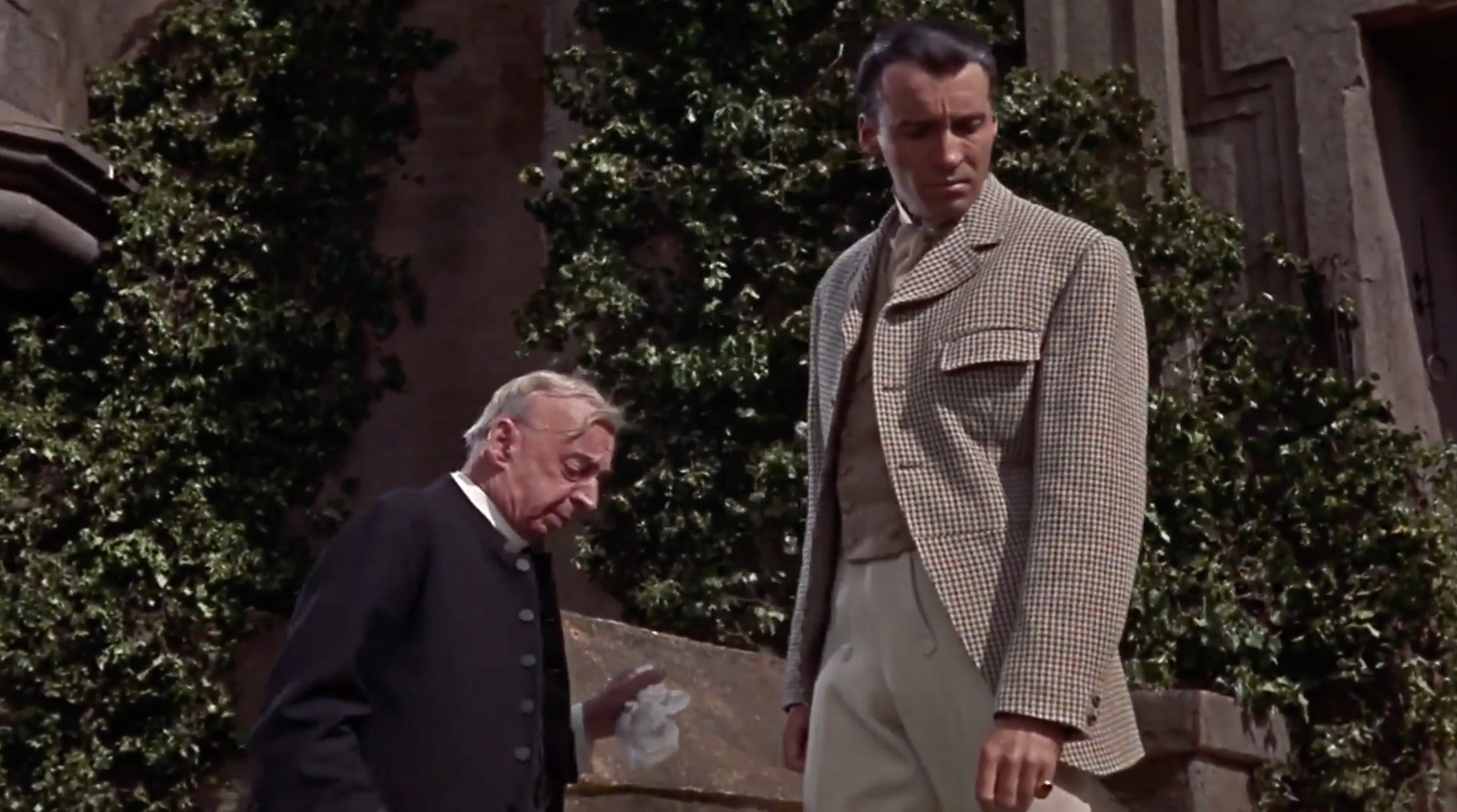
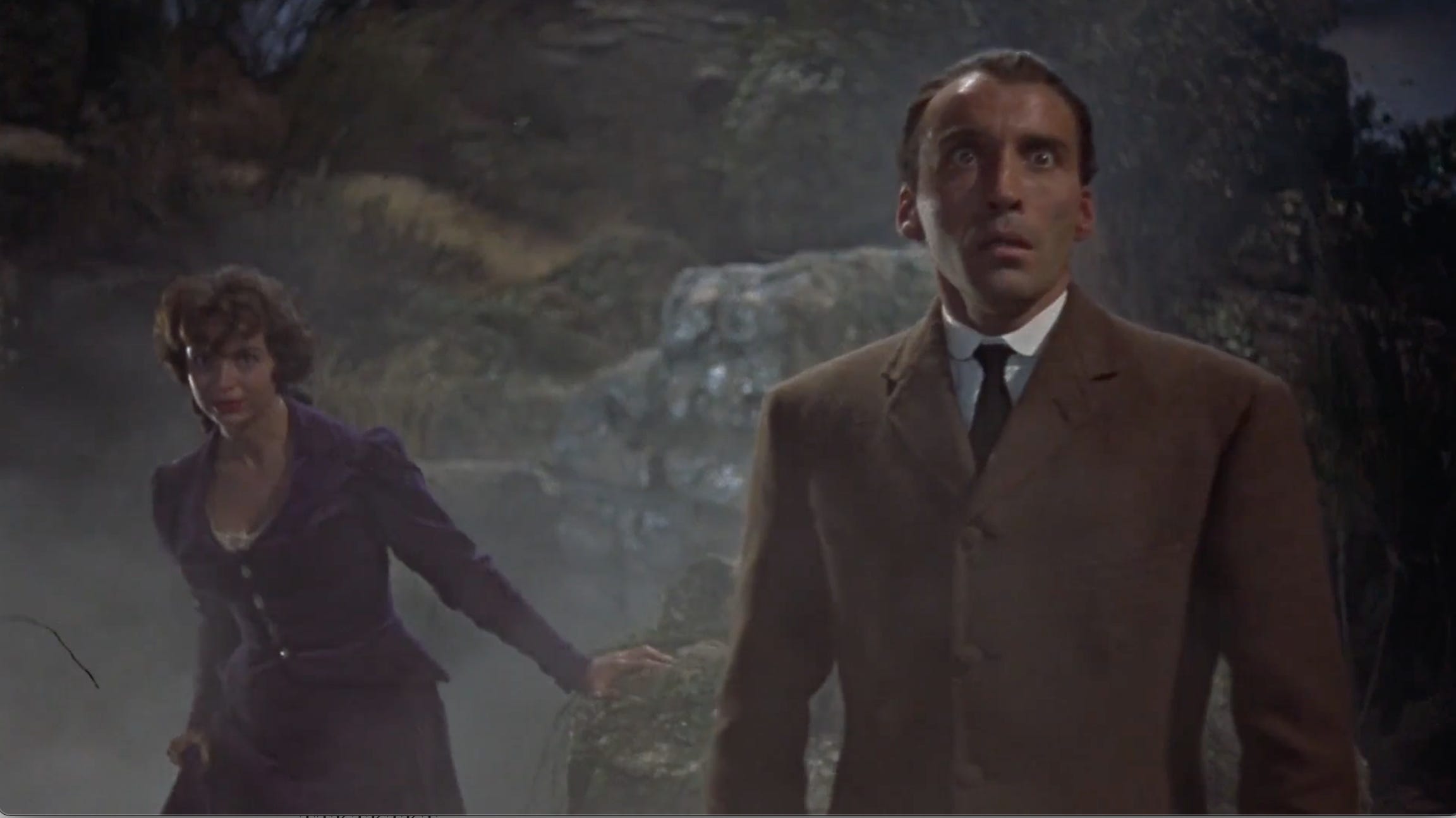
I’ll say. Having toyed with and, thankfully, abandoned the idea of sexing up Holmes (another bugbear of mine), Hammer allocated almost its entire horniness quota to Sir Henry, who strides around being devastating in a series of Mills and Boon cover-worthy outfits. We’re talking white tie and tails, a lovely midnight blue smoking jacket, several suits, another fancy dressing gown and, of course, this equestrian get-up.
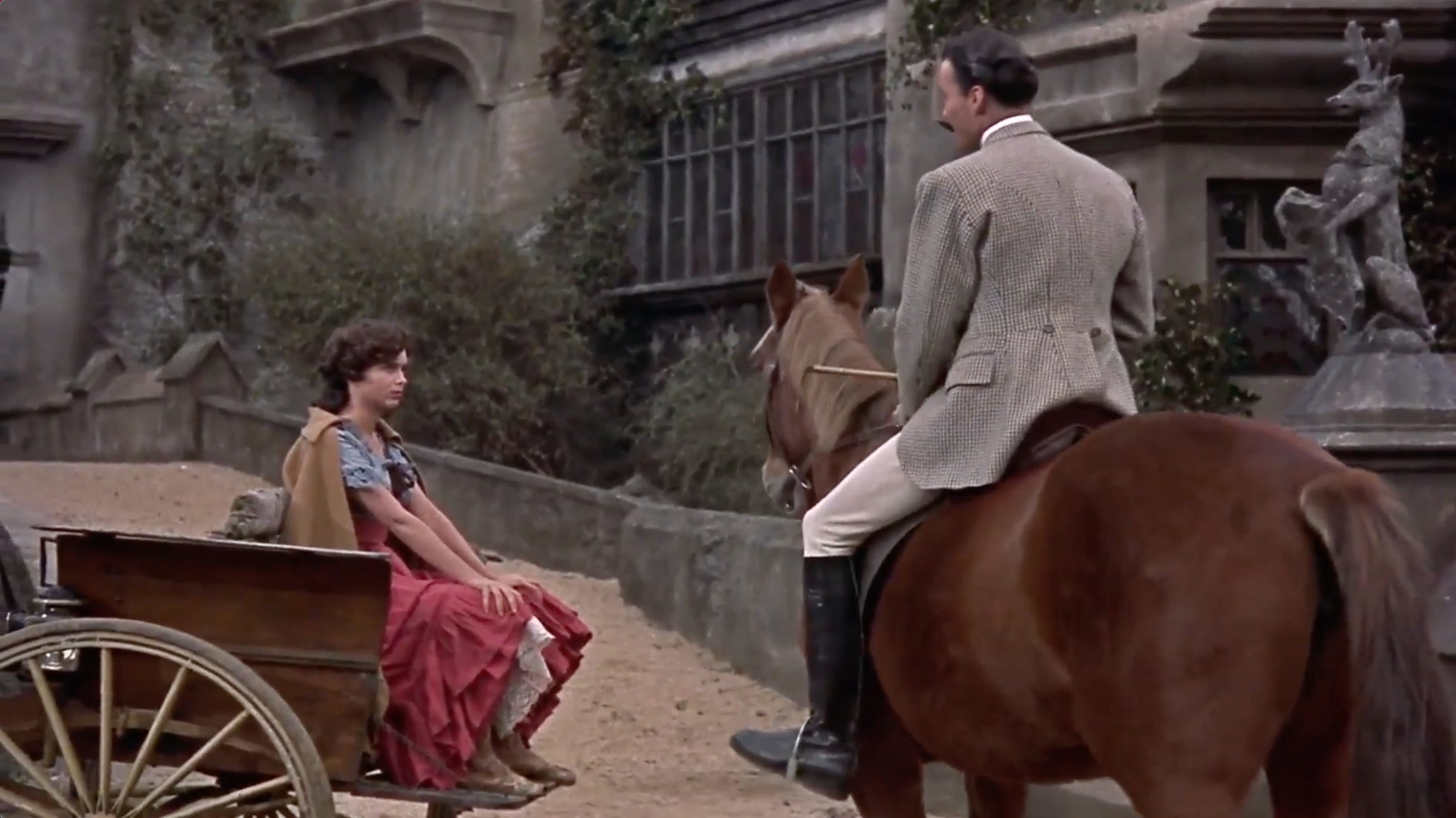
Look, I know I said I wasn’t going to do this, but I really do need to talk about the riding boots. Probably to someone with a medical degree, but you’re here now, sorry. There’s a bit where he steps into the shot and the camera tracks up from his feet which causes me to scream at the TV even now, after [number redacted] viewings. I watched The Hound of the Baskervilles long before I read any Jilly Cooper so I hold Hammer responsible for my enduring weakness viz men kitted out like this. You might think this is a non-issue given I live in London but you would be very wrong. Do you have any idea how many polo players pass through Clapham Junction? I also now have to go a different way to work in November because the local poppy seller is attached to the Household Cavalry and the last time our paths crossed I ended up giving him £50 (he had a card machine). And don’t even get me started on Hyde Park. It’s all very difficult.
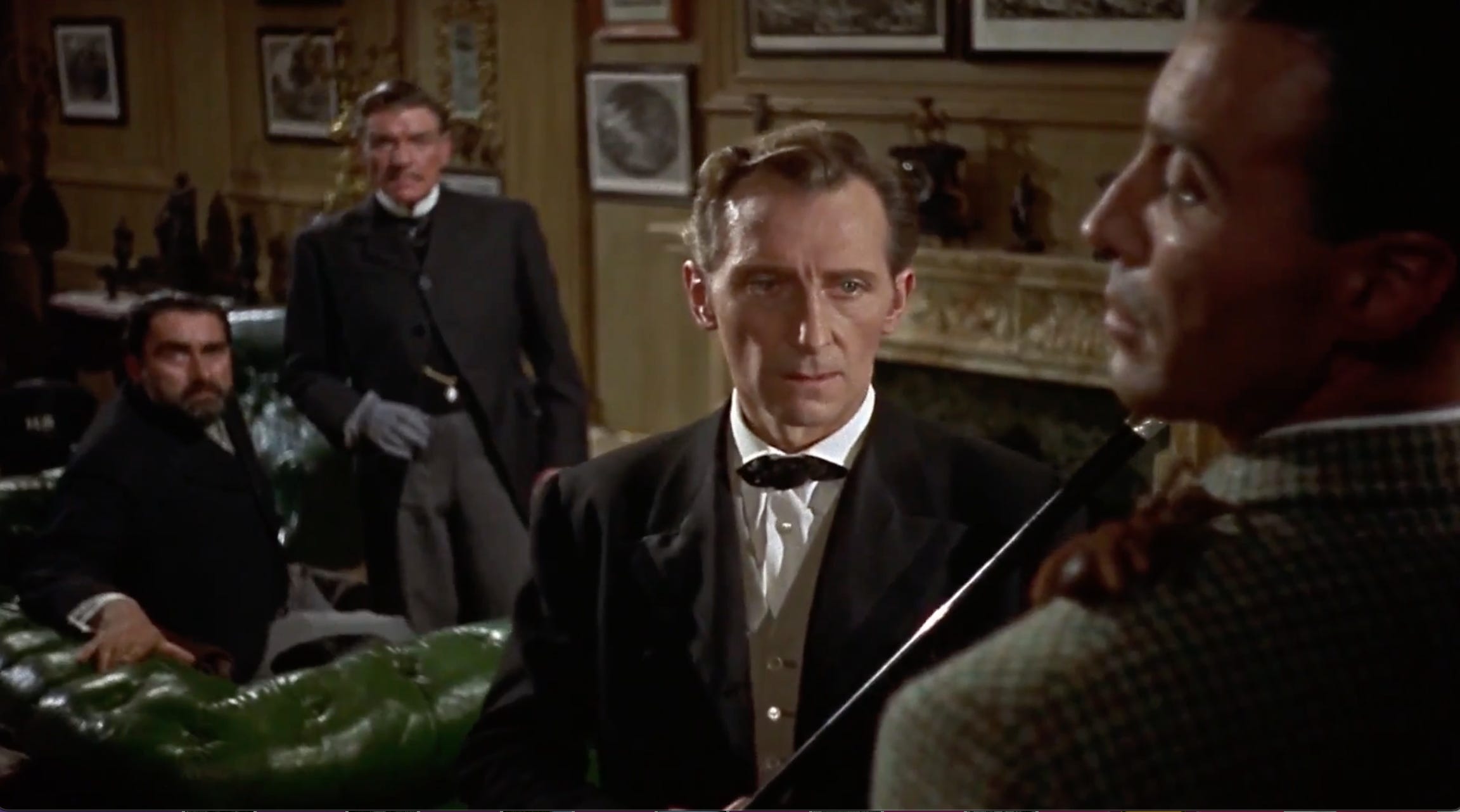
I’ll admit that ‘brooding toff’ probably wasn’t the biggest creative stretch, but watching this film you do get the sense that Dracula has been very good for our hero, giving him a much-needed confidence boost – he is, as they say, ‘owning it’. Poor old Sir Henry doesn’t have his troubles to seek, though. No sooner has he arrived in London en route to Dartmoor than someone steals one of his boots and hides a tarantula in the other one. His weak heart starts playing up. And once he gets to Baskerville Hall he can’t even indulge in a little light droit de seigneur without someone trying to kill him. The guy simply cannot catch a break!
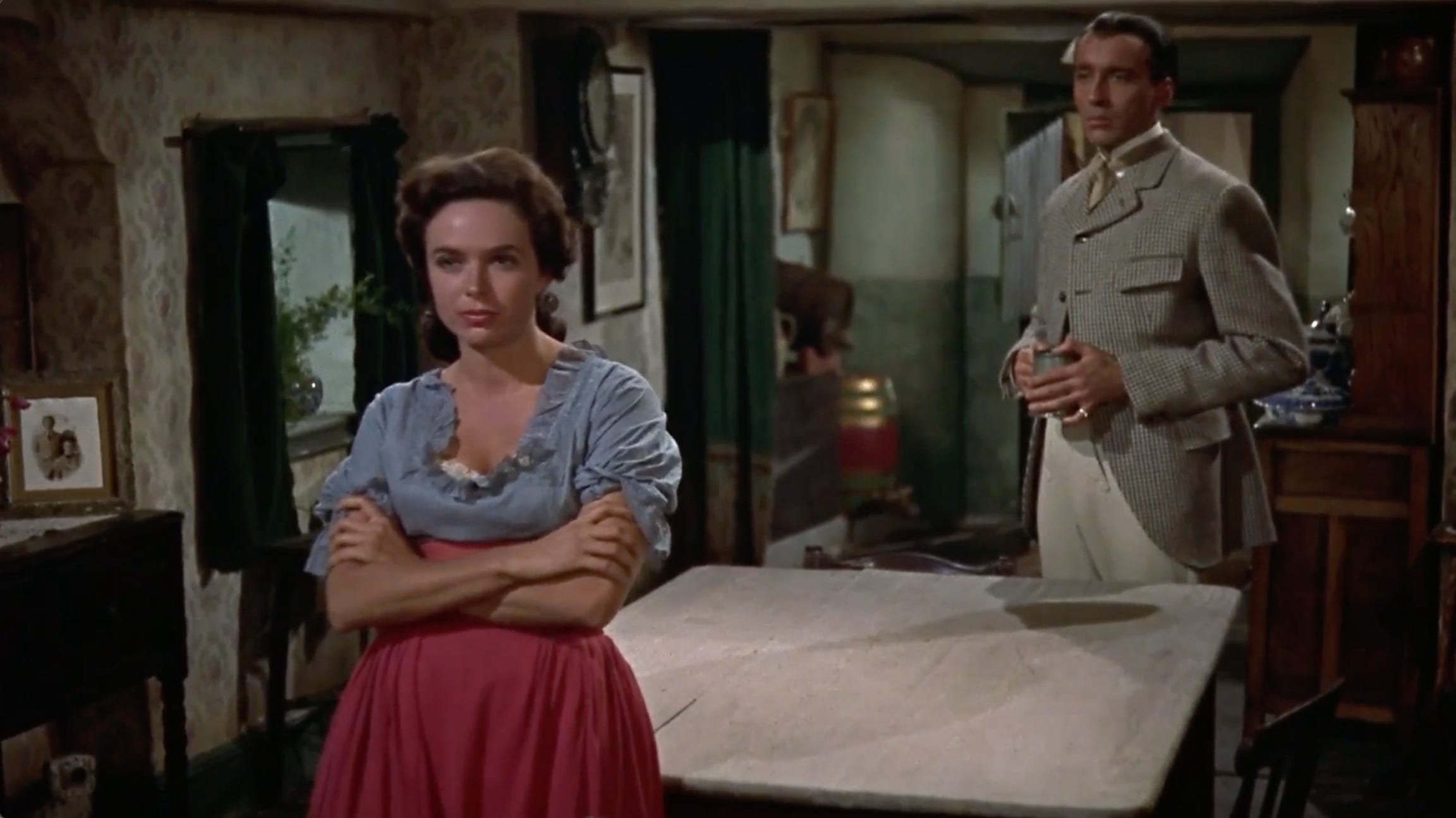
The woman who turns his head is Cecile – Beryl in the original story – the part-Spanish daughter of local wrong ‘un Stapleton, as opposed to his sister-slash-wife in the book. Someone at Hammer got wind of the fact that Beryl is described as having Costa Rican heritage and took that as a green light to cast Marla Landi, a drop-dead gorgeous former Norman Hartnell model and favourite of Princess Margaret’s. She was actually from Turin but this is Hammer, nobody cares about a little thing like the Mediterranean – apart from Christopher, who I’m sure was trying to practice his Italian between takes.
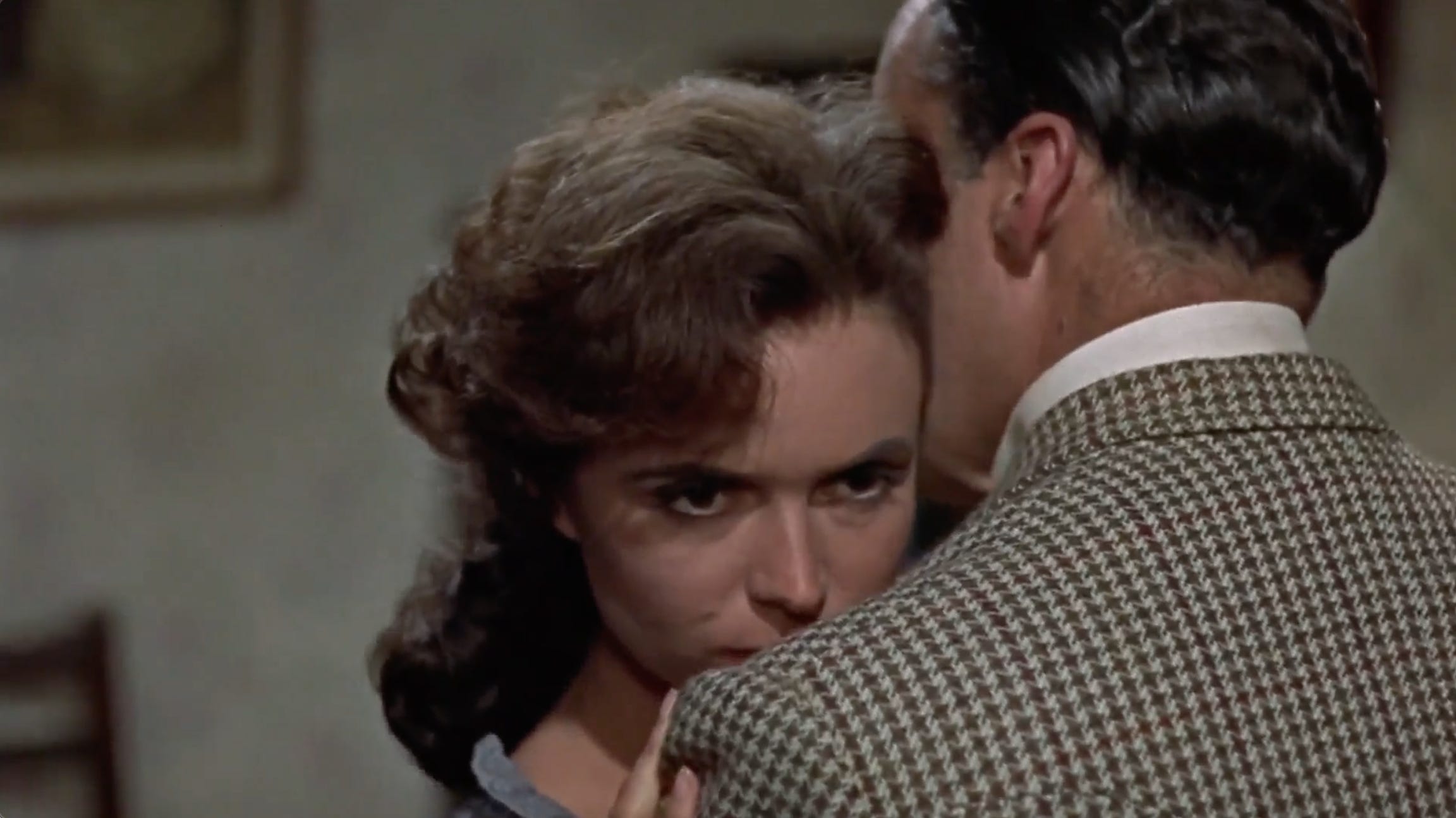
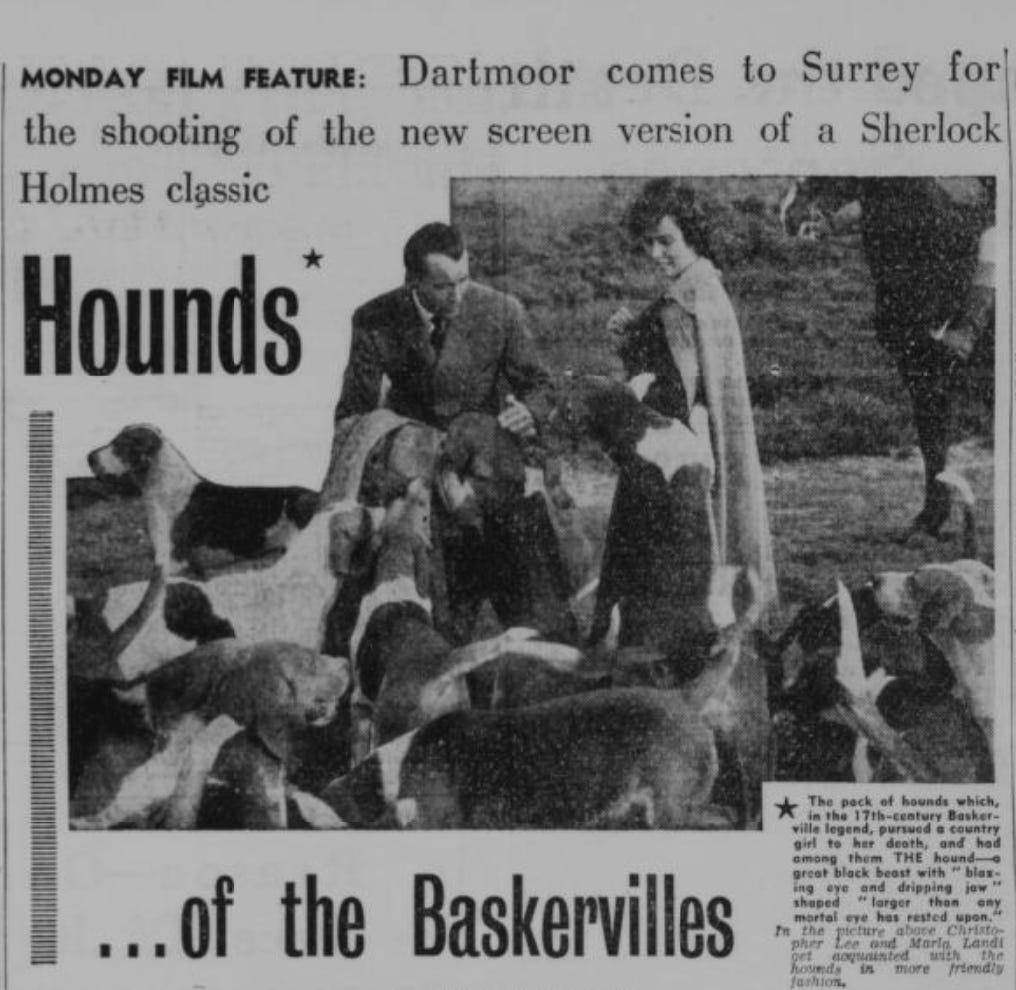
Like David Oxley, Landi isn’t given much to work with in the way of three-dimensional characterisation but she does a great, suitably unhinged job, and all the angry kissing made quite an impression on my younger self. She later became fashion editor of Harper’s Bazaar, presented Play School (?!?), launched a wig business and married Sir Francis Dashwood, a descendant of the peer of the same name whose Hellfire Club definitely inspired the prologue of The Hound of the Baskervilles. Here she is with Christopher and the pack; judging by her expression I don’t think she was quite as much of a dog-lover as him.
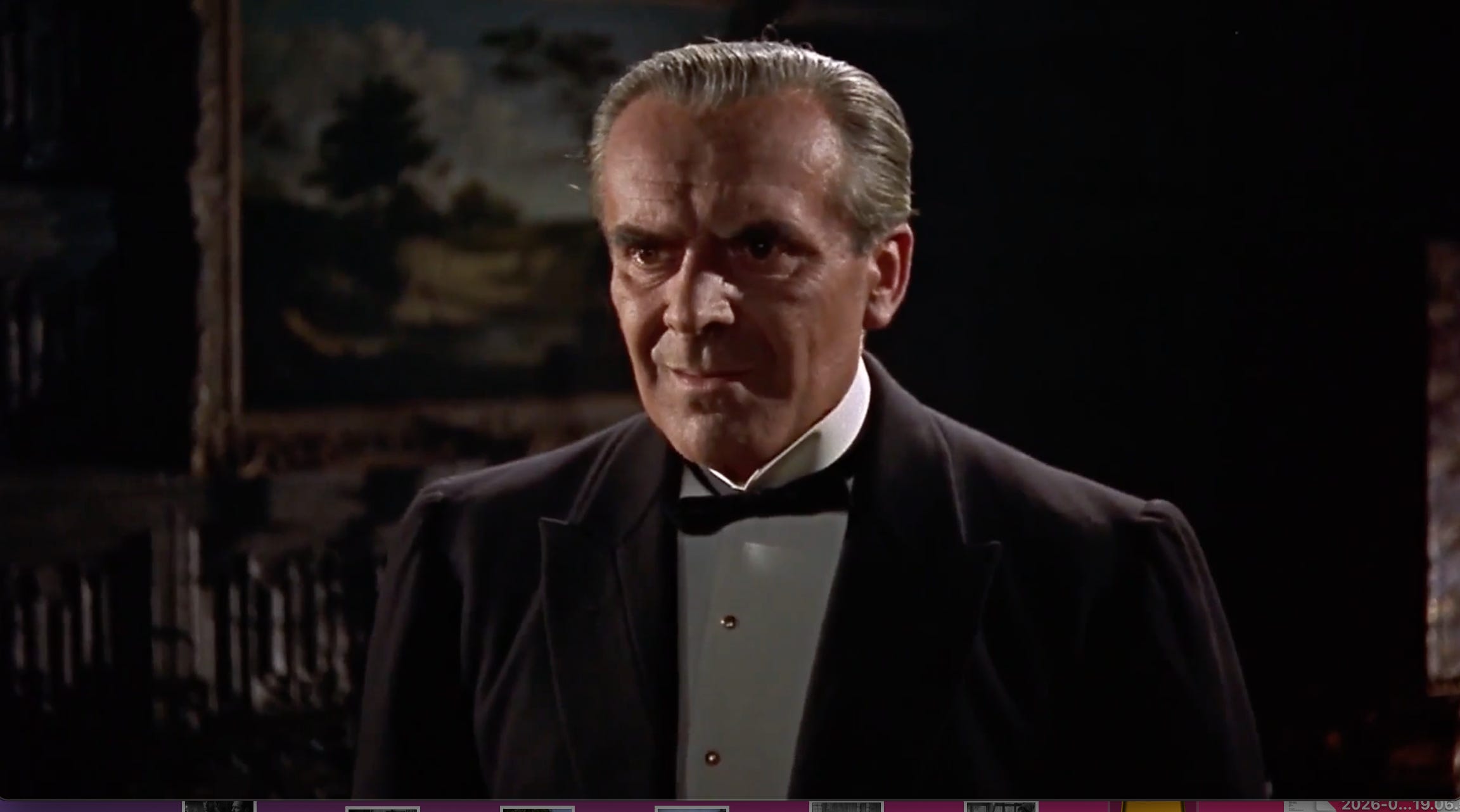
The supporting cast are all spot on, with the possible exception of Brian Blessed forerunner Francis de Wolff as Dr Mortimer, although he had clearly been instructed to play him sinisterly as a red herring so that isn’t really his fault. John Le Mesurier, last seen in Police Dog, is perfect as the faithful (or not-so faithful?) retainer Barrymore, and Miles Malleson steals every scene he’s in as Bishop Frankland. You can see everyone else trying desperately to keep a straight face when he turns up at Baskerville Hall on the scrounge for the parish bring-and-buy sale. He had actually met Conan Doyle: fifty years earlier, as captain of his school cricket team, he had played a visiting MCC side skippered by the author. (“A pretty good cricketer,” he told the Portsmouth Evening News.)
Ever since the first screen adaptation of The Hound of the Baskerville (a 1921 silent film starring Eille Norwood, whose portrayal Conan Doyle himself rated), filmmakers have had to grapple with The Problem of The Hound. How can you make it as scary as it need to be? Of all the production companies, Hammer would surely be equal to the task. “You can expect a big horrible dog,” Picturegoer reported, followed by a lot of breathlessness about how colour would make it even more terrifying.
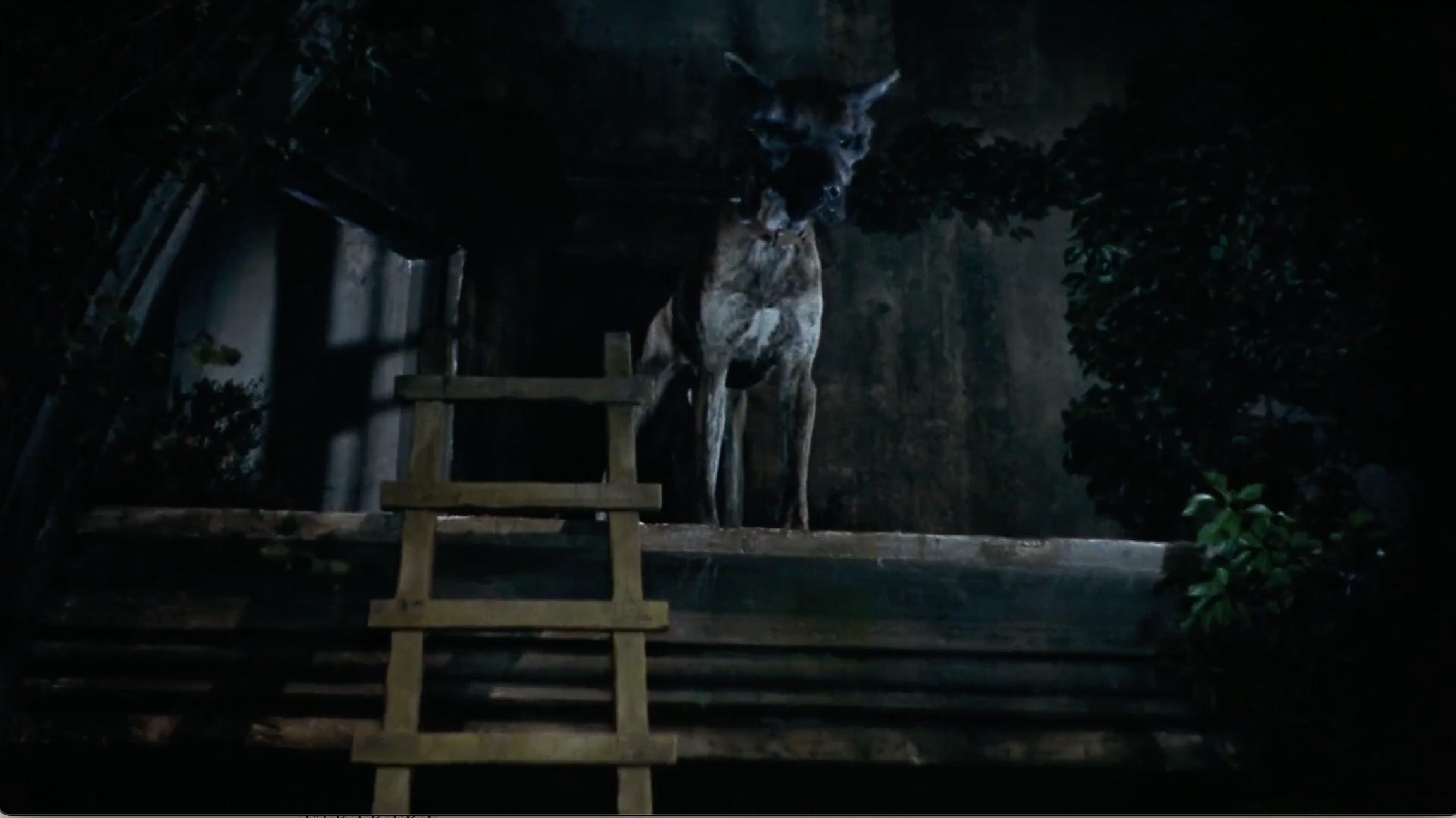
The end result was, unfortunately, all gong and no dinner. Hammer rang round various breeders and even Crufts trying to source a suitably massive beast, with no luck. Eventually they managed to borrow a Great Dane called Colonel but according to Christopher ‘after he had been on the set six weeks he was so amiable, so acclimatised and so stuffed to the gunnels that he was a non-starter as a hound of hell’. He also just… didn’t look very big next to a giant. The team went to extraordinary lengths to try to get round this, as Peter Cushing later remembered:
Sid Pearson the special effects man had the idea of trying to give the illusion that it was enormous by putting it in a mask and dressing up three small boys as Christopher Lee, André Morell and myself to be filmed in long shot. He built a sized-down section of the moor, covered it with dry ice to simulate fog, and threw a piece of meat into the middle as the cameras started rolling. The next day we saw the rushes. They seemed just like what they were: comical - three small boys playing a kind of charade while a hungry dog gnawed on its bone.
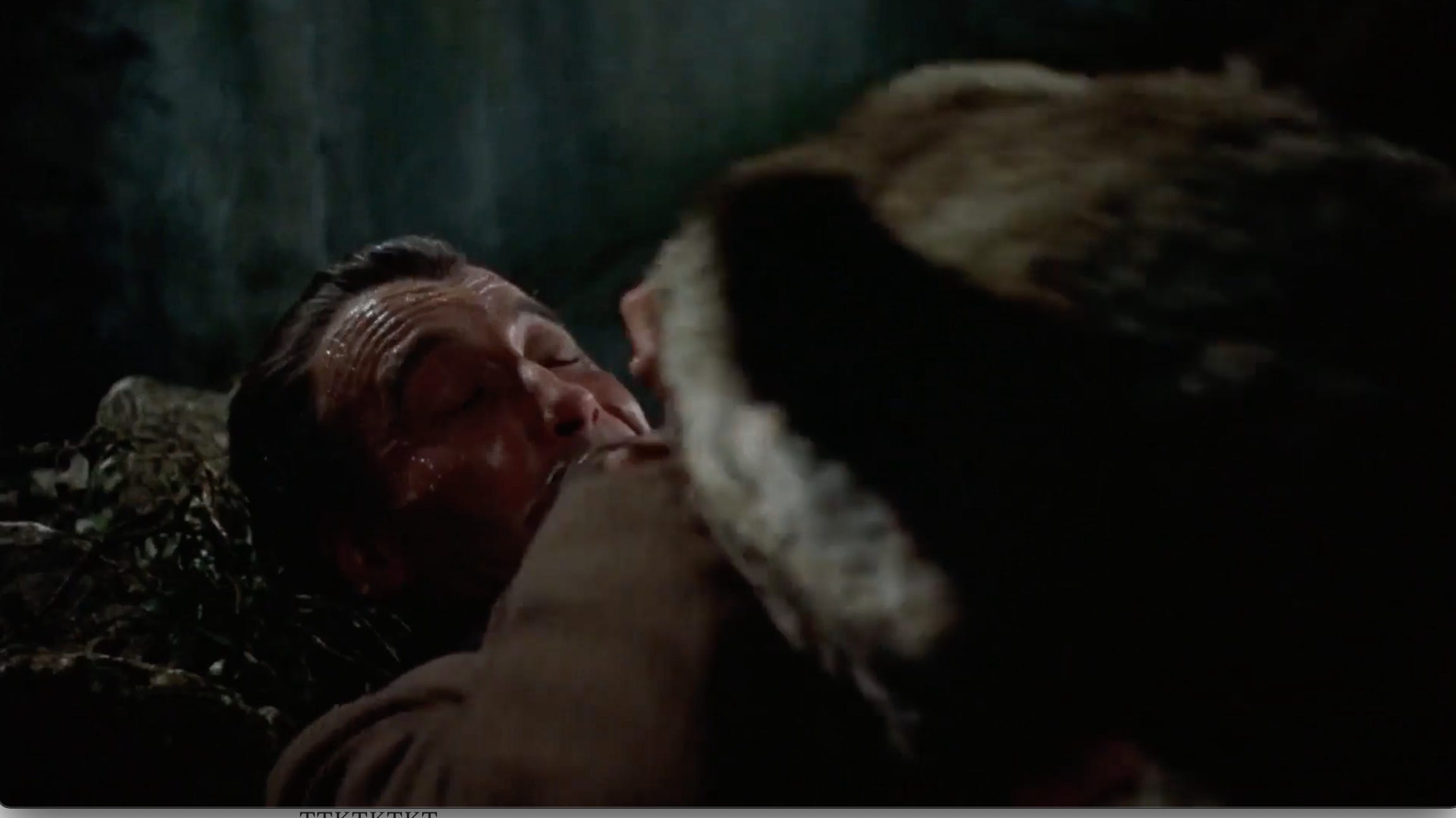
There was nothing for it but to not give Colonel his tea, stuff Christopher’s suit pockets with food and hope for the best. The dog belatedly entered into the spirit of things and did in fact draw blood, for which I’m sure he was very sorry.
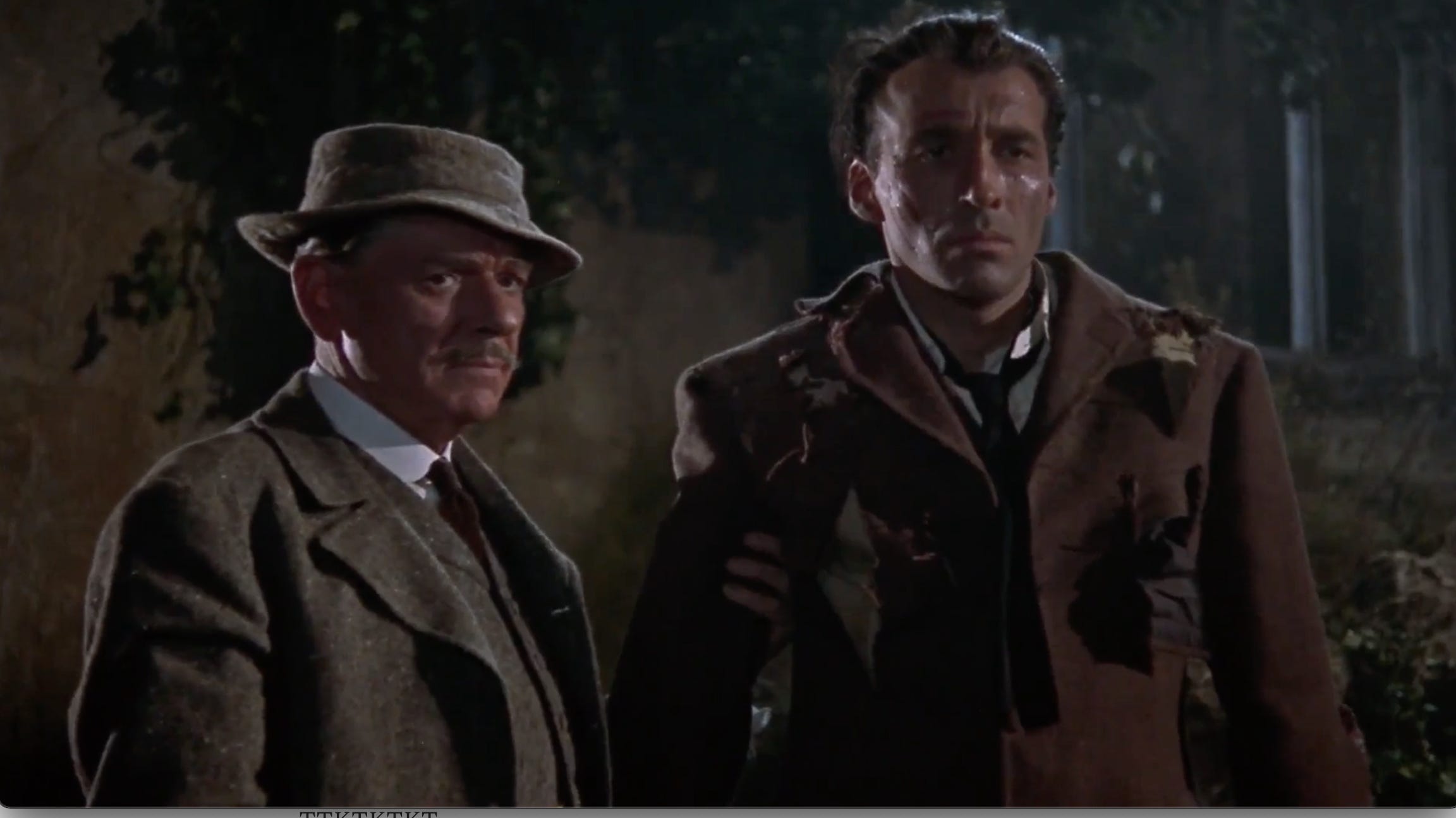
Poor old Sir Henry is last seen being helped back to Baskerville Hall by Holmes and Watson. All’s well that (sort of) ends well…? To me this is the quintessential rainy Sunday film: cheerful, undemanding fun saved from being truly daft by a quality script, great costumes and classy performances. The whole thing is on Youtube and I strongly encourage you to stick it on this evening.
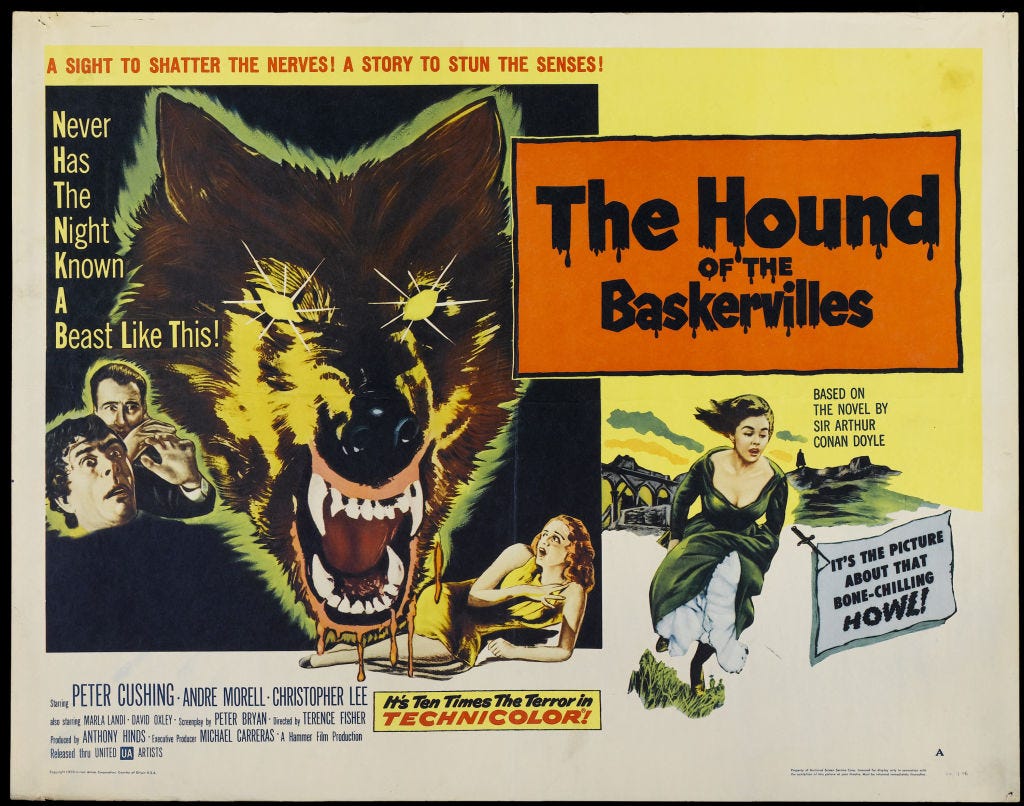
Despite being billed as ‘A Story To Stun The Senses!’, The Hound of the Baskervilles only got an A certificate from the BBFC, meaning that anyone under the age of 16 had to be accompanied by an adult. This must have been disappointing; an X was better for business.
Undaunted, Hammer launched a competition for cinema managers to create the most blood-chilling publicity campaign for the film, and its PR team continued sending the usual guff to the papers, including a made-up story3 that Peter Cushing had been a non-smoker before playing Holmes but was now burning through two ounces of tobacco a day. A special tie-in paperback was also released by John Murray (plenty of which are still floating around on the internet if anyone would like to get me a belated birthday present, ahem).
The Hound of the Baskervilles had its premiere on Friday, March 27, 1959, at the London Pavilion, which is no longer a cinema but which you can still see on the corner of Shaftesbury Avenue and Coventry Street. Some of the early reviews were positive.
“Stands up very well,” said the Daily Mirror, commending its “atmosphere and thrills” despite some parts feeling “very elementary” (ho ho!). “Not for years has there been such a good old-fashioned (in the best use of the term) thriller,” gushed the West London Observer, whose reviewer went on to say that “the big surprise is Christopher Lee who, released from monster roles, plays Sir Henry Baskerville with a charm and assurance that recalls the young James Mason” (they said it, not me!)
Most of them, though, were lukewarm. The Daily Express called the film “a merry little romp”, which I don’t think will have gone down well, praising Peter Cushing for doing his best with “soggy material”. “Loses some of its eerie power,” sighed the Sunday Express, reflecting on the film’s “thin-blooded horror and remarkably undersized hound”. The Daily Herald agreed that the hound itself was “a bit of a disappointment”. The Manchester Evening News’s anonymous critic lamented the fact that the story seemed to have been adapted “with humour rather than horror”.
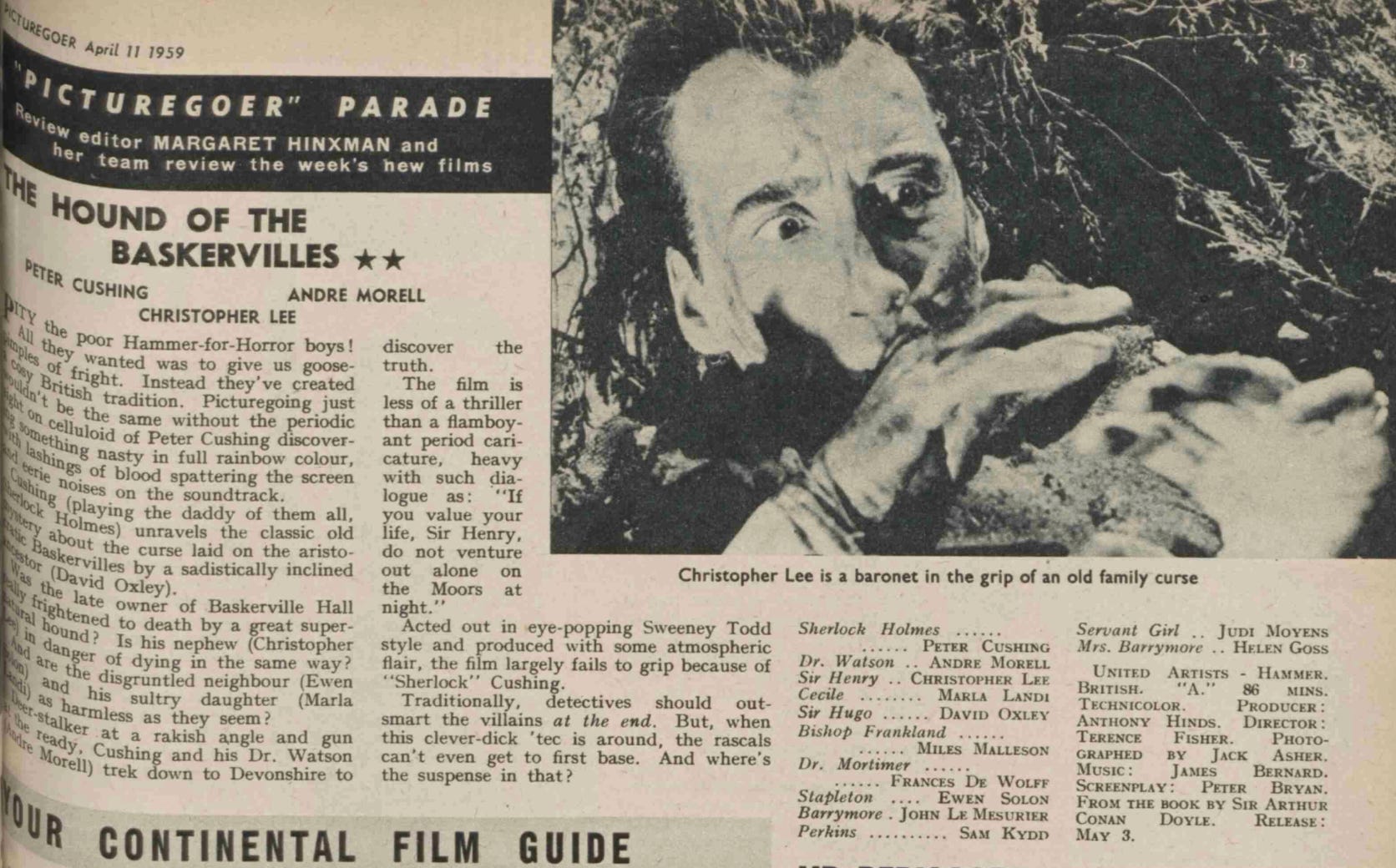
Even Picturegoer only gave the film two stars, calling it “less of a thriller than a flamboyant period caricature”. Sarah Stoddart seems not to have been allowed to write the review but I suspect she had a hand in choosing the photo from the pack of stills sent in by Hammer. (“I just think it’s the best picture!!!!” I imagine her protesting as tears of laughter rolled down the Art Editor’s face.)
The Hound of the Baskervilles did respectably at the box office, but ultimately people wanted and expected a Hammer film to have a proper monster in it. There was another problem, too, which the Manchester Evening News’s reviewer put his or her finger on. “Doyle was such a master of the narrative art that every word he chose was full of awful suspense. And pictures that show a lot of red paint scattered around are nothing like so horrible as the things you can imagine for yourself.”
So Kenneth Hyman’s planned sequels never happened: some say the Conan Doyle estate wasn’t happy with all the bodice-ripping and refused permission, others that Hammer had realised there just wasn’t going to be enough money in them. Even more tragically, this would be Christopher’s first and, as far as I can gather, only time playing a romantic hero, which I’m sure we can agree is a terrible loss to me film history. I really think he could have been brilliant in period dramas – I for one would have waded through Grimpen Mire to see him play a character like Mr Rochester.
What’s that? You think he would have made a good Sherlock Holmes too? Well, it’s funny you should say that, because… But let’s not get ahead of ourselves. I’ll see you all next time – after you’ve watched The Hound of the Baskervilles.
Rating: one million out of ten, thank you, no questions
Next time on The Christopher Lee Project: The Man Who Could Cheat Death
This was Hammer stuntman David Birks performing his hundredth spill. He had recently been called on to fall 150ft from a church spire in 1957 tennis murder mystery Town On Trial.
Morell had made one previous Hammer film, 1957’s notably graphic and unpleasant Japanese PoW campsploitation flick The Camp on Blood Island.
I can definitively prove that this was a fib because in a later interview Cushing talked about having to buy a set of Turf’s ‘Conan Doyle Characters’ cigarette cards before filming began “as Turf was not my favourite brand”, indicating that he had one; just call me Sherlock Hughes.
This was outstanding. Thank you.
To quote Basil Fawlty, "Just my way of getting through the day, dear. The Samaritans were engaged."