
#7 Ooh, it gets dark
Pirates, painters and a *very* early glimpse of fangs. Plus, inevitably, Wuthering Heights

Welcome back to The Christopher Lee Project, in which I spend a year tracking down every film made by Christopher Lee and watching them all. I’m Emma Hughes: a journalist, an author, and my first celebrity crush was Scar from The Lion King.
Life has imitated art this week: Christopher is out of contract, and so am I. My current, brilliant role at a wonderful magazine is a year-long deal, and my time there, very sadly, is almost up. I now feel even greater sympathy for our hero’s post-Rank predicament: as we enter Week Seven he is traipsing to auditions and gritting his teeth when the umpteenth director asks what the weather’s like up there, while I am jamming the word ‘optimisation’ into my CV and being cheerfully informed that AI will have made me obsolete in a few years. (To which I say: could an AI do THIS?)
Three films this week. Full disclosure: none of them are what you would traditionally call, um, good. One, however, is… well, you’ll see. These would all have been a real mission to find were it not for one of the exciting developments I mentioned last time, which is that a few weeks ago a collector of old films got in touch offering to help me out. The person responsible is publicity shy and has asked to remain anonymous but I am very grateful indeed to them – and to all of you who have liked, shared and messaged me about these posts, and the audio.
Onwards to glory!
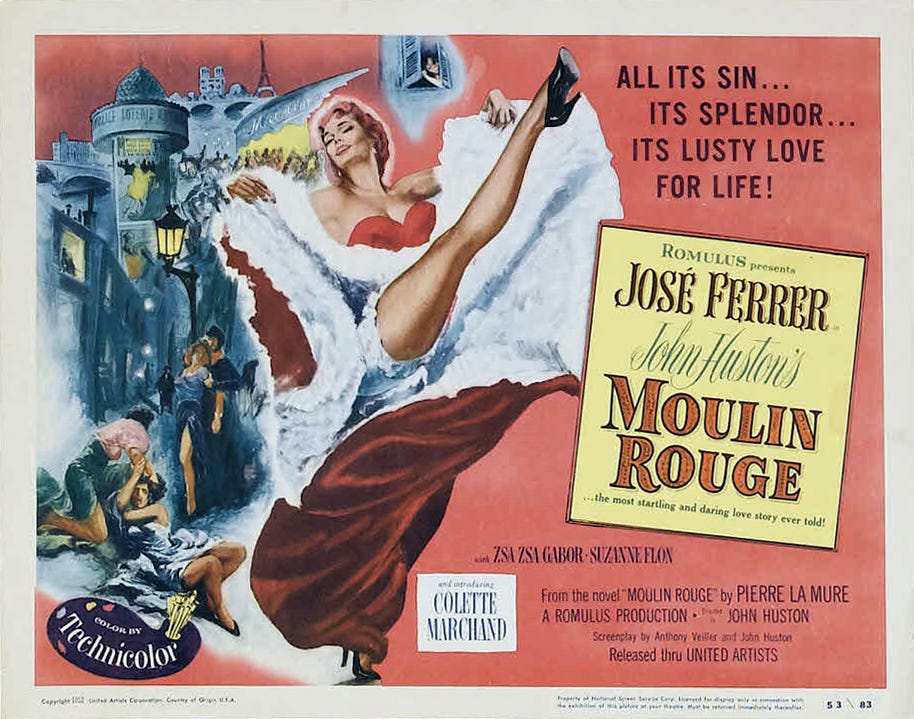
13) Moulin Rouge (1952)
I want to tell you about a very long, very expensive film made by a famous director I saw this week. It polarised the critics: a few were impressed by its visuals, but most found it boring, pretentious and silly. There was a lot of chat before it came out about how sexy it was, but personally I’ve had more erotic journeys on the Northern Line.
I also watched 1952’s Moulin Rouge. BA DUM TISH.
There are plenty of bold retellings I will go to war for, including the frankly outrageous Hammer Hound of the Baskervilles, which is carved on my soul. Another of my all-time favourite films is Secretary, which diverges radically from the Mary Gaitskill short story that inspired it (which I also love). And I absolutely adored Emily, the bodice-ripping 2022 Brontë biopic (which is on iPlayer right now). It would also, frankly, be a bit hypocritical of me to get properly stuck into a former boarding school girl for building a crazy multimedia monument to a guy she thinks is dishy because… er, well, look around you.
But even on its own terms – let’s call it Twilight: Breaking Moors – for me Wuthering Heights just doesn’t work. A disturbing and ambiguous ghost story has been reduced to the live-action Feeld profile of a couple who met in a 1Rebel spin class and think they’re edgy because they once went to Torture Garden in his-and-hers harnesses from Coco de Mer. Not shocking, not sexy (it’s striking how incredibly un-sexy it is), just… meh. A two-and-a-half hour-long perfume advert with some Just William-esque pranks involving eggs. Like Saltburn this struck me as a glossy but fundamentally incoherent and hollow film with a talented cast doing their absolute best to wring out some genuine emotion. Whole sections reminded me of nothing so much as the video for Rex Manning’s ‘Say No More Mon Amour’ from Empire Records.
In terms of the politics, for me the issue is not just that it has a very different message to the book in terms of class and racial ‘otherness’, it’s that it actively contradicts it, by design or otherwise. There’s a lot of excellent writing doing the rounds at the moment unpicking this much more eloquently: I enjoyed this by Rhiannon Lucy Cosslett in the Guardian and Heather Parry’s superb essay here.
Both Wuthering Heights and Moulin Rouge – the film I am meant to be writing about, sorry – are guilty of something which really grinds my gears: being told repeatedly and loudly by the promotional material for a book, film, album &c WHAT I MUST AND WILL FEEL. What can I say, I don’t love the whole end-stage capitalism vibe of our emotional repertoires being yanked out of our chests and sold back to us in wilfully stupid flat-packed form! I’m funny like that! (Side note: there is a ‘sexy’ underwear collection being marketed off the back of Wuthering Heights, an adaptation of a book in which the male lead murders his wife-to-be’s dog).
I tend to think of being expected to fall into zombie-step behind the marketing juggernaut as a modern ill, but actually it isn’t at all, as I discovered when I watched some trailers for Moulin Rouge and looked at the cinema posters. A representative sample tag line was ‘The Film That Has The Whole World Talking – And Blushing!’ I do not believe anyone actually thought or said this; reviewers at the time called it “long”, “pretentious”, “deadly” and “two hours of innate boredom”. As for it being titillating, it was made not long after the end of the Second World War, during which a lot of people, famously, had (in relative terms) a lot of sex. If you’d had a grand old time playing human pass-the-parcel in the blackout I’m not sure a few glimpses of some can-can dancers’ 100 denier opaques would really have got you going.
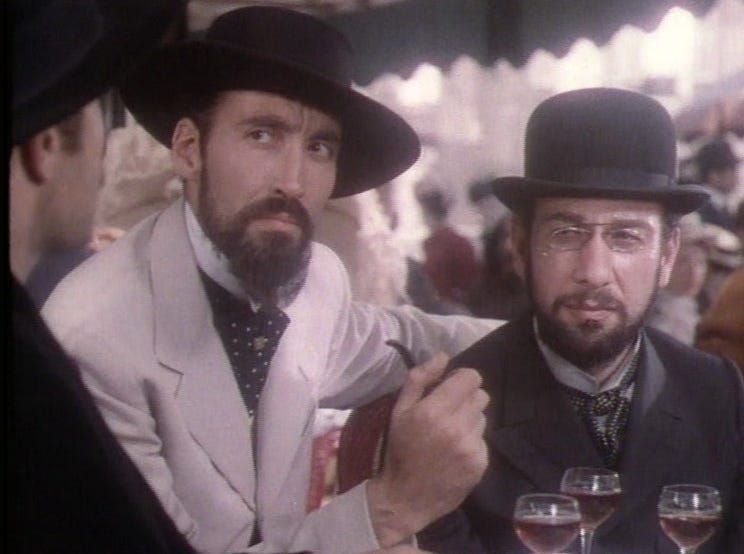
Christopher appears very briefly as the Pointilist painter Georges Seurat. He has a beard. I am generally very pro beard but not in this case; it feels superfluous, like putting tinsel on the Shard. I’m afraid I do not have anything more penetrating to say about his performance in Moulin Rouge; I have lost grey matter this week which I will never get back.
Rating: 2/10
14) The Crimson Pirate (1952)
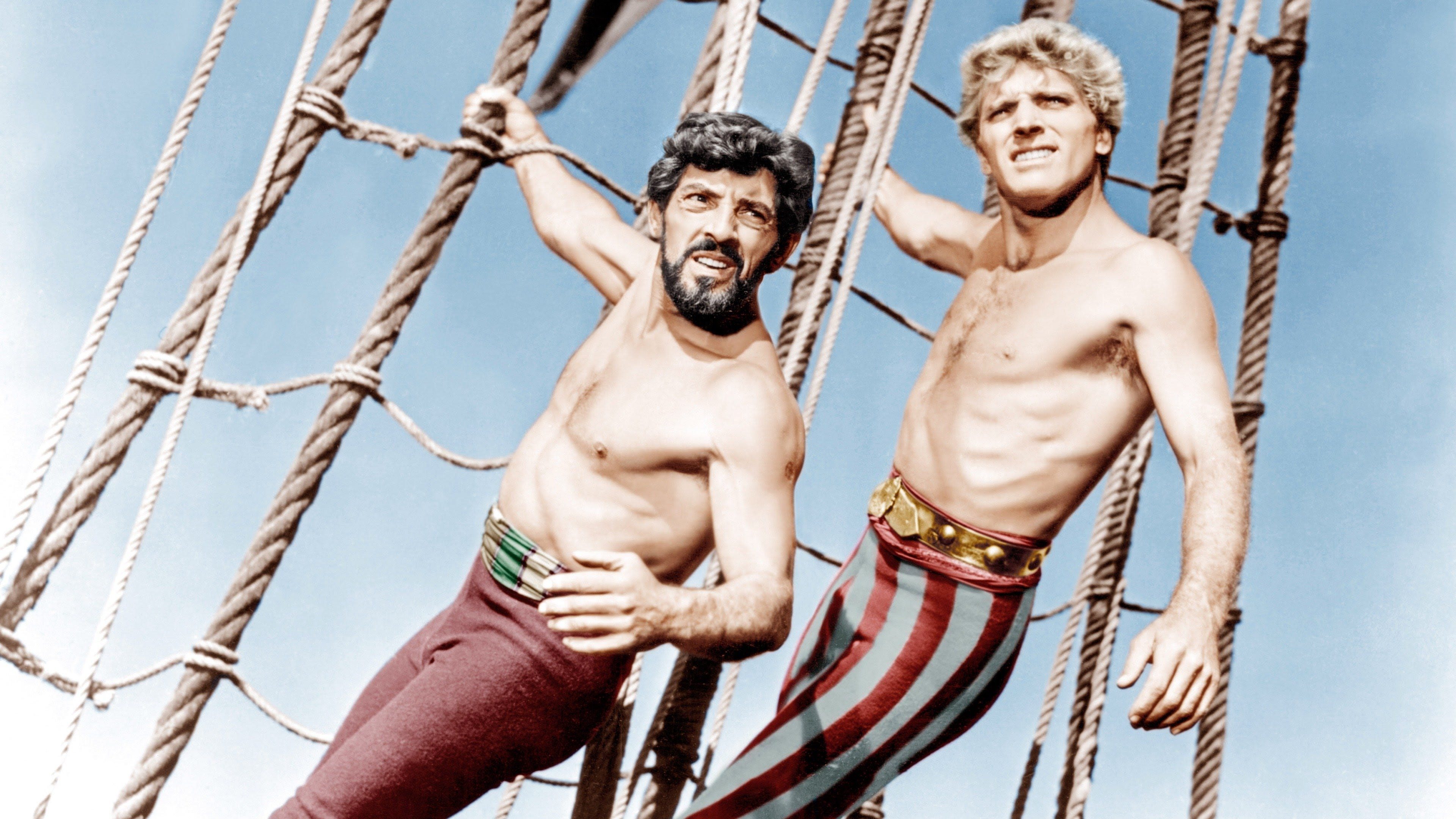
A high seas adventure, filmed in the Bay of Naples and starring Burt Lancaster (right). I’m leading with a still rather than the poster so you can see his teeth, although it does not do them justice. They are blinding. I had no idea teeth like this even existed in the 1950s. I cannot stress enough how alarming they look in Technicolour.
Due to now having a brain which is completely smooth I brought in reinforcements for The Crimson Pirate: my friend J, who accepted an invitation to dinner at mine not realising this was going to be the digestif. “Is it... a children’s film?” has asked tentatively as we watched Burt and his sidekick do perfectly synchronised Super Mario tricks after infiltrating the baddies’ fortress. We consulted Wikipedia; it turns out Burt Lancaster had actually been a professional acrobat and the film was conceived of as a showcase for his skills.
A character we christened Jim Exposition did extensive scene-setting in a shaky “avast me hearties!” pirate accent. Back to Wikipedia; said accent had been codified two years earlier in Treasure Island, so was still in its cinematic infancy. Main-braces were spliced, timbers were shivered, grog was taken. Finally, Christopher appeared, still with beard and playing a military factotum called Joseph. All the velvet must have been a real ordeal under the Italian sun.
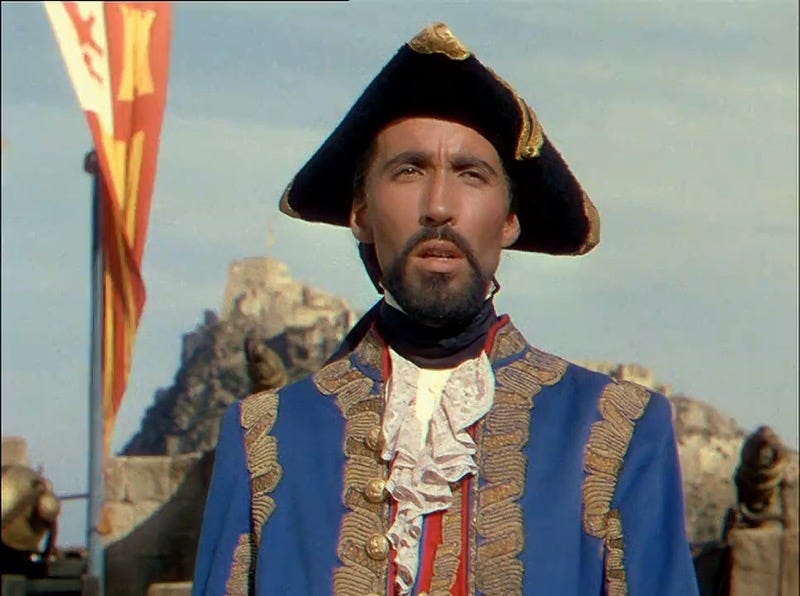
This film is almost two hours long, emphasis on long. There is no tension, no humour, no subtext, no text, no nothing apart from the aforementioned tumble turns. Even Christopher duelling couldn’t stop me wanting to look at my phone. J and I collectively lost the will an hour in. “Now we know where the budget went,” he said sadly as we watched a montage of people building a hot air balloon before sneaking into a parade in drag. We double-speeded the final half hour with a mixture of guilt and relief. My main takeaway from all of this is that I was probably a bit hard on Hornblower.
Rating: 1/10
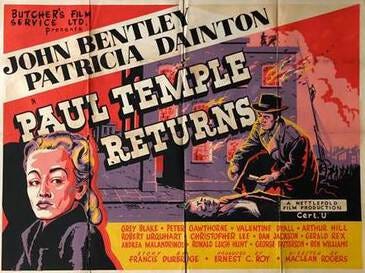
15) Paul Temple Returns (1952)
I’ve really been trying not to read up on the films before I watch them, but my curiosity was piqued here – where is Paul Temple returning from? – so I did do a bit of digging. Off the back of that I went into this feeling confident that I was going to tell you about its relationship to a phenomenon I’ll call ‘What Do We Do With All The Officers?’
The Second World War ending left writers of a certain stripe in a bit of a bind: they weren’t sure what to do with the very bankable officer types they’d been getting so much milage out of. Some of them kept on writing war stories, for which there continued (and continues) to be a market, while other re-cast the same sort of male figure – cool under fire, morally incorruptible, handsome but not effete, sardonic but only towards baddies – in civilian tales, usually making him an investigator of some kind. Dick Barton, Special Agent (a radio serial, then a series of films and a TV series) is a classic example – Dick is even assisted by his former batman from the army, who has loyally followed him onto Civvy Street and still insists on calling him ‘sir’ despite being asked not to. James Bond, I would argue, broadly fits into the same category: he is a 1940s man with 1950s accessories.
All of this is interesting (to me, anyway) – but it’s not the most interesting thing about Paul Temple Returns. Oh no. Not at all.
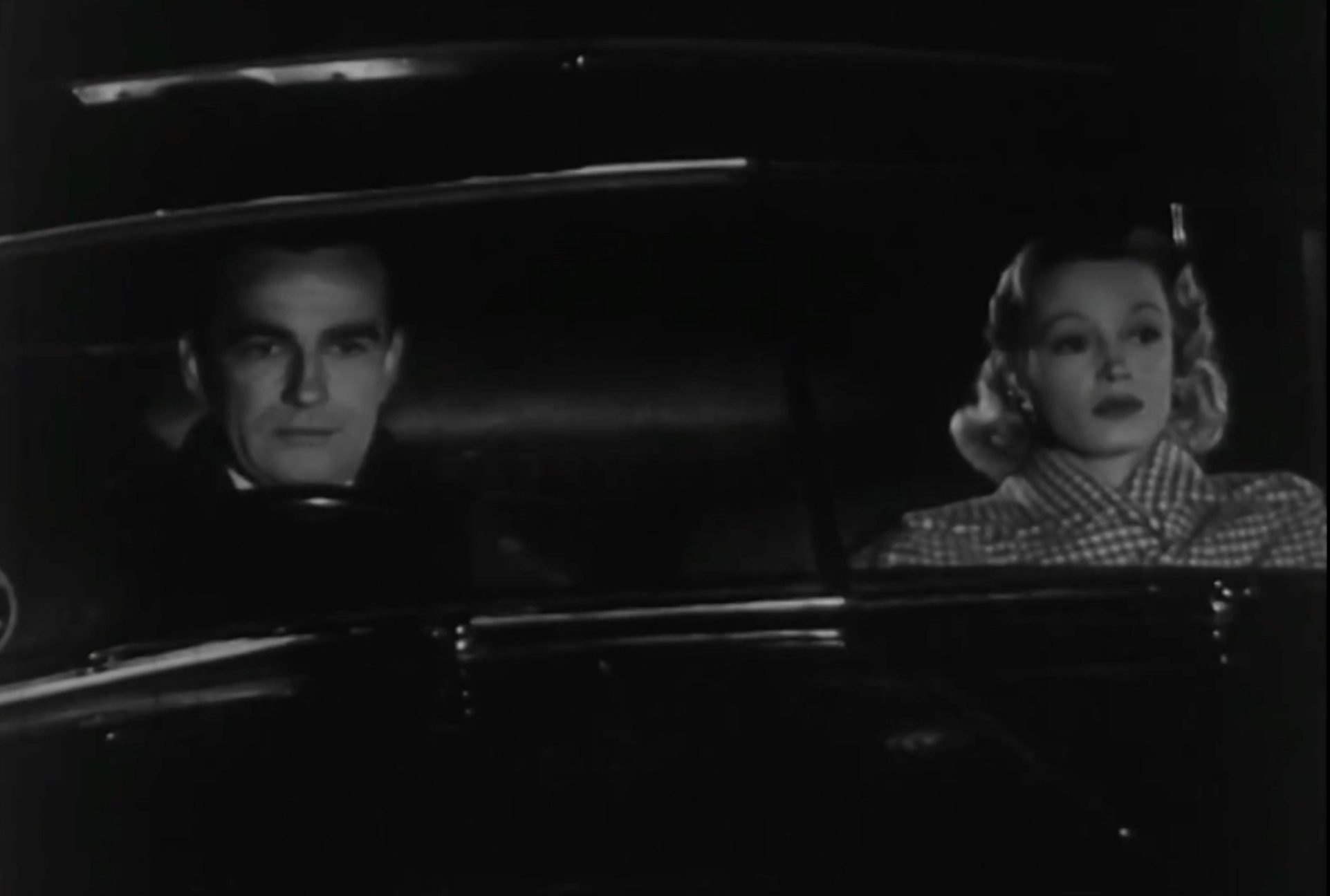
Paul Temple (John Bentley, Old Hollywood handsome, voice like the prow of HMS Victory) is a British crime writer turned detective. He is assisted by his wife (Rank Charm School graduate Patricia Dainton), an absolute doll with some sassy one-liners called, er, Steve. They’re a team! It’s all good, clean, paint-by-numbers fun.
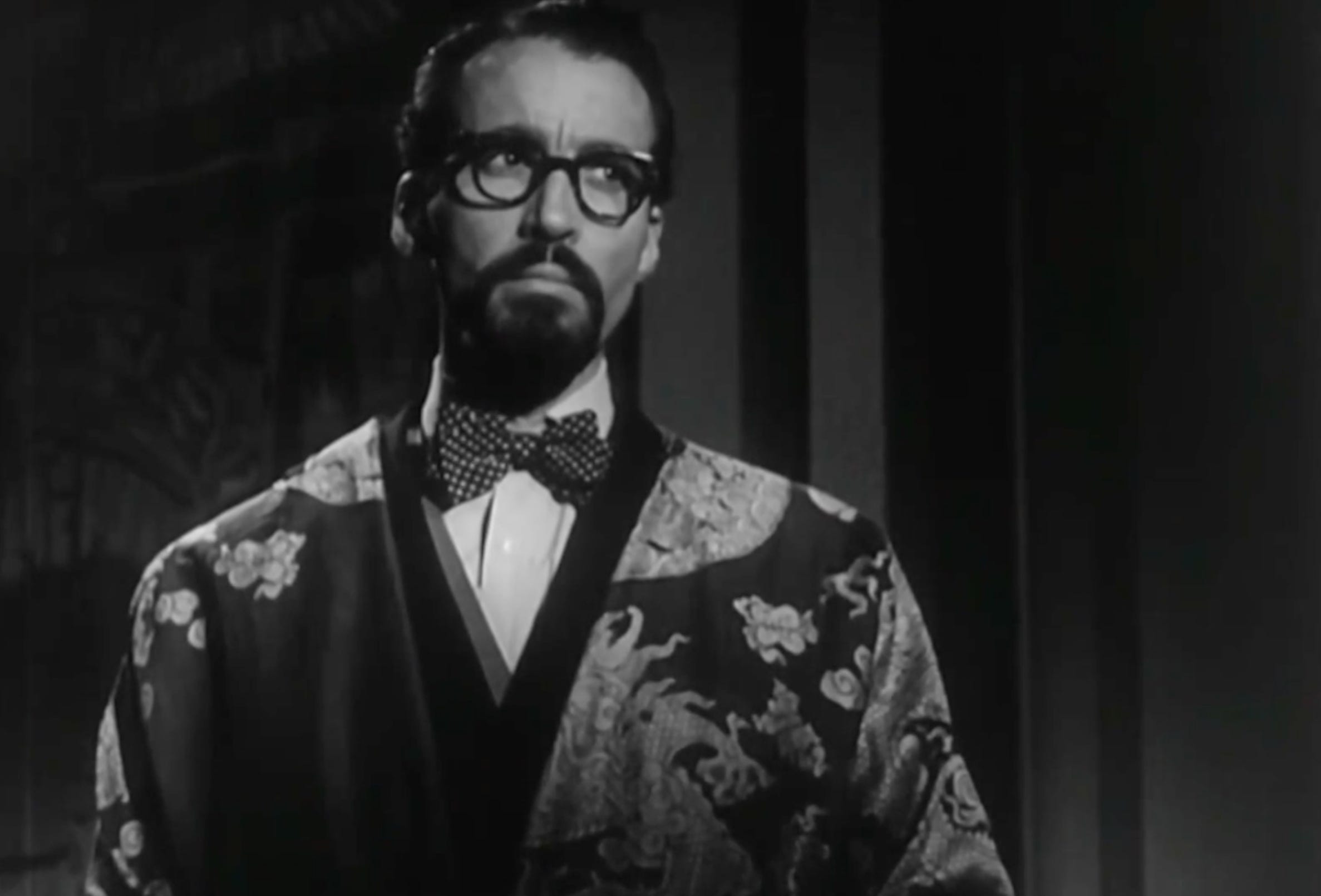
For this, the fourth film in the franchise, they are investigating a series of apparently unconnected murders in London. This brings them to the country house of Sir Felix Raybourne, a Very Sinister Egyptologist. He wears silk dressing gowns, has a (clearly papier mâché) statue of Anubis in his living room and is, of course, played by Christopher, who does it all completely straight apart from a fourth-wall-breaking look to camera after he’s waved off Paul and Steve (who agree he is a rotter and up to no good). ‘Lol, fine’, my notes read. All quite silly and not at all scary, but at least nobody licked a wall or pretended to be a dog.
And then…
Paul has gone off to chase someone through a field, leaving Steve unattended in the village pub. She has just finished her drink when who should walk in but Sir Felix, no longer in his Aleister Crowley get-up and actually looking rather dashing, but still definitely evil. He turns, sees her, stops. We watch A Plan forming in his mind. He strolls over to her table. Would she like to join him for a drink? Steve – who is emphatically not written as a dummy – looks up at him with an uncharacteristically guileless smile. Yes, she would! He sits down opposite her and orders for them, maintaining eye contact the entire time. Perhaps Mrs Temple would like a cigarette? Mrs Temple would. He gets his snazzy silver case out, eyes still burning holes in her chair. What is going on?!?! The atmosphere by this point is genuinely very tense. But far from being unsettled Steve appears entirely charmed. In fact I’d go so far as to say that she seems to be… under some kind of spell?
If you’ve seen Dracula you’ll know what I’m getting at. I won’t spoiler the rest of it apart from to say that the entire film fizzles out, but as in Valley of Eagles this little vignette is really quite strikingly out of step with the rest of the film, tonally and also, to be honest, in terms of the quality of the acting. I have since discovered that the BFI singled out Paul Temple Returns in a feature on the most significant early Christopher Lee films. So I don’t think I’m totally off base here when I say that this feels like hearing the opening notes of a very familiar song.
How did it happen? The director, Maclean Rogers, was an old hand with dozens of nice, safe British B-picture comedies to his name; I doubt this particular flavour of highly charged menace was his idea but I could be wrong. More likely, I think, is that this was a case of shop-window opportunism: having been forced into a panto turn for his first appearance in this film, Christopher – who is fed up of getting bit parts and beginning to hear the dark side calling – decides to use his only other substantial scene to demonstrate greater range. (Having watched Wuthering Heights, I am christening this move ‘The Alison Oliver’.) In later years he was notorious for rewriting his own lines or just delivering completely new ones, so I don’t think it’s a wild hypothesis that he just went a bit rogue here and turned it up to 11 in the hope that any directors who happened to be watching would take notice.
And perhaps they did? Again, we’ll never know – but I don’t think it’s beyond the realms of possibility that somewhere in the Home Counties a young filmmaker called Terence Fisher – who had directed Christopher once before – watched all of this play out on the big screen and had the beginnings of an idea...
Rating: 8/10
Next time on The Christopher Lee Project: the only way out is through
The beard is hot, twice