
#18 Hammer time
Behind the scenes at Bray Studios for Part One of The Curse of Frankenstein, the film that finally made Christopher Lee a star

Welcome back to The Christopher Lee Project, in which I spend a year tracking down every film made by Christopher Lee and watching them all. I’m Emma Hughes: a journalist, an author and someone who made the mistake of wearing espadrilles yesterday.
We made it! By which I mean not only us but our long-suffering hero, who has spent the past decade physically and psychically wounding himself to get his acting career off the ground. Little does he know that everything is about to change. But before it does, two bits of housekeeping.
Firstly, The Christopher Lee Project is tantalisingly close to a Significant Number of Subscribers – so if there’s anyone you were thinking of sending it to, please do. To reiterate, none of these posts will ever be paywalled: I do this purely for the love of the game and because SSRIs backfire on me.
Secondly, a mystery... A couple of weeks ago I came home from work to a parcel containing a pristine first edition of Tall, Dark and Gruesome, which go for hundreds of pounds online. There was no note and the usual suspects have denied all knowledge. If it was you who very generously bought it for me, please will you put your hand up so I can thank you properly? (And, er, calibrate how worried I need to be about you having my home address.)
Right. Frankenstein! There’s so much to say about this one that I’ve decided to split it into two parts. Today we’ll be covering the making of the film (including some behind-the-scenes photos which are not generally available), and next week we’ll be looking at its reception – and how it ended up changing Christopher Lee’s life forever.
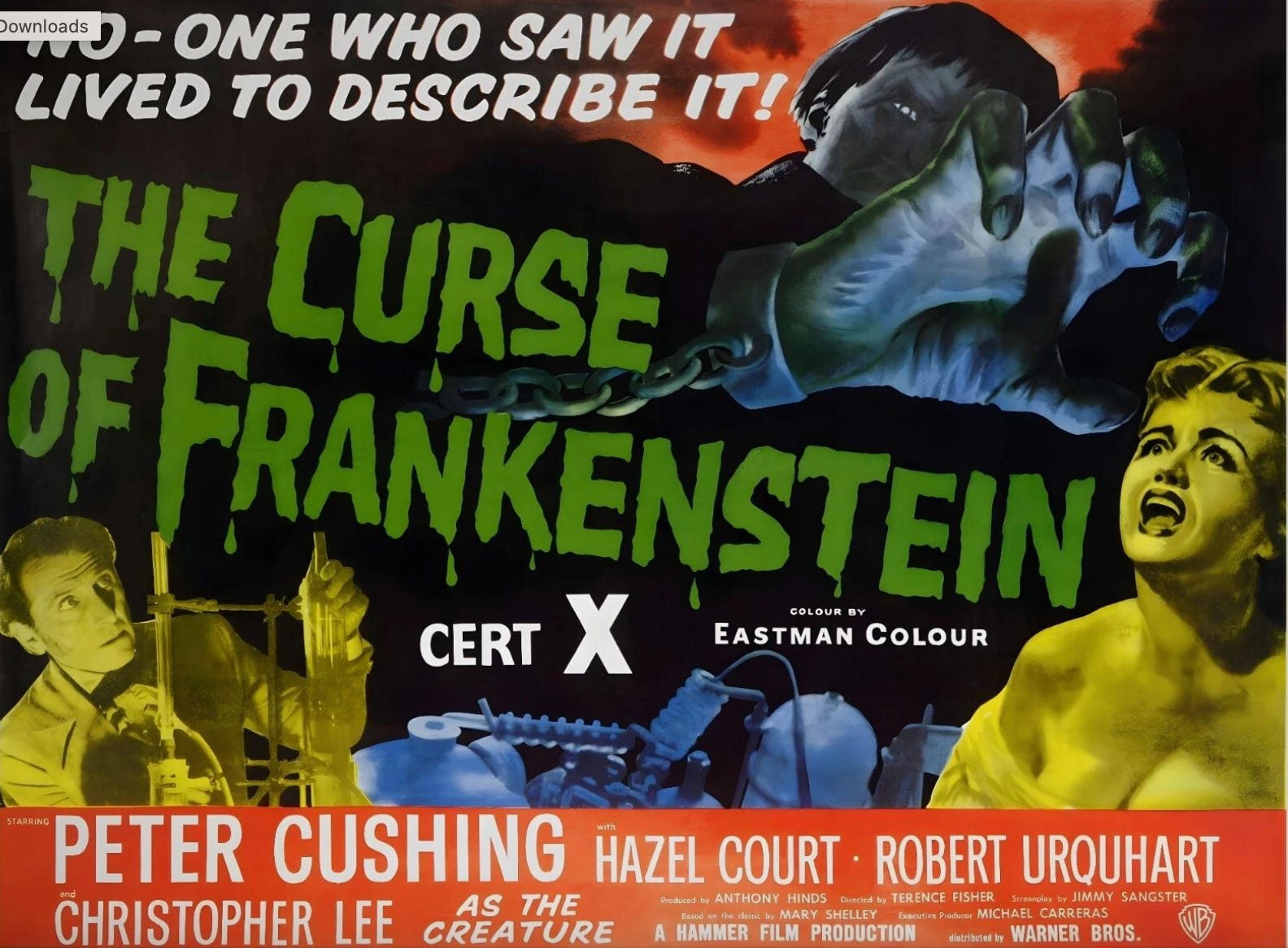
33) The Curse of Frankenstein (1957)
“It seemed merely like one more indignity on a grander scale,” was Christopher’s reaction when his agent asked him how he’d feel about playing a monster. The requirements were modest – the producers were simply looking for someone who was:
Tall
A good sport
“It was self-evident that this was not the path to glory,” he later wrote, “[but] purely technically it was a tremendous challenge. Besides, my visions of glamour in the business were by now totally blown.” He auditioned and got the part.
The studio making the film was Hammer, which had started out with quota quickies before the war. By the mid 1950s it was making headlines with horror-tinged films like The Quatermass Xperiment from its base at Bray Studios, a once-derelict country house overlooking the Thames. All the sets were constructed in and around the house while an ever-present tea trolley dispensed brews and biscuits. The whole set-up was (and largely remained) a cosy, very British cottage industry, with the feel of a rep company: most of the actors were regulars, a fair number of the crew ‘lived in’ permanently at Bray and those who didn’t were collected by the Hammer bus each morning.
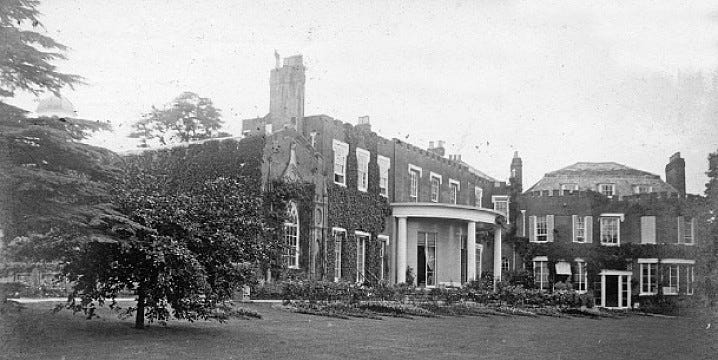
On June 13 1956 – right around the time Christopher was getting the third degree from his would-be father-in-law Count Fritz von Rosen in Stockholm – Hammer’s founder Jimmy Carreras wrote to the British Board of Film Censors (BBFC), past whom every new film had to be run, informing them that ‘we are re-making in colour, and with our tongue in both cheeks, “Frankenstein”. Hammer had cut a deal with Universal for a do-over of the 1931 version, which had starred none other than Boris Karloff. As part of the agreement Frankenstein’s monster – or The Creature, as he is styled here – needed to have a completely new look. No forehead bolts allowed.
Jimmy Carreras and his producer Anthony Hinds had a legendary make-up artist on the books named Phil Leakey. Leakey was delighted to find himself working with an actor who was very happy to look horrible and even had some ideas for how to achieve this.
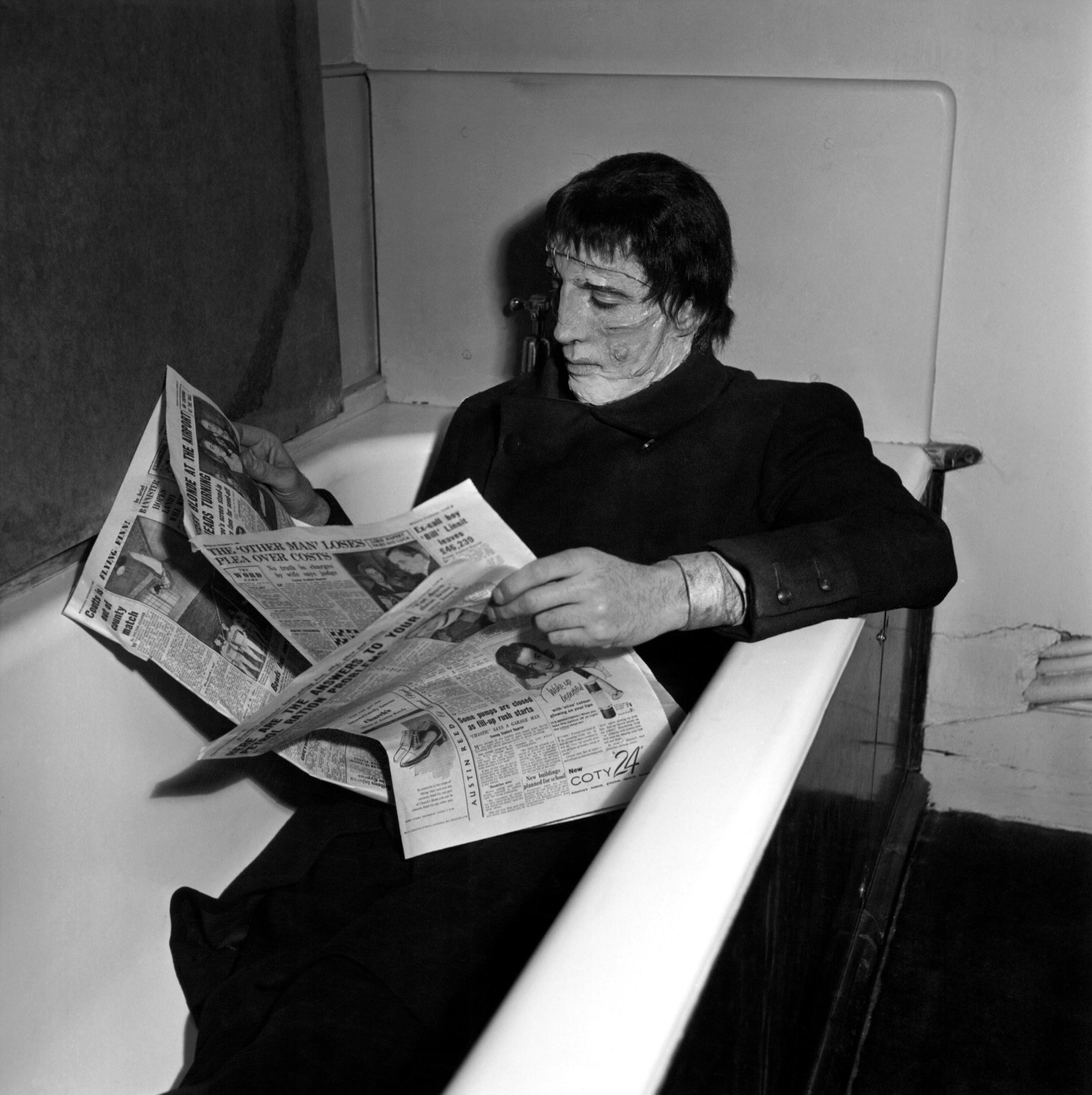
After some unfortunate Elephant Man experiments, he and Christopher came up with an awful death-mask of latex scraps, wads of cotton, lumps of wool and undertaker’s wax, all topped off with yellowy-white greasepaint. The layers had to be set with cool air and the whole shebang took hours to apply. Oh, and it had to be recreated almost completely from scratch every day. This was all the more impressive given the make-up room was a converted lavatory.

Once the make-up was on, it was on for the day, which presented various issues. The food at Bray, courtesy of Hammer’s stalwart cook Mrs Thompson, was excellent but Christopher couldn’t chew without cracking his face so he had slurp cottage pie through a straw. In any event, he tended to avoid the canteen because his appearance was putting people off their lunch. Bray wasn’t terribly comfortable and there was no sofa in his dressing room, so he had to sit in the bath.
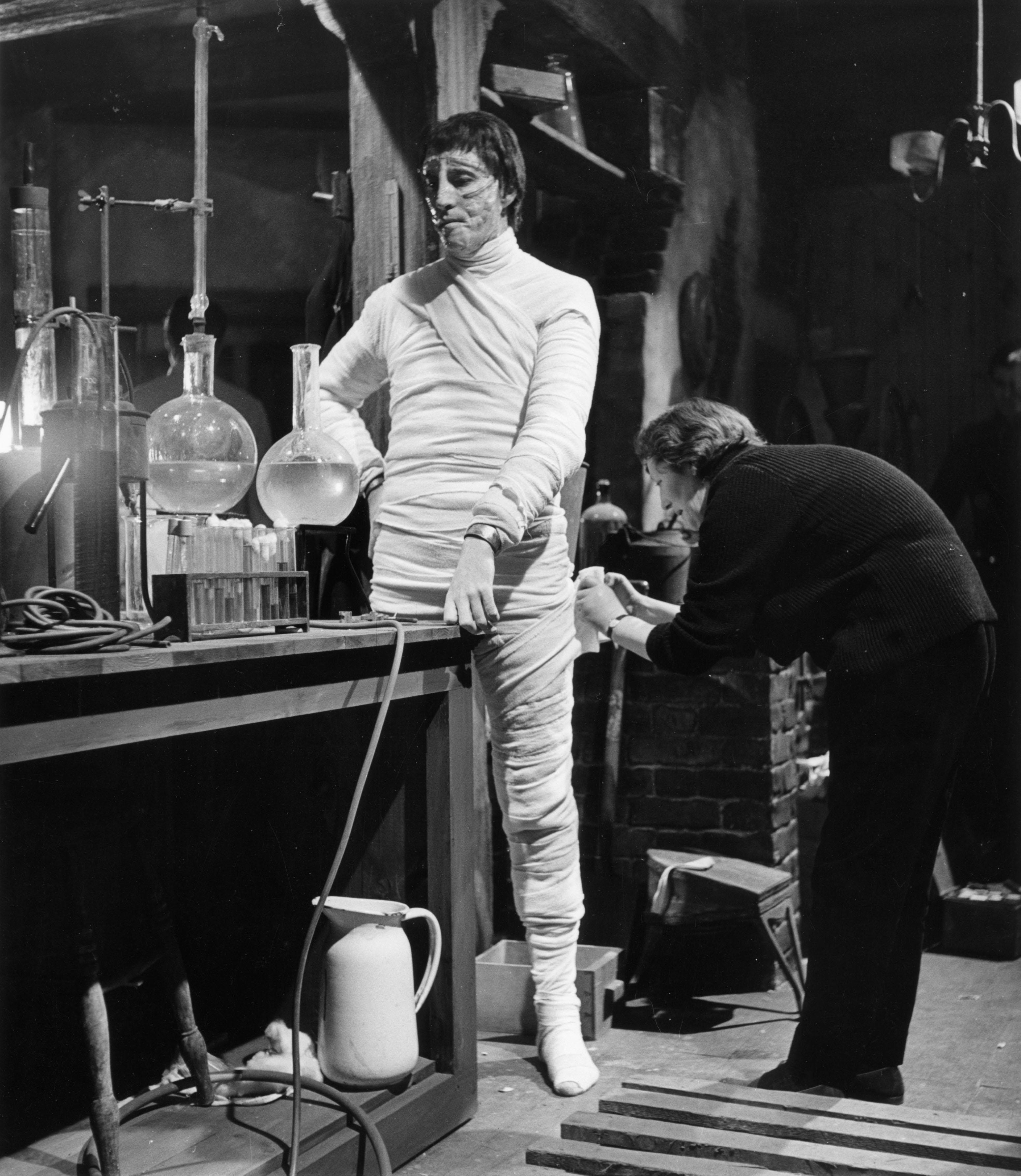
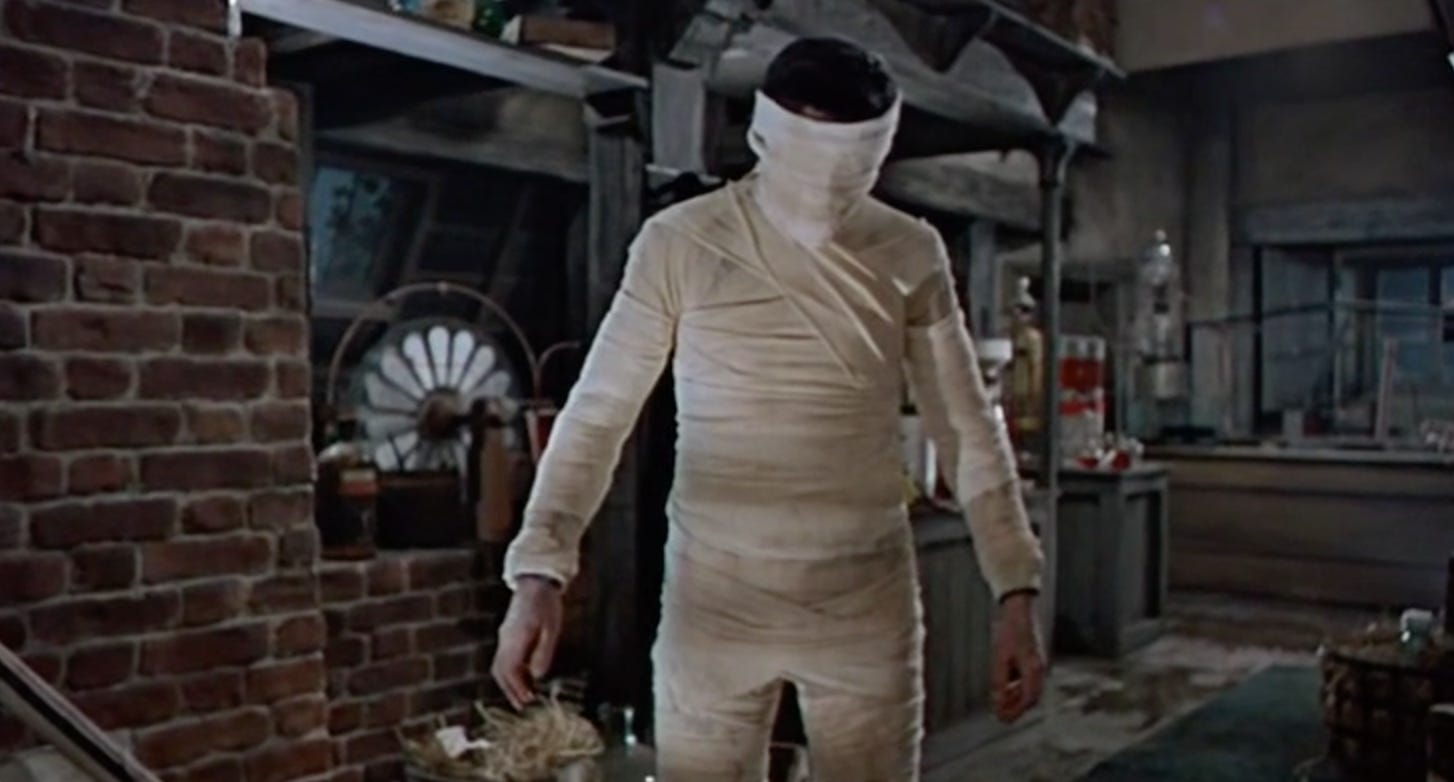
When The Creature makes his first appearance he is wrapped up in bandages. This, obviously, doesn’t work costume-wise – you need to be able to ensure visual consistency from day to day as well as being able to get the damn thing on and off. The costume department got around these issue by tacking the bandages onto an old Second World War flying suit, to which they had added a hidden zip at the back – I suspect the photo below was staged for publicity but you get the idea. As a side note Bray’s wardrobe mistress deserves a round of applause for succeeding where so many others failed and managing to wrestle Christopher’s signet ring off him.
The rest of the cast fared better costume-wise: Hammer had managed to get hold of a cache of actual Victorian clothes, which were as old then as mid-century vintage is to us now and thus still pretty wearable.
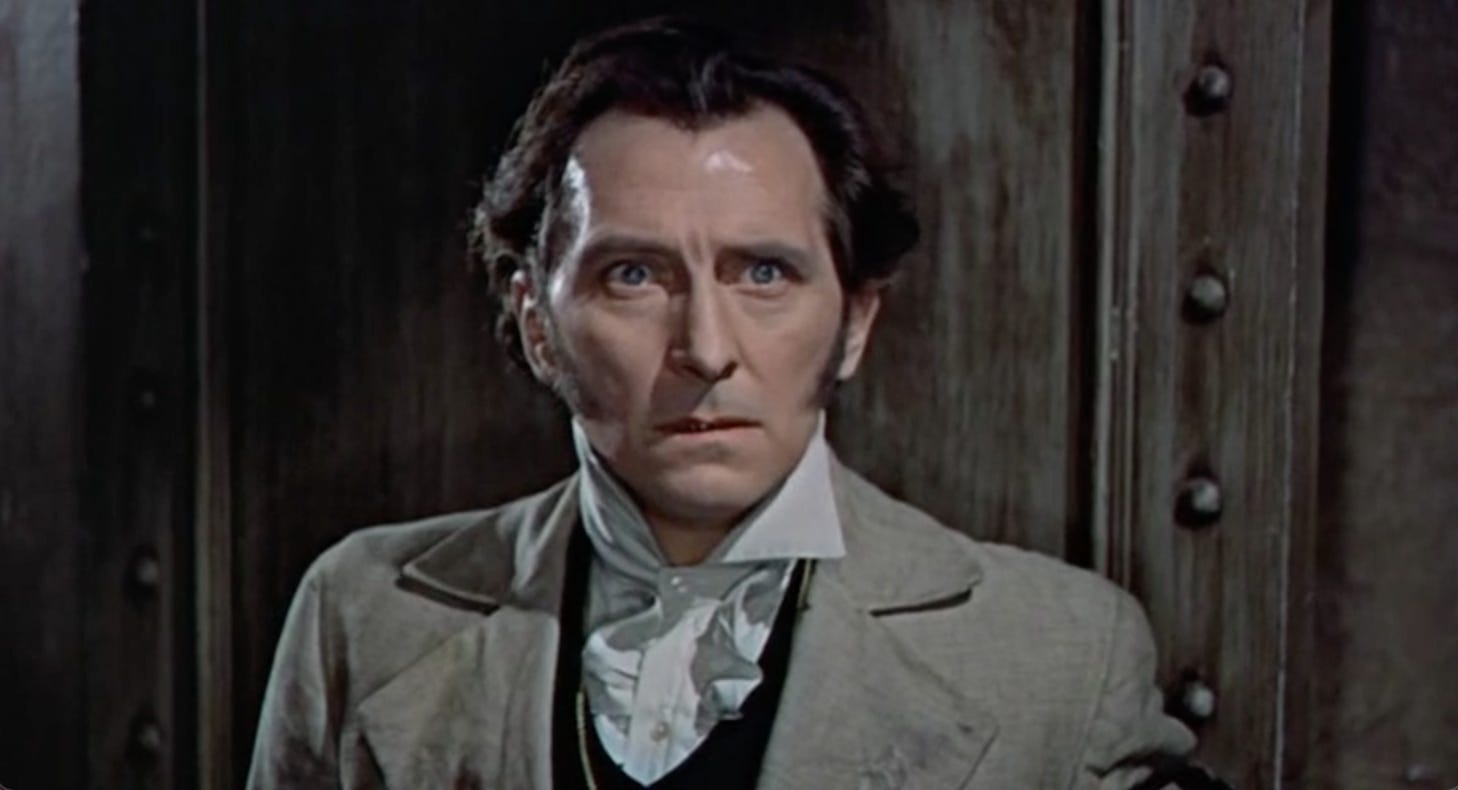
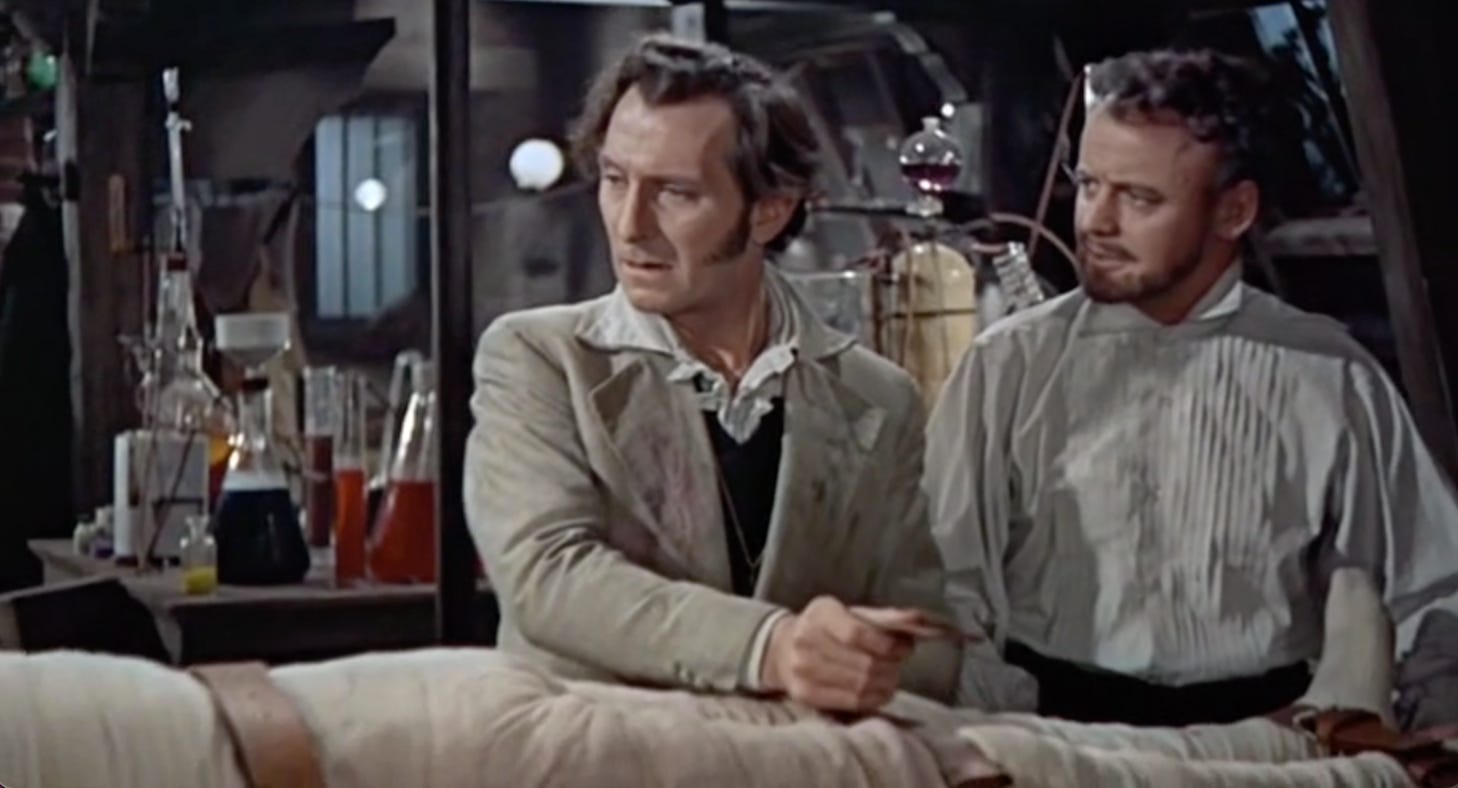
Baron Frankenstein is, of course, played by Peter Cushing, who’d already had a long and colourful career by the time the Hammer years rolled around. Did you know, for instance, that he was television’s first Mr Darcy? He starred in the 1952 BBC serialisation of Pride and Prejudice, which was broadcast live every Saturday night for six weeks but never recorded, although there are a couple of stills on IMDB.
Cushing could be relied on to bring class to a production, no matter how ludicrous the plot or shonky the script. He would always have learned everyone’s lines off by heart and was known as ‘Props Pete’ for his ability to keep half a dozen of them in play simultaneously (once you notice this you can’t un-see it: he’s always doing something). Nobody ever had a bad word to say about him.
He and Christopher had actually crossed paths twice before – first in Laurence Olivier’s Hamlet, the subject of the very first episode, and then in Moulin Rouge, which I gave a two-footed shoeing to at the same time as Wuthering Heights. When they were properly introduced at Bray what ensued was one of cinema’s great platonic love stories: as well as making dozens more films together they became best friends for life. “He is a man of so many attributes, among them a most marvellous sense of humour plus the ability to laugh at himself, and uncanny skill as an impersonator, which helped to lighten the darkness,” Cushing later wrote in his autobiography.
Christopher was equally devoted. “I don’t want to sound gloomy,” he said in an interview after Cushing died in 1994 at the age of 81, “but at some point of your lives, every one of you will notice that you have in your life one person, one friend whom you love and care for very much. That person is so close to you that you are able to share some things only with him... And then when that person is gone, there will be nothing like that in your life ever again.”
I have my own Peter Cushing (hello, Pat), and watching the two of them cracking each other up with decades-old nonsensical in-jokes during joint interviews it’s clear that they had the same sort of connection. I am currently trying to trace the source of the longstanding internet rumour that they were once asked to leave a cinema for laughing too loudly at a Bugs Bunny film.
(I suppose I should actually review this film at some point, shouldn’t I?)
The Curse of Frankenstein was made in ‘Eastman Colour’. Developed in 1950 by Kodak, this democratised colour filmmaking by introducing a single strip of film with in-built colour layers that could be used in ordinary camera, removing the need for Technicolour’s separate and hugely expensive ones. The only downside was that the dyes weren’t very stable so the films tended to degrade unevenly, with blue tones going first. The print I watched was certainly tending towards sepia in places.
The really problematic colour, though, was red. Much was made by Hammer’s publicist that blood had only ever been shown on screen in black and white before: Hitchcock was still using chocolate sauce at this point. Hammer had its own proprietary fake blood nicknamed ‘Kensington Gore’, which was mixed for them by a retired chemist and contained, among other things, golden syrup and food colourings, which in the 1950s were probably extracted from asbestos. It’s still pretty nasty to behold – I had to look away at certain points in the lab scenes, although as previously discussed I am a complete wimp.
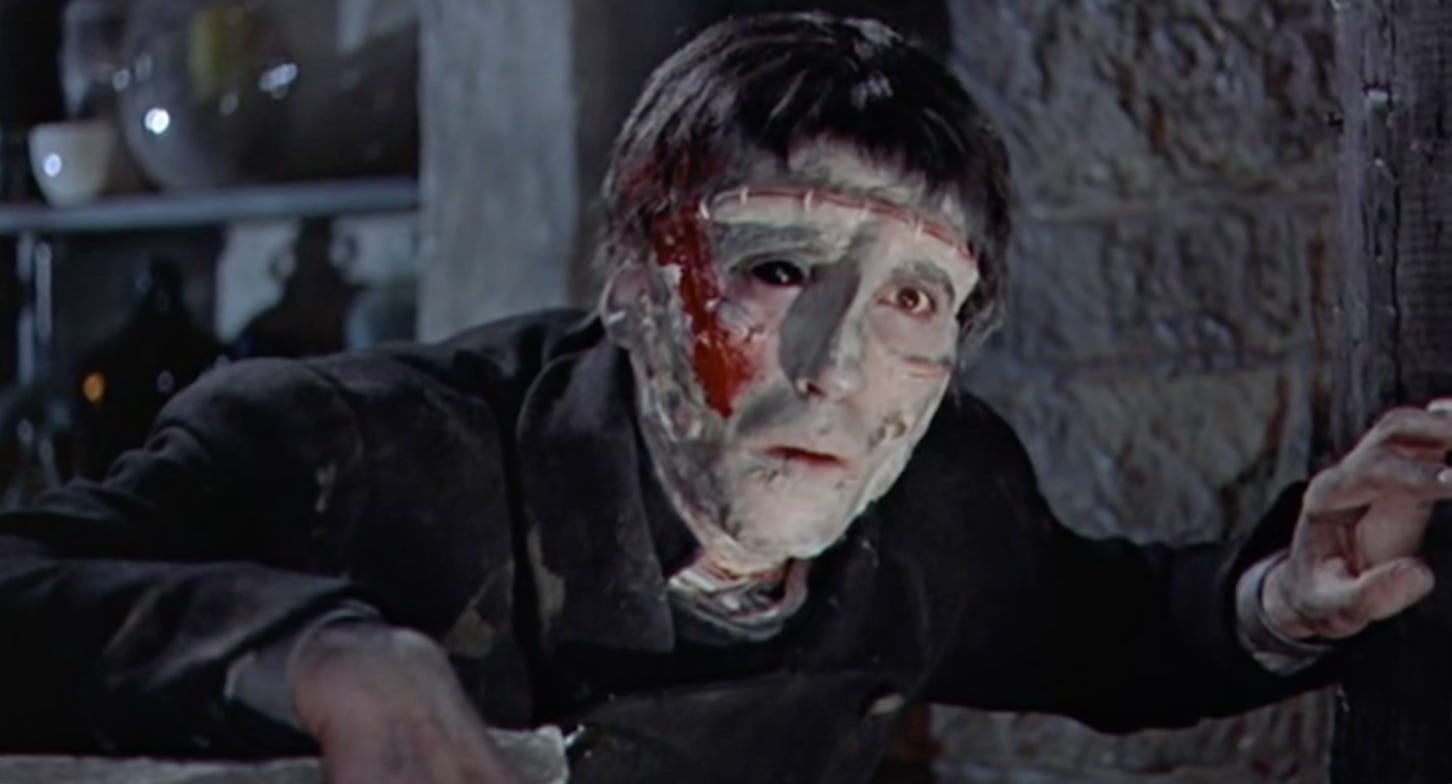
The Curse of Frankenstein opens as a story within a story: a priest is called to Baron Frankenstein’s prison cell the night before he is due to be guillotined and hears his confession. The script was written by Jimmy Sangster, who had worked his way up from the studio floor and became a huge part of Hammer’s success. His dialogue, here as elsewhere, is… functional, let’s put it that way. But he had a really horrid imagination (complimentary), which is ultimately what matters. His Baron Frankenstein is a thoroughly nasty piece of work, grave-robbing and murdering with glee – no trace of Mary Shelley’s tragic and conflicted figure.
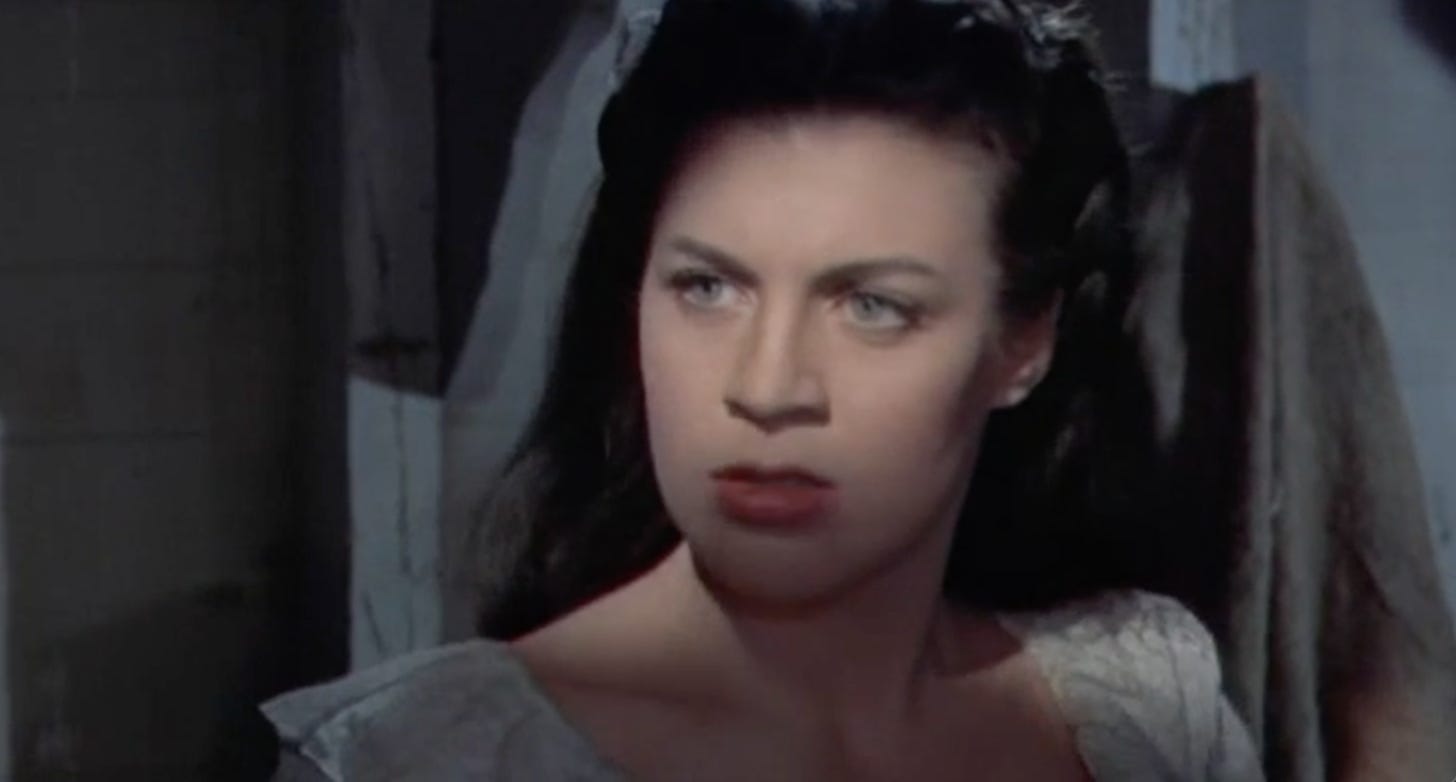
As well as all of the above, Frankenstein is carrying on in a caddish manner with the maid, Justine, who meets a sticky end when she breaks into his laboratory. She is played by Valerie Gaunt, on whom I have always had the most enormous crush. I can still remember the kick of ‘!!!!!!’ I felt in my chest the first time I saw her on screen. To me she has one of the all-time great faces, part demure English rose, part gum-chewing hellraiser.

In 1956 she was a fairly recent Rada graduate doing theatre and bits of television, including an episode of Dixon of Dock Green in which she let out a blood-curdling scream. Hammer director Terence Fisher happened to be watching it, and was so impressed that he immediately telegrammed her agent. In the spring of 1957, not long before The Curse of Frankenstein came out, she was called on to do a pin-up shoot at her flat to promote the film. Her expression suggests she thought this was a very stupid idea and complied with the request in the manner it deserved.

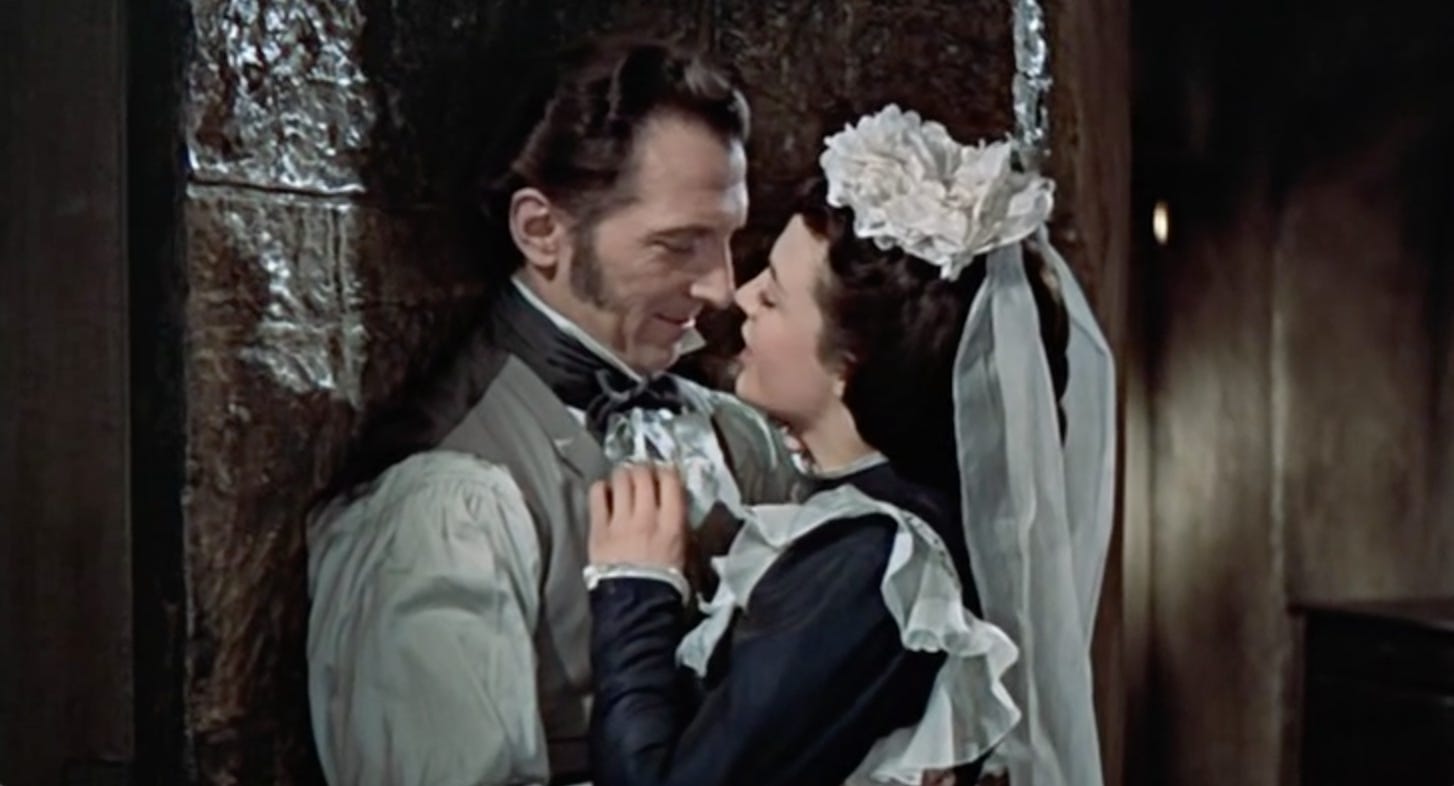
While we’re on the subject of Justine, she is involved in the first screen kiss we’ve seen so far that deviates from the tame prewar norm, in which the participants just sort of smoosh their faces together and stand there not moving. As well as insisting that crime couldn’t pay, the BBFC’s guidelines prohibited ‘lustful’ behaviour. These were in theory voluntary but if you didn’t follow them the BBFC could order cuts before your film could be released. Anyway, this is definitely lustful kissing and there’s several minutes of it – which hints at the power struggle between creatives and the censors which was being played out towards the end of the 1950s and into the early 1960s. Stay tuned for more on that.
The film gets off to quite a slow start: it takes almost an hour for Frankenstein to succeed in assembling, then reanimating his creation. Despite not having any lines (“You’re lucky, I’ve read the script,” Peter Cushing was said to have quipped when he complained about this) Christopher remembered what Boris Karloff had said to him about only needing one one eye and put his to excellent use. It really feels like a window onto the poor old Creature’s soul (and he does seem to have one, which makes everything so much worse). I don’t think it’s too much of a stretch to say that a lifetime of feeling physically ungainly and awkward fed into this performance, and is one of the reasons it’s so impressive.
All of those screen-deaths stood him in good stead, too: within the first minute the Creature has had a chair smashed over his head and things only get worse for him from there. He is subsequently shot, manacled to the wall, set on fire and finally falls into an acid bath. Throughout he maintains an air of mournful, even stoic bewilderment. For me the worst – and therefore best – horror films are upsetting rather than necessarily gory, and this definitely is.
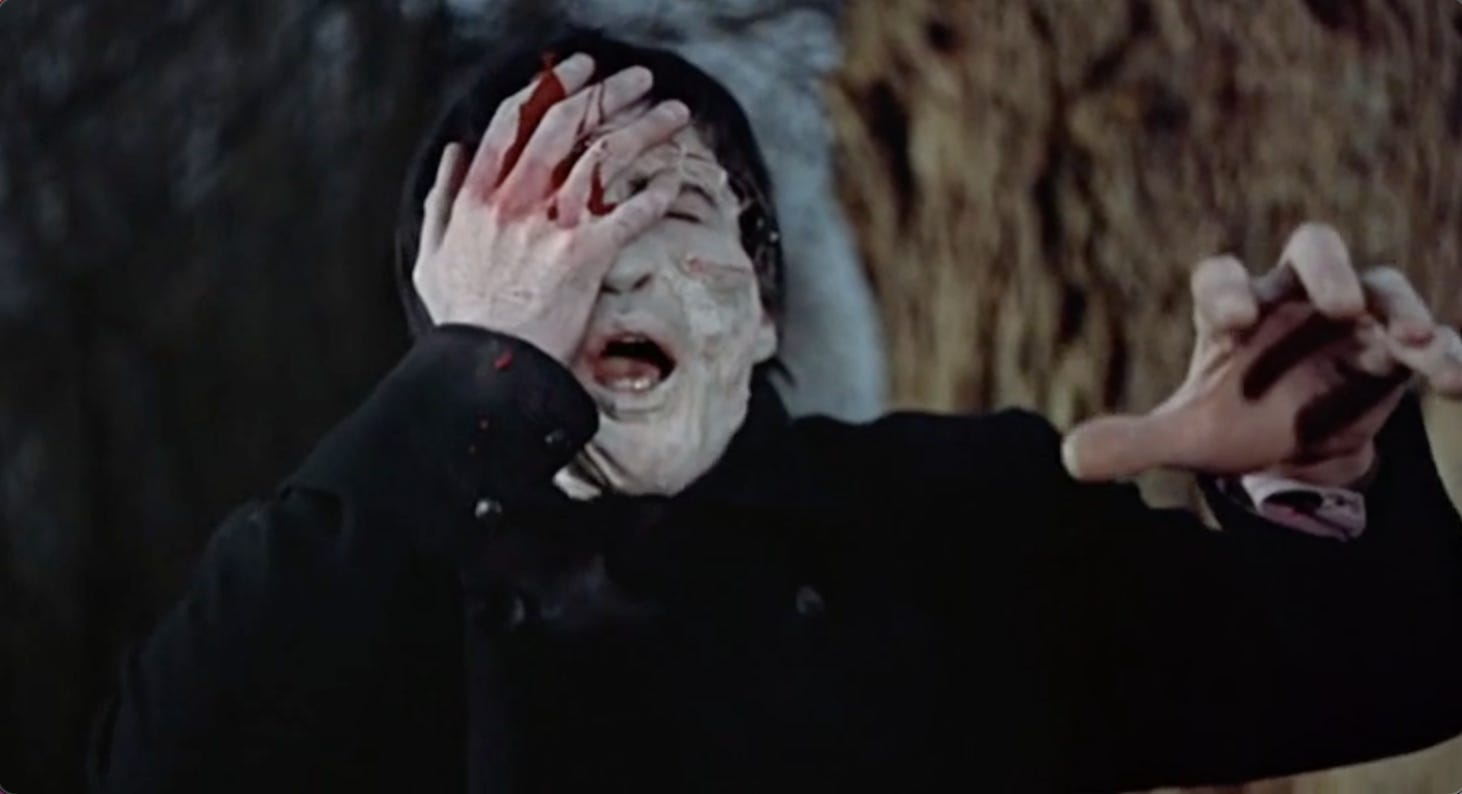
In this scene the Creature lets out an awful gasp of pain when he’s shot – which was genuine, because the Kensington Gore which Christopher had to smack in the direction of his eyes actually got into them, with excruciating results. A trooper to the end, he carried on despite thinking he might actually have gone blind and Terence Fisher printed the take, even though the make-up had come off his palms by this point in the day.
For all of the indignities, The Curse of Frankenstein was a very happy shoot. Christopher would burst into Peter Cushing’s dressing room and sing opera at him through his bandages, and found the work of bringing a monster to life wonderfully absorbing. “I was never so content. The five weeks of the schedule flowed by, plus a sixth because the sensation had grown at Hammer that we were onto something, and the ship mustn’t be spoilt for a ha’p’orth of tar.”
Filming wrapped towards the end of 1956, after which he spent what sounds like an excruciating Christmas navigating various booby-trapped social events hosted by Fritz von Rosen in Sweden. Perhaps he thought his work on The Curse of Frankenstein was done at this point – but if he did, he was very wrong…
Rating: 10/10
Next time on The Christopher Lee Project: the horrors persist on the Frankenstein press tour
Looking for some something to tide you over until next week? I’d recommend this Guardian interview with Rupert Everett, and not just because he saved my bacon once. When I interviewed him some years ago there was an awful comms SNAFU beforehand, the kind I still wake up sweating about, but he was a true pro about it and I am forever in his debt. Anyway, the Guardian piece covers some very Christopher Lee Project-adjacent ground, including the fact that at one point RE was so fed up of his height being an issue at work that he started padding out his clothes to look less gangly. Won’t somebody think of the very tall men! (Apart from me, I mean. I think about them a lot.)
Kensington Gore!