
#20 Sade times
A "top-level swank villain", a desert storm in a teacup and the return of the fancy dressing gown

Bienvenue à Le Christopher Lee Project, au cours de laquelle je passe une année à rechercher tous les films de Christopher Lee et regarder tous. Je suis Emma Hughes: journalise, auteure, et aujourd’hui nous parlons seulement Français.
Bonjours mes amis! Comment ça va? J’espere que… no, sorry, I can’t keep this up. It’s too hot.
I was going to do today’s episode fully in Franglais, as all three films have a French connection and I love nothing more than wringing a joke dry. But it has been Quite A Week – for exciting reasons which I will hopefully be able to share before too long – and I am dead on my feet. I can barely string a sentence together in my native language, let alone a foreign one, which is also why there is no audio. Plus next week we’re going to be taking our first bite out of Dracula, so we all need to conserve our energies for that.
What becomes of the broken hearted? If you’re Christopher Lee, newly un-engaged, you make three films of varying quality in quick succession, starting with…
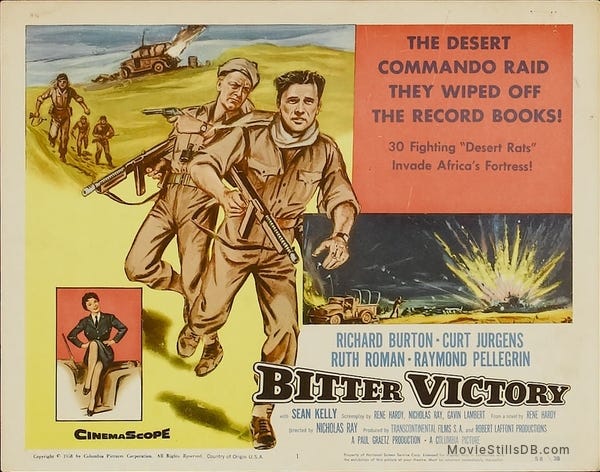
34) Bitter Victory (1957)
A French-made film dramatising a novel about two British officers bickering over a woman during a commando raid in German-occupied Libya. The year is 1957, which means the war has been over for well over a decade. Why, I asked J – who for some reason is still coming to my house – are all these filmmakers still so obsessed with it? He gave me a very good answer involving people taking refuge from the uncertainties of the Cold War in a reassuringly black-and-white rendering of recent history, which I will not be able to do justice to because I have had 12 hours sleep in the past 100.
One of the two British officers is played by a very young Richard Burton, who is well cast. Which is more than can be said for Christopher on the left here.
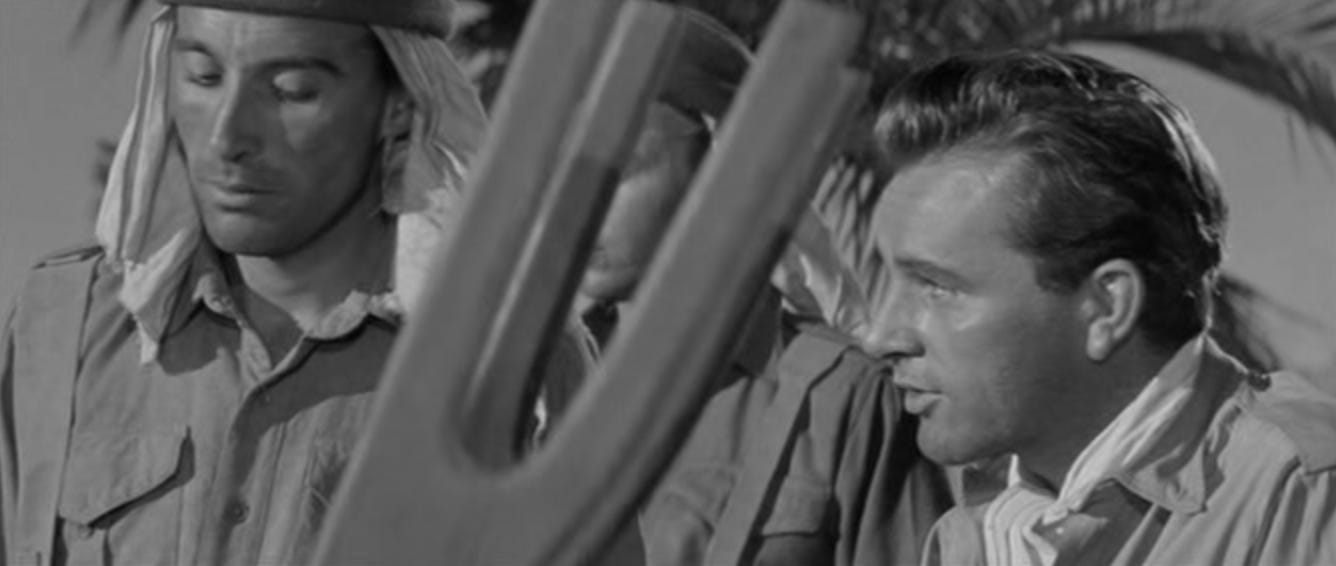
He is first seen stabbing a sandbag dummy with an expression of such withering condescension that I naturally assumed he was the top brass. He is, in fact, playing a regular rank-and-file soldier, with profoundly unconvincing results. It isn’t so much his voice – which is a bit gorblimey but basically fine – as his entire being, every fibre of which screams ‘lunch at Rules, a fiver on Crafty Admiral at Newmarket then home to murder the nanny’. He has, of course, refused to remove his signet ring.
How did this insane piece of casting come about? J suggested we consult Tall, Dark and Gruesome and see what Christopher had to say about it. In a word (well, two)? “Utter chaos.”
I wasn’t told before I got there what part I was to play… When the cast reached Tripoli we were ferried out to the Marcus Aurelius ruins and there the dramatis personae were apportioned with the same casual optimism by the director as if the clock had been turned back fifteen years and we’d all been in fact doing a skit for the camp entertainment. Everybody either got a part they did not want or which somebody else coveted more than they did.
Worse was to come. The hotel they were staying in was a former brothel, the cameraman broke his collarbone and a castmate attempted to slash his own wrists after a lovers tiff. (Christopher, who’d had tricky roommates before, was not terribly sympathetic.) The cast parted after six weeks “in the certain knowledge of having shared in a failure”.
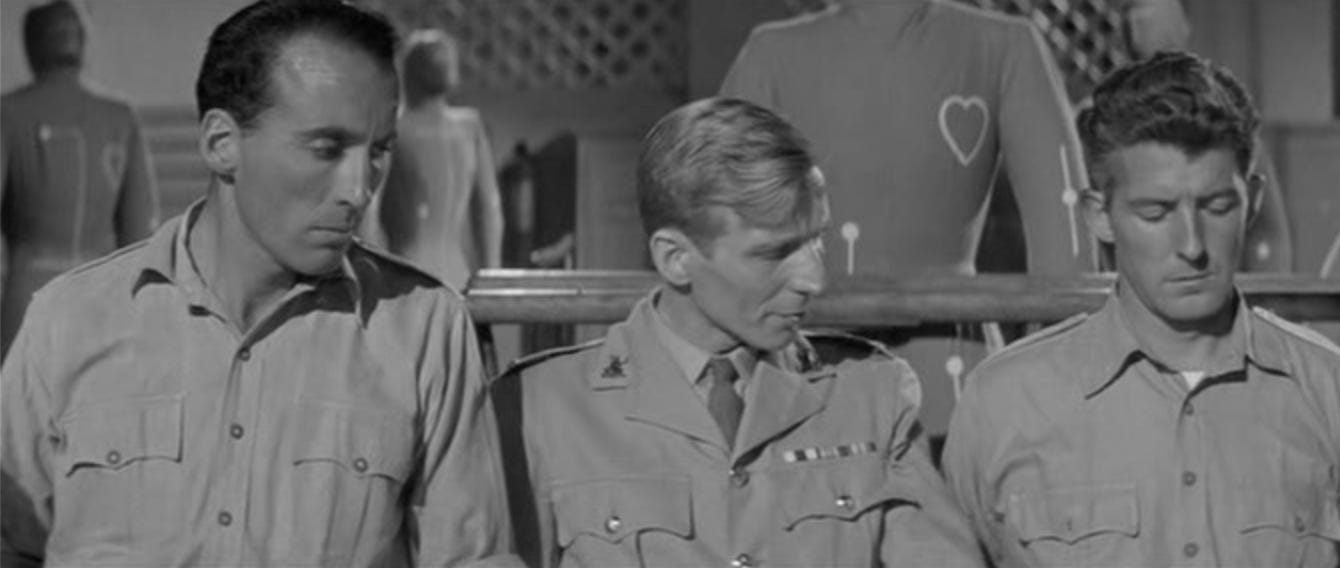
Although this film is nominally about the English it feels extremely French. Every conversation is a Big Philosophical Debate and the filmmakers show a bracing disdain for bourgeois notions such as happy endings and indeed endings full stop; the whole thing just peters out with a sad trombone noise. I do sort of admire their determination that nobody who is consuming Culture should have even a moment’s fun while they’re at it, but it does make the whole thing drag.
“Are you… doing a crossword?” I asked J at one point, peering over at his screen during what was meant to be a gripping battle scene.
“You’ve been looking at the weather forecast for the past ten minutes!” he shot back, which was true.
A bitter victory indeed.
Rating: 2/10
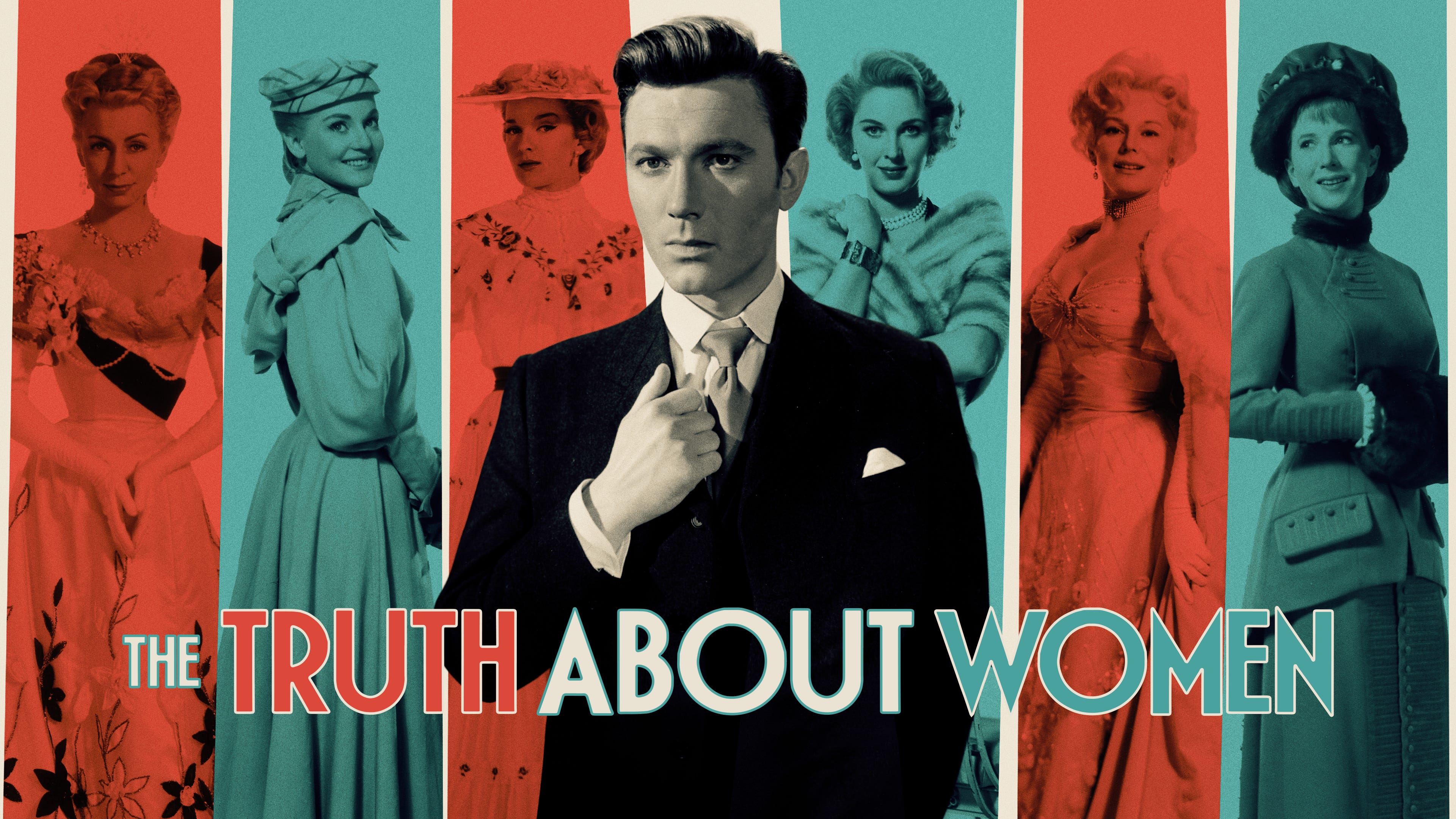
35) The Truth About Women (1957)
Although I am no closer to discovering this, I am closer to solving the mystery of the Reappearing Dressing Gown which first cropped up in Episode 16. Here it is again, as sported by Christopher playing a politician who discovers that his wife is carrying on with someone else behind his back. He promptly whacks his wife’s new squeeze with a glove and challenges him to a duel, but before they can fight it the husband of the woman he is carrying on with challenges him to a duel, which he loses. We are, needless to say, in Paris.
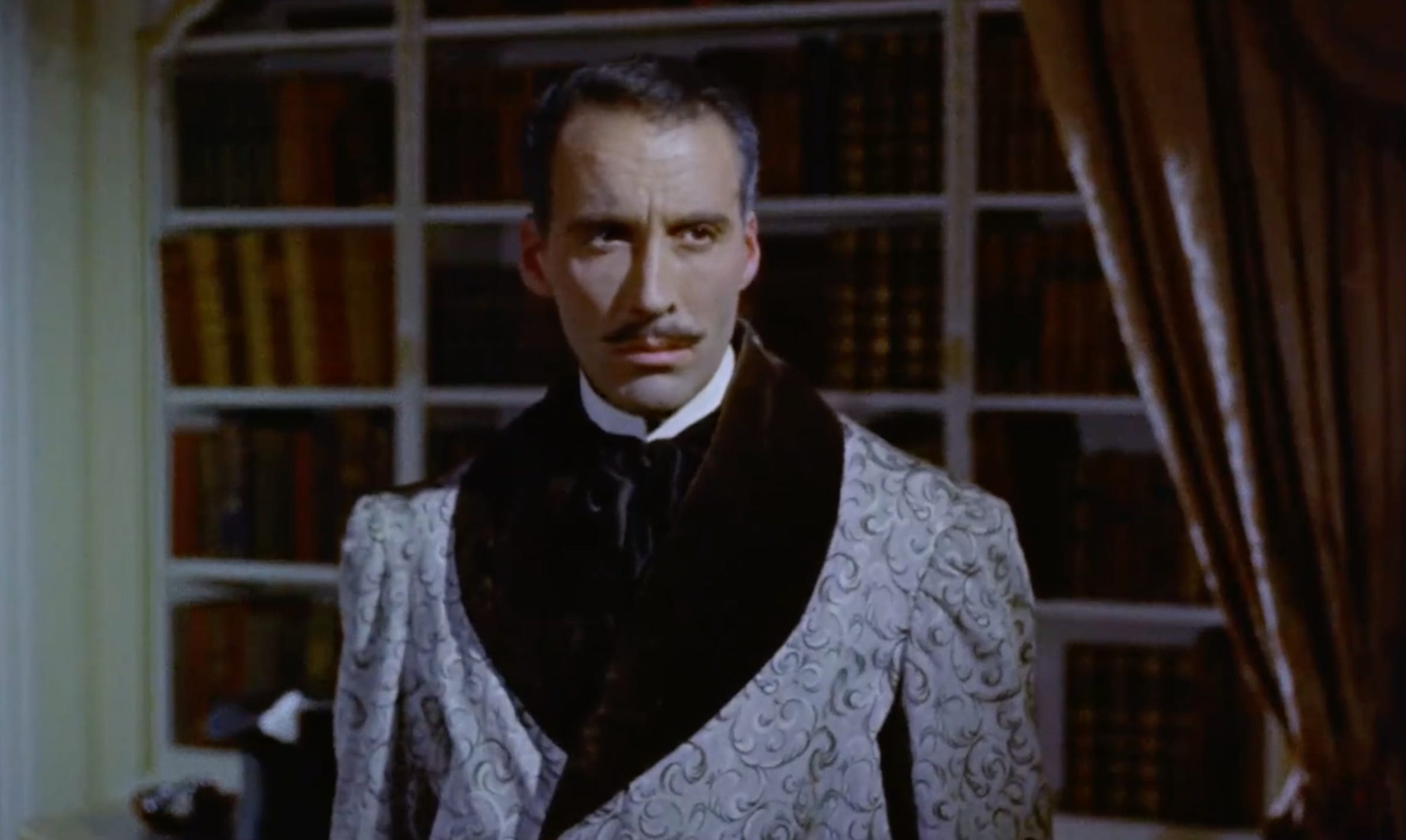
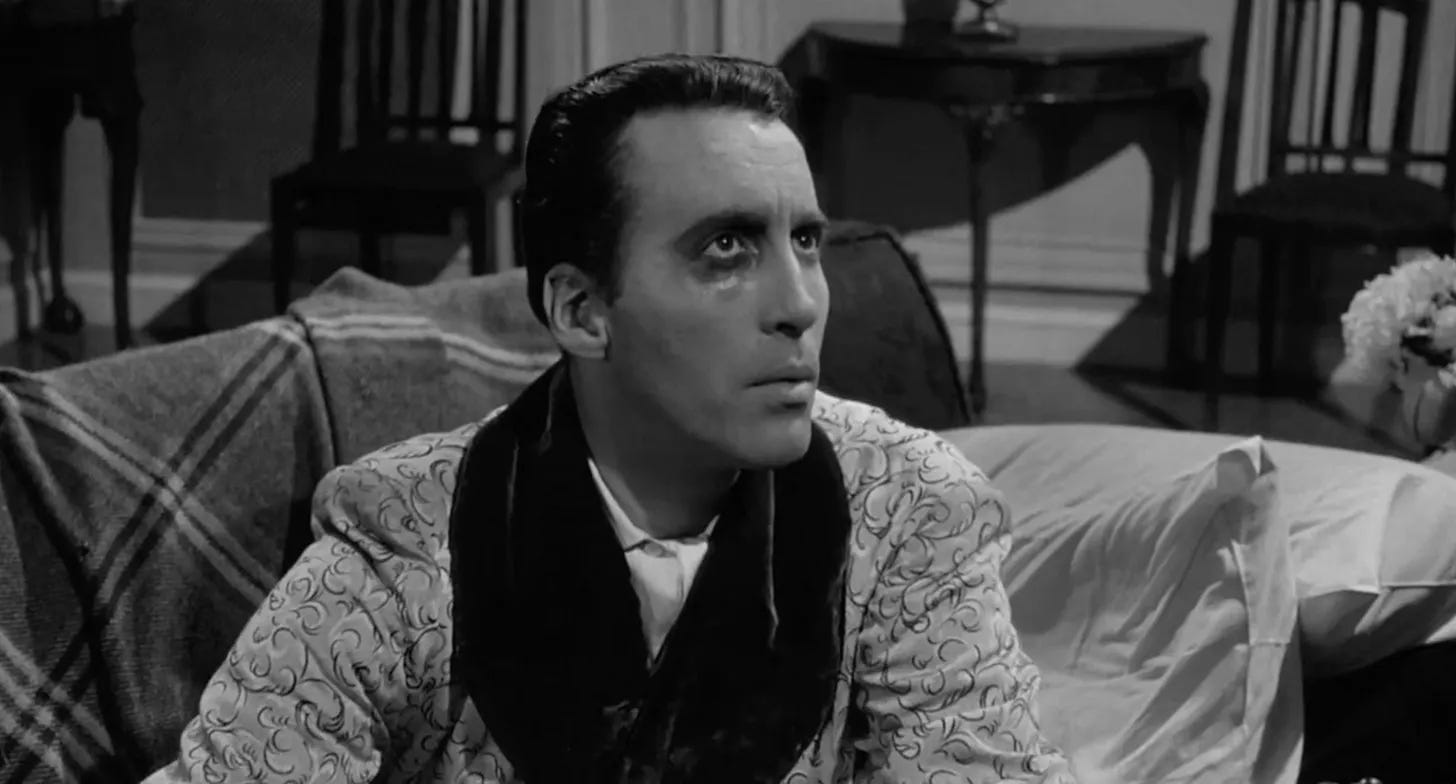
Having confirmed this was indeed the same dressing gown, I of course (?) found myself wondering where he got it from. I had been idly flipping through some postwar menswear advertisements to no avail when I happened to walk down Jermyn Street on my way to the library. At the southern end of Piccadilly Arcade is New & Lingwood, purveyor of posh dressing gowns since 1865 – and there, in the window, was an extremely close match, complete with a velvet shawl collar and exactly the same cut of cuffs. So I think it’s safe to say that what little money Christopher was getting from films before he hit the big time was going straight on Daniel Day-Lewis in Phantom Thread-esque fancy loungewear. Obviously I love this.
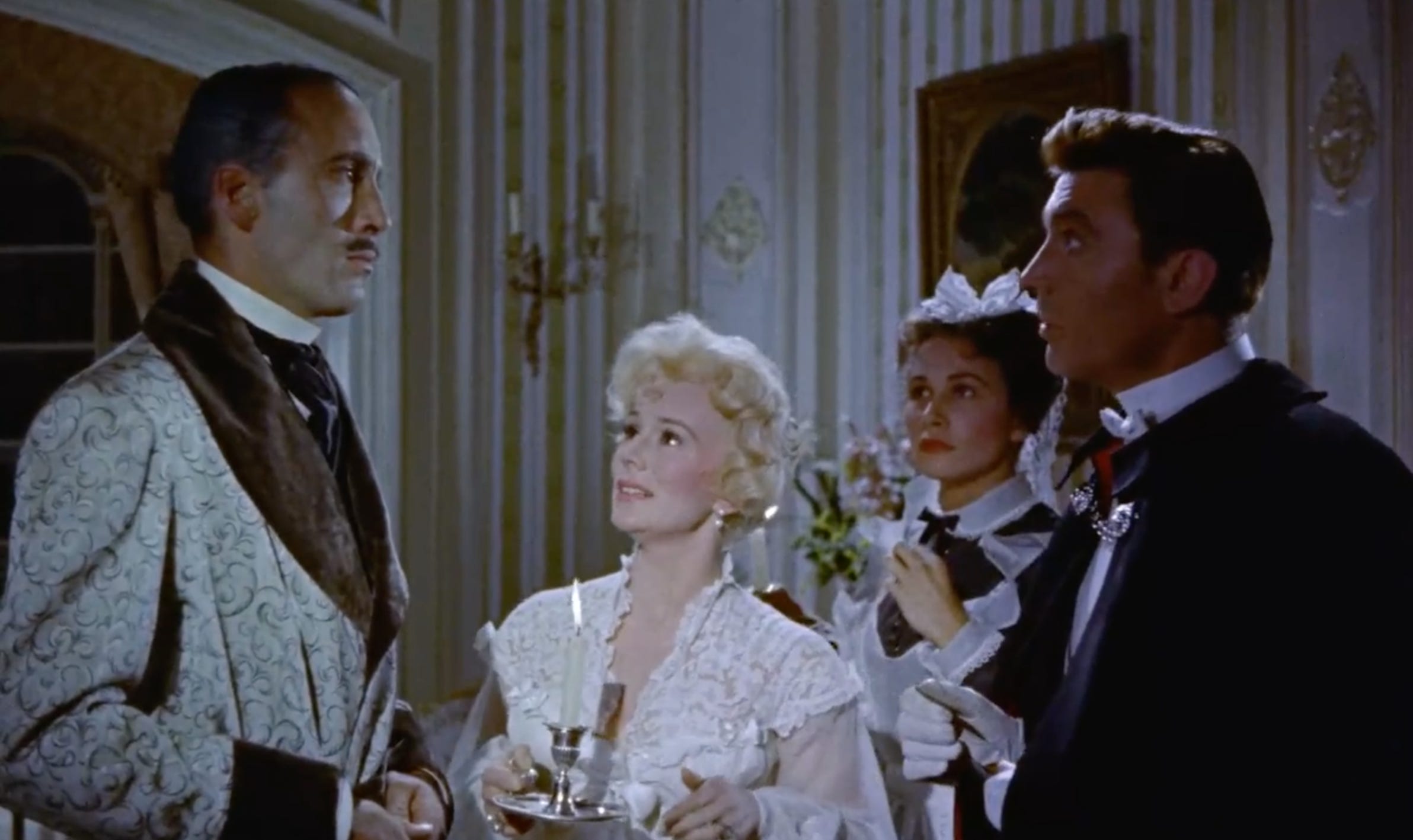
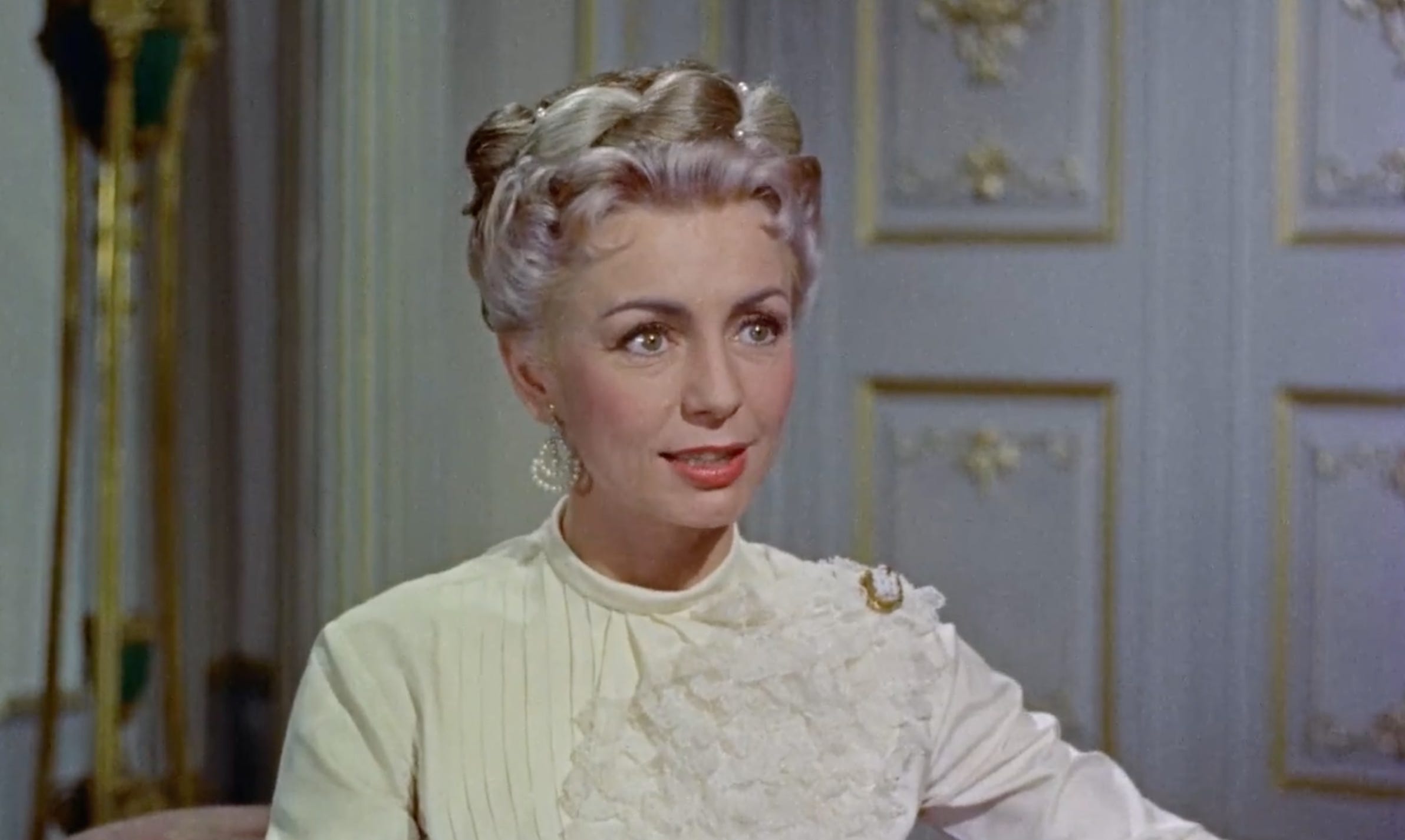
Speaking of fancy loungewear, can we just take a moment for that incredible peignoir in the middle? And, for that matter, this fabulous mauve rinse? I adore these 1960s-does-Edwardiana looks, and… sorry, what’s that? You want to know if the actual film is any good? Honestly, there’s no pleasing some people. Well, it’s almost two hours of a man of the world relating tales from his youth, the running theme of which is “women, eh?” I actually didn’t dislike it as much as that description might suggest, but I will watch literally anything with this sort of costuming. I would probably sit quite happily in front of an episode of Diary of a CEO if Steve Bartlett was wearing a peach-dyed backcombed hairpiece.
Rating: 5/10
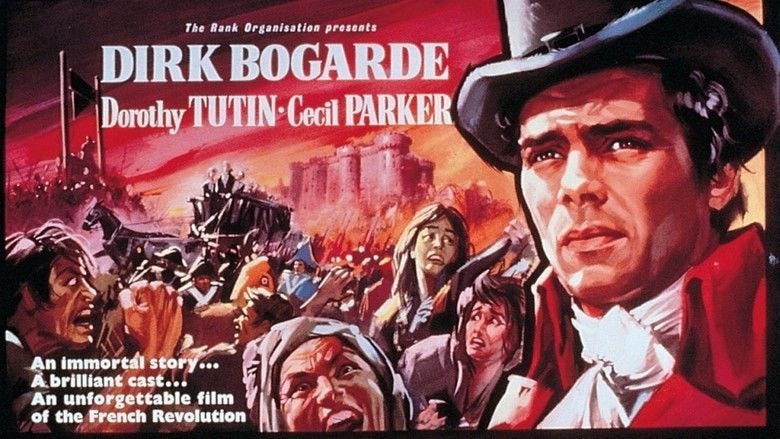
36) A Tale of Two Cities (1958)
I have never read A Tale of Two Cities, but I have written an essay about it. This was the norm at my university, where we were given at least two essays a week in the full expectation they would be complete nonsense, and I think it explains why quite so many of its alumni have gone into politics and, consequently, the state of the country.
Back then, of course, there was no AI to help you write absolute rubbish. Students today will never know how it feels to take a medically inadvisable quantity of Pro Plus and stay up all night desperately piecing something together out of Sparknotes and a second-wave Marxist-feminist commentary on James Joyce called Uly-SEES: Proletariat Awakenings in South Dublin Between 1922 and 1931 which you swiped from the library. But I digress.
My point is that although I have never actually picked up A Tale of Two Cities, I digested enough commentary on it at some point that I had a Post-It note at the back of my brain to the effect that the Marquis de St Evrémonde is a nasty piece of work. And so it proves.
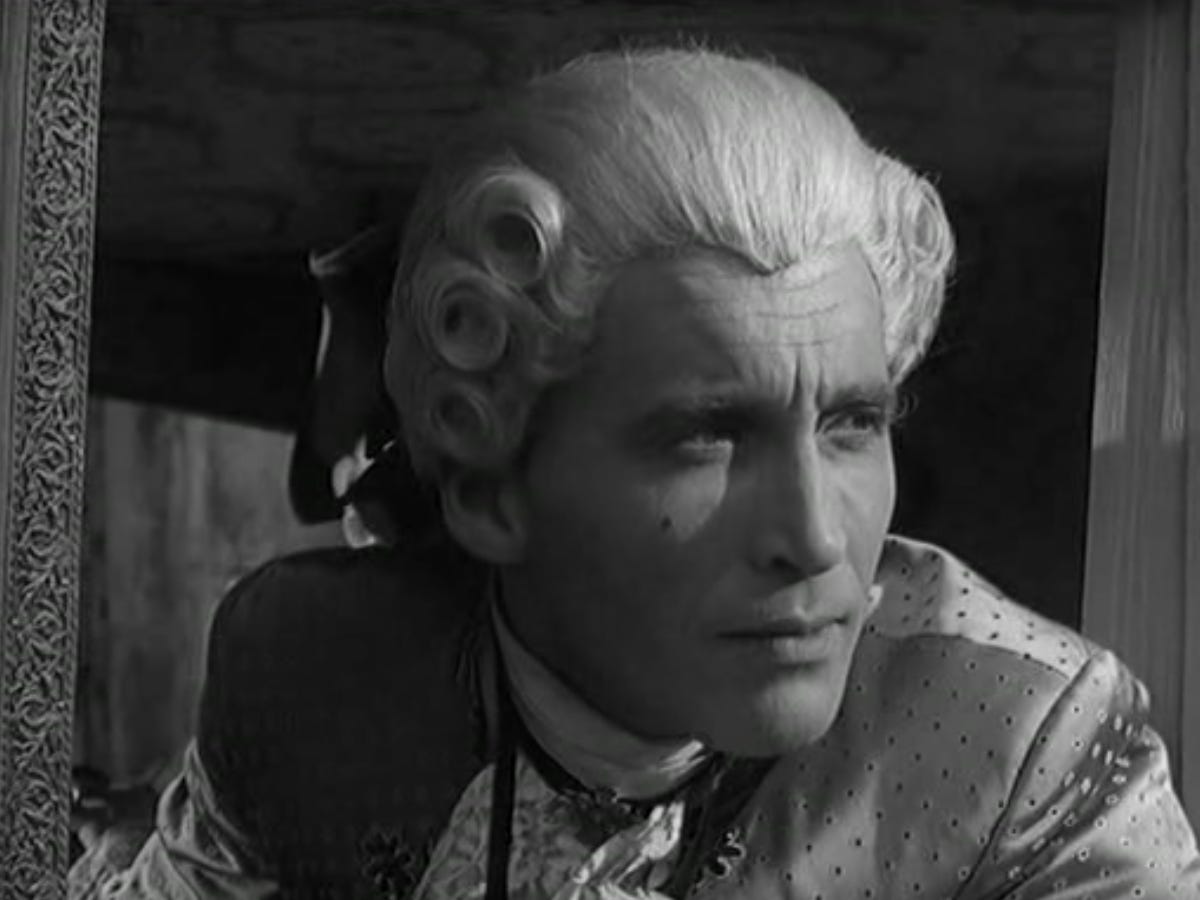
Within the first 15 minutes of the 1958 film adaptation (itself a do-over of the 1935 one, in which Basil Rathbone, soon to become Sherlock Holmes, took the role) he has kidnapped and imprisoned a peasant girl, fatally stabbed her brother and slapped the doctor trying to revive him, before having him locked up in the Bastille, all to a soundtrack of peacocks screeching evilly. He then runs over a child in his carriage and tosses a coin out of the window at the boy’s sobbing father while grumbling about the inconvenience of the hold-up. He is not, I think, on many people’s Christmas card lists.
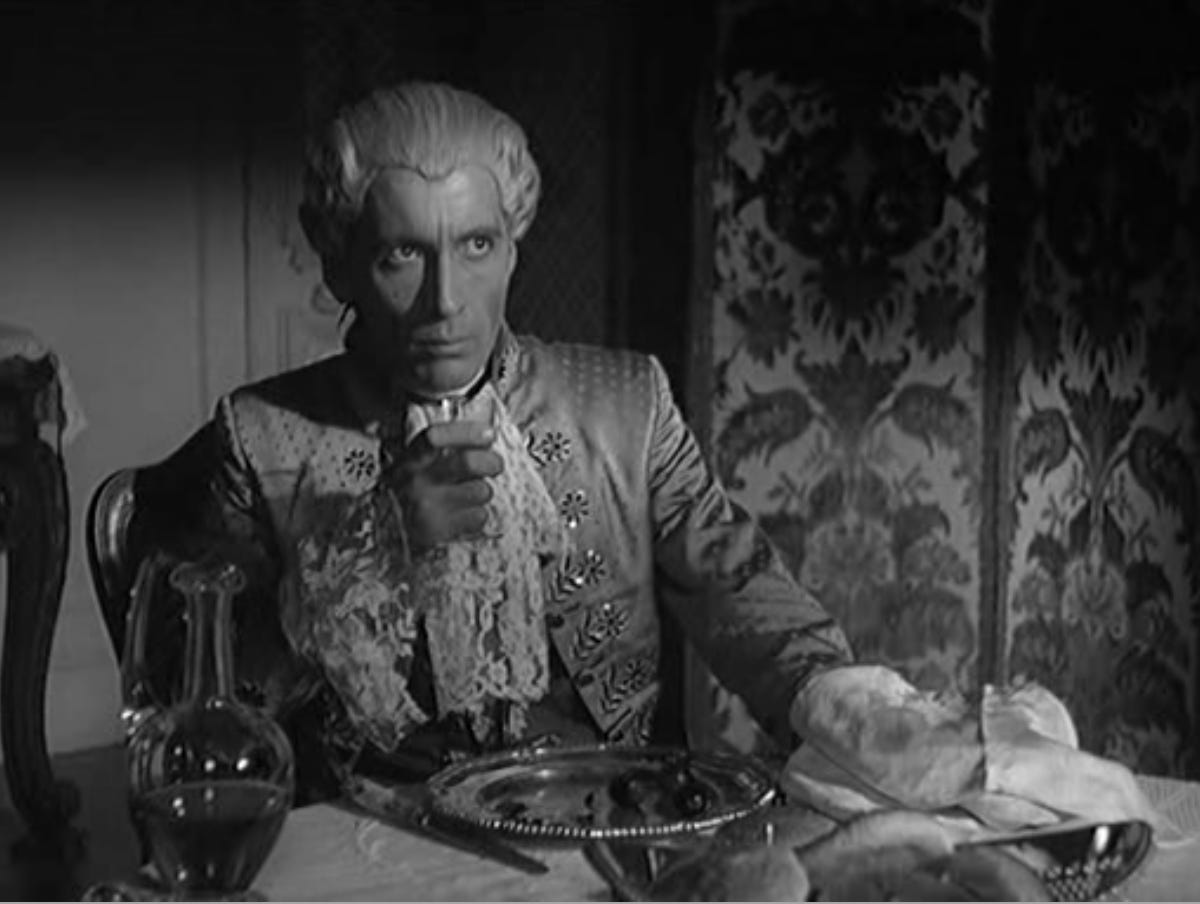
After Bitter Victory Christopher was delighted to be asked to play a ‘top-level swank villain’ who is vile straight out of the gate. There had a been a highly publicised Chatterley-esque court case involving the Marquis de Sade’s works in 1956, and I suspect the producers thought it might be canny to go for a more Sadean vibe here but got cold feet in the edit given the sedate tone of the rest of the film. The result is a single very jarring long close-up of a gagged woman and a character who is absolutely foul for every moment he’s on screen.
The consistent top-volume awfulness actually lessens the impact of his crimes, and I’m going to take a punt here and say this is on Dickens, not Rank: he wrote the character as an embodiment of the cruelties of the Ancien Régime, not a real person. He was a great one for annotating his creations to tell readers what they ought to be feeling about them, and he quite literally did that in this case – the Marquis is found stabbed to death with a note of instruction pinned to his chest.
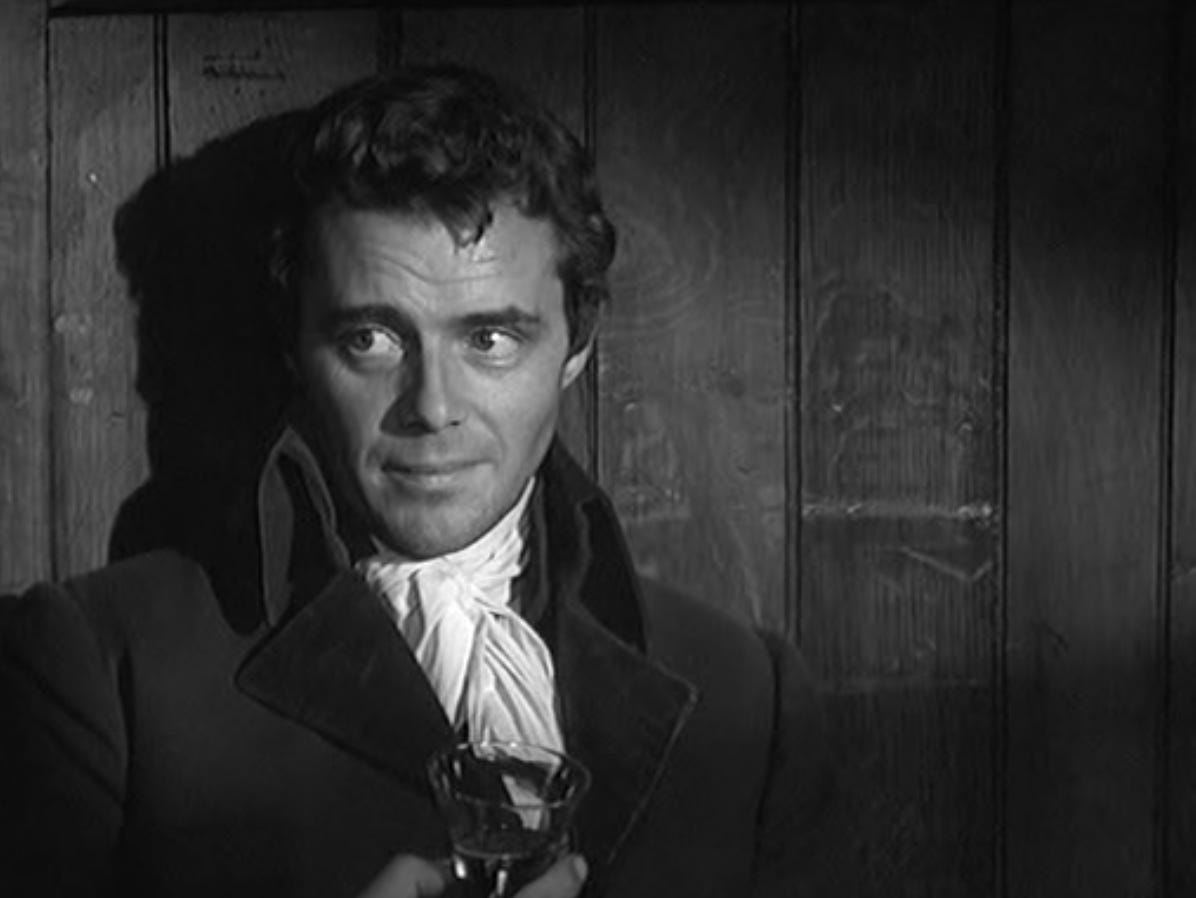
This film’s main saving grace is Dirk Bogarde (above), who is really, really good as Carton, the tragic English lawyer, equal parts twinkly and sad. The location shots of chateaux and medieval French towns are also great and the crowd scenes are impressively packed. This is exactly the sort of prestige production which, in 1958, could easily have been shot in colour – but it wasn’t, presumably to save money. Which turned out to be an own goal: it was a bit of a box office disaster and lost a lot of money.
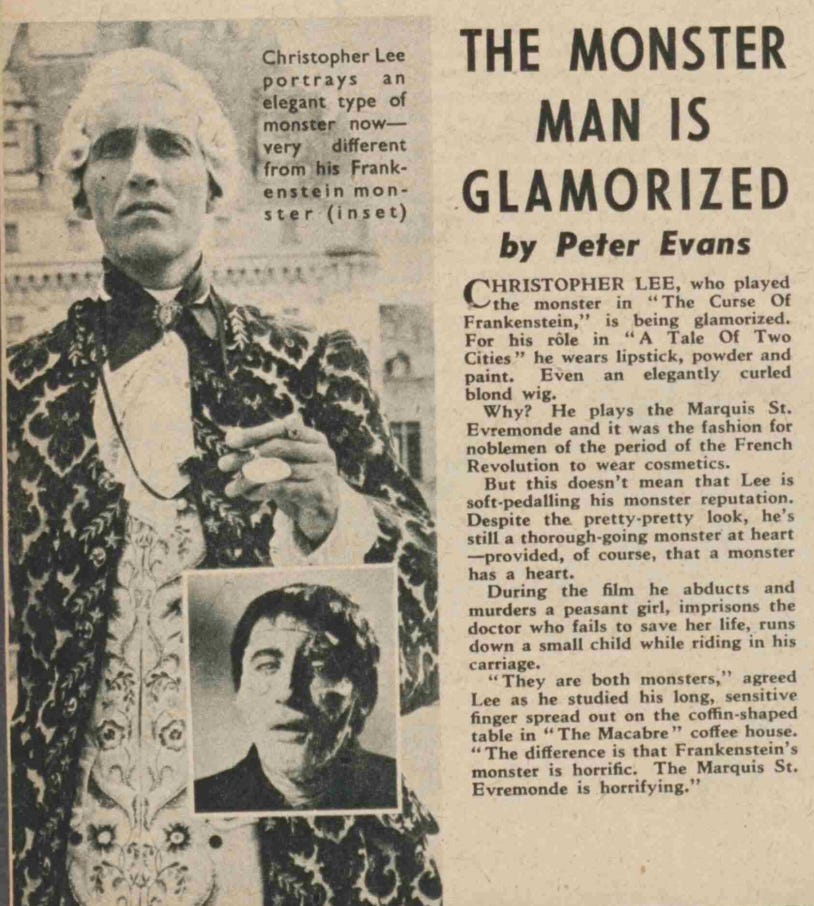
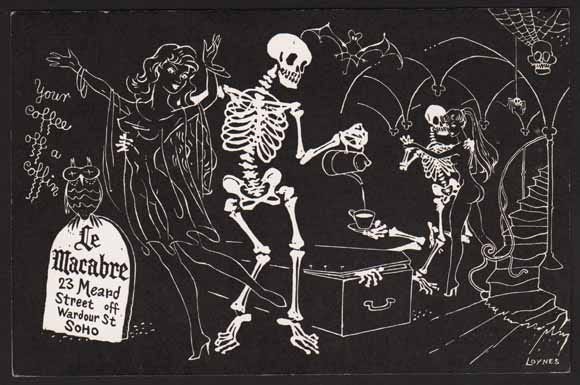
It got decent coverage, though, and the photographer Tony Armstrong-Jones – soon to be Mr Princess Margaret – was dispatched to the set by Tatler to photograph the cast. Picturegoer bought one of his shots of Christopher and ran it alongside a story about how he had moved on from The Curse of Frankenstein to play “an elegant type of monster”. In an early sign of the bit-committing to come, someone thought it would be fun to do the interview at Soho’s new horror-themed espresso bar, Le Macabre on Meard Street.
A few weeks later the Daily Mirror’s diarist Noel Whitcomb went to a party in Chelsea hosted by the socialite Nancy Oakes. There he got chatting to an actor he described as “specialising in Monsters, Creatures and Things”, who cheerfully informed him that he was going to be “disintegrated” at the studio the following day – in colour, no less.
The film he was making, of course, was Dracula – and in the almost-words of Charlie D, it would turn out to be a far, far better thing than he had ever done.
Rating: 4/10
Next time on The Christopher Lee Project: fangs for sticking around
Particularly enjoyed this - “‘lunch at Rules, a fiver on Crafty Admiral at Newmarket then home to murder the nanny’. He has, of course, refused to remove his signet ring.” Tres bien. Douze points!